
 Call us now:

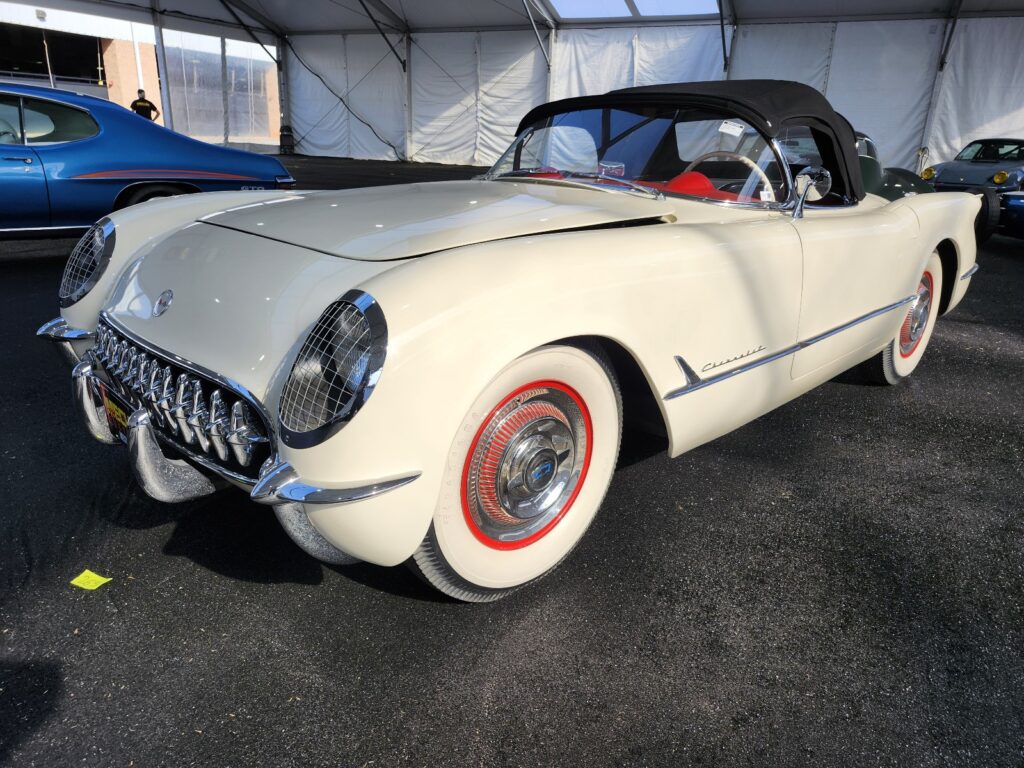
The 1953 Chevrolet Corvette Roadster is one of those vehicles that instantly changes the mood when it rolls into view. When I walked the floor at Mecum Kissimmee 2026, I knew I needed to spend real time with this one. After all, this is the first production year of America’s sports car, and only a limited number were built.
Just as important, early Corvettes can look correct at a glance while still hiding major authenticity issues underneath. Because of that, I approached this inspection the same way I do with any high-stakes collector purchase. I focused on documentation and originality indicators. Additionally, I examined the specific casting numbers and stampings that separate a world-class investment from a nice restoration.
Why Auction Inspections Matter on First Year Cars
Auction environments move fast. Meanwhile, bidders often make decisions based on presentation, reputation, and a short written listing. However, first year collector cars like a 1953 Corvette demand verification, not assumptions.
When I inspect vehicles at auction, I look past the shine and focus on objective identifiers. For example, I verify casting numbers, engine stampings, and carburetor tags whenever access allows. I also document trim and interior correctness because those details often reveal the quality and intent of a restoration.
Classic Car Auction Inspections Pillar
Classic Car Auction Inspections
Auction purchases can involve major financial risk if authenticity and condition are not verified. I wrote a full guide explaining how I approach on site auction inspections, what I document, and why it matters.
The Birth of the Corvette and Why 1953 Is Different
The Corvette story began as a bold experiment. GM wanted a sports car that could compete with European style and capture attention in showrooms. As a result, the 1953 model year is unique in both production methods and historical significance.
In addition, early cars were built in a very different way than later Corvettes. These vehicles were hand-assembled in low volumes, and details can vary. That reality makes inspection and documentation even more important.
Origins and History of the 1953 Corvette
The Chevrolet Corvette story officially began on January 17, 1953, when the EX 122 concept car debuted at General Motors Motorama auto show at the Waldorf Astoria in New York City. The vehicle was the brainchild of GM legendary design chief Harley Earl. He envisioned an affordable, all American two seater that could compete with the European sports cars GIs were bringing home after World War II, such as Jaguars and MGs.
The Corvette was designed to inject sizzle back into a Chevrolet division that was perceived as stodgy in the early 1950s. Harley Earl small, secretive team focused on a radical new material for the body fiberglass. This innovation allowed for sleek, aerodynamic curves that were difficult to achieve with steel at the time.
Early Production Location and Numbers
Manufacturing and Production Details To meet the overwhelming public demand following its Motorama debut, Chevrolet rushed the Corvette into production on June 30, 1953.
- Location The initial run was hand assembled on a temporary pilot line in a converted customer delivery garage on Van Slyke Road in Flint, Michigan.
- Volume Only 300 units were manufactured for the 1953 model year, making it the rarest and most sought after Corvette year for collectors.
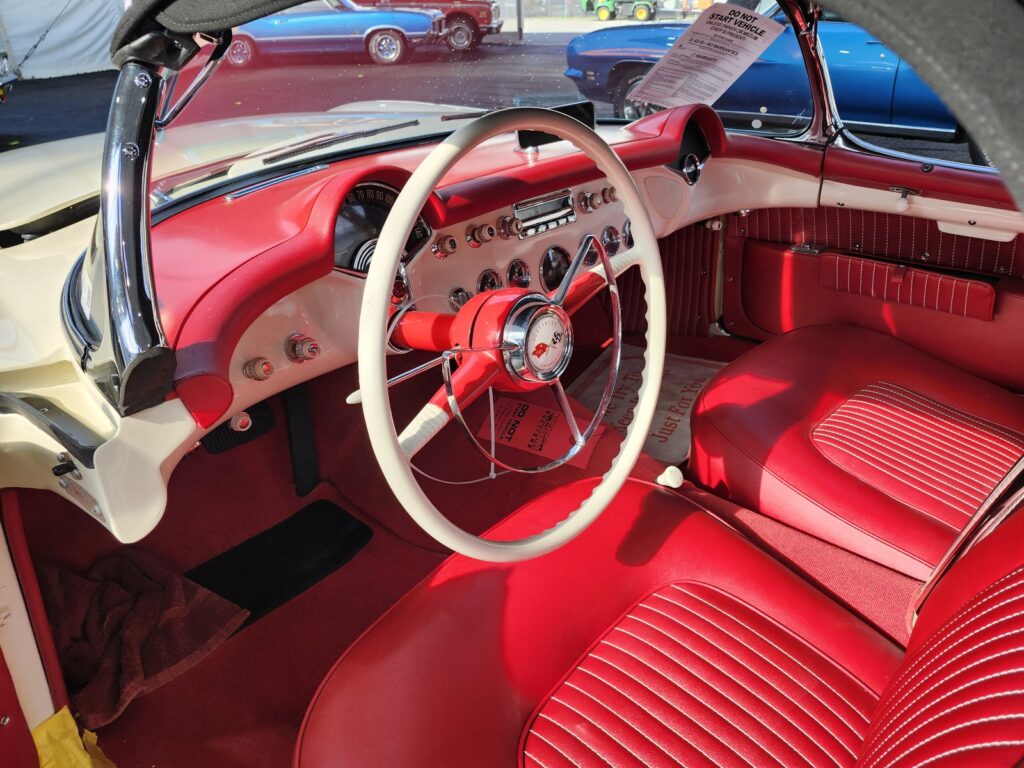
- Standardization To simplify the rapid production start, every single 1953 Corvette was built with an identical configuration Polo White exterior paint, Sportsman Red vinyl interior, and a black canvas convertible top.
Original Sales and Pricing Data While Harley Earl originally hoped for a $2,000 roadster, the technical complexity and hand built nature of the first year pushed the price significantly higher.
- Base Price The original MSRP was approximately $3,498.00.
- Mandatory Options All 300 cars were equipped with the only two available options a heater ($91.40) and a signal seeking AM radio ($145.15), bringing the final delivered cost to roughly $3,734.55.
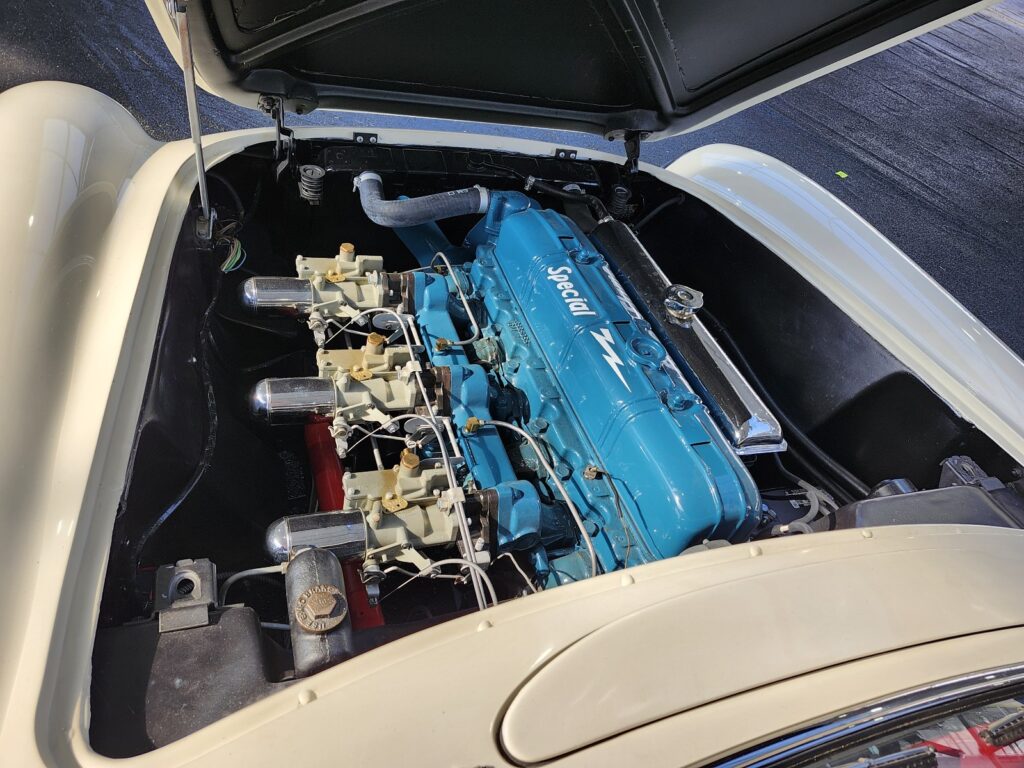
Professional Inspection Note The 1953 Corvette used a specialized Blue Flame 235 CI inline six engine. Because Chevrolet did not yet have a manual transmission that could reliably handle the 150 HP output of this triple carbureted engine, every 1953 model was equipped with a two speed Powerglide automatic transmission.
For deeper historical context, I often reference resources like the National Corvette Museum and the National Corvette Restorers Society when verifying early production details and restoration correctness.
For additional model-year reference articles and enthusiast documentation, I also review CorvSport for Corvette history and features by generation.
My Blue Flame 235 Inspection and Authenticity Checks
During my physical inspection of VIN E53F001186, I documented the following identification numbers to verify its standing as a “numbers-matching” investment:
- Vehicle Identification Number (VIN): E53F001186 The VIN plate on the driver’s side door pillar confirms this is car #186 of the original 300 produced in 1953.
- Engine Serial & Suffix: LAY546805 Located on the distributor boss, the “LAY” suffix is the critical indicator for a 150 HP Corvette-spec engine paired with a Powerglide automatic transmission.
- Engine Block Casting: 3701481 Visible on the side of the block, this casting number is correct and consistent for 1953 model year production.
- While 3835911 is the most commonly cited casting for production 1953 Corvettes, the presence of the LAY stamped suffix on this 3701481 block is a significant detail. In the world of NCRS (National Corvette Restorers Society) judging, having the correct “LAY” stamp and the triple-carburetor provisions is essential for authenticity.
- Cylinder Head Casting: 3836066 GM 1 This casting is clearly documented on the head, which is consistent with the high pressure 235 Blue Flame engines used in early Corvettes.
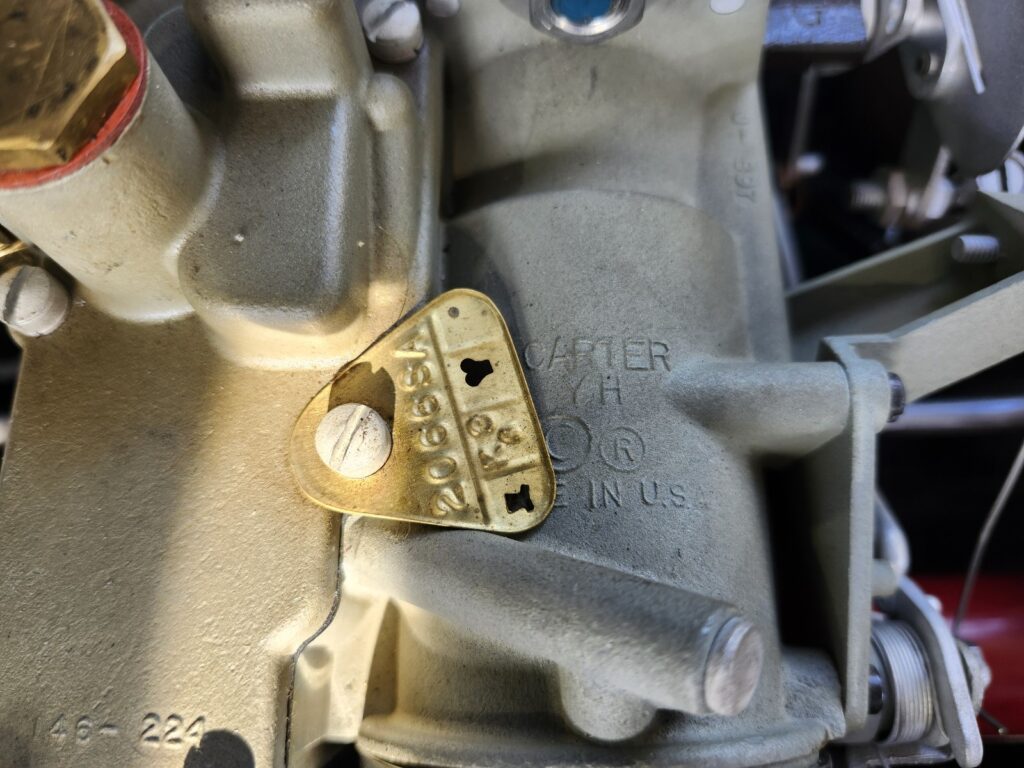
- Carburetor Identification: 2066SA The brass tags on the Carter YH side draft carburetors confirm these are the specialized units designed specifically for the first year Corvette.
Under the hood, this Corvette presents the signature Blue Flame inline six configuration that defines early C1 cars. Even so, the appearance of a Blue Flame valve cover is not enough. I always confirm the hard identifiers, because those are what protect a buyer.
Engine block casting number verification
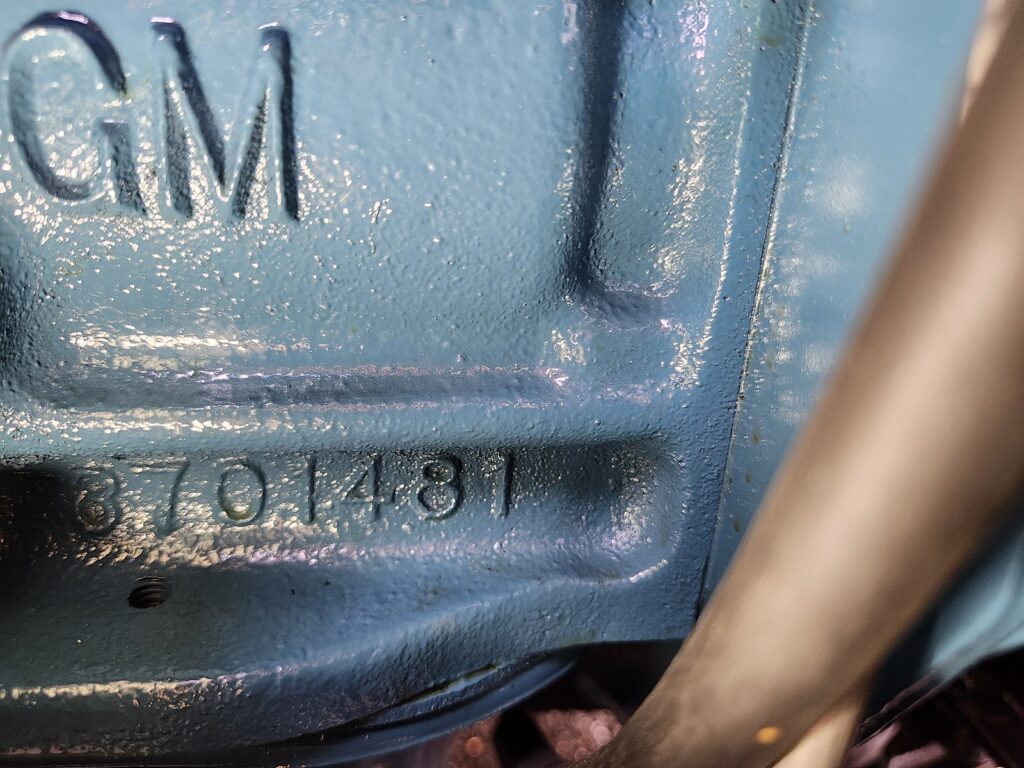
In this photo, the block casting reads 3701481 GM, which aligns with the correct early 235 application used in this era. Importantly, this kind of casting number check is step one. Next, I validate stampings and other components to confirm the overall picture.
Engine serial and suffix stamp confirmation
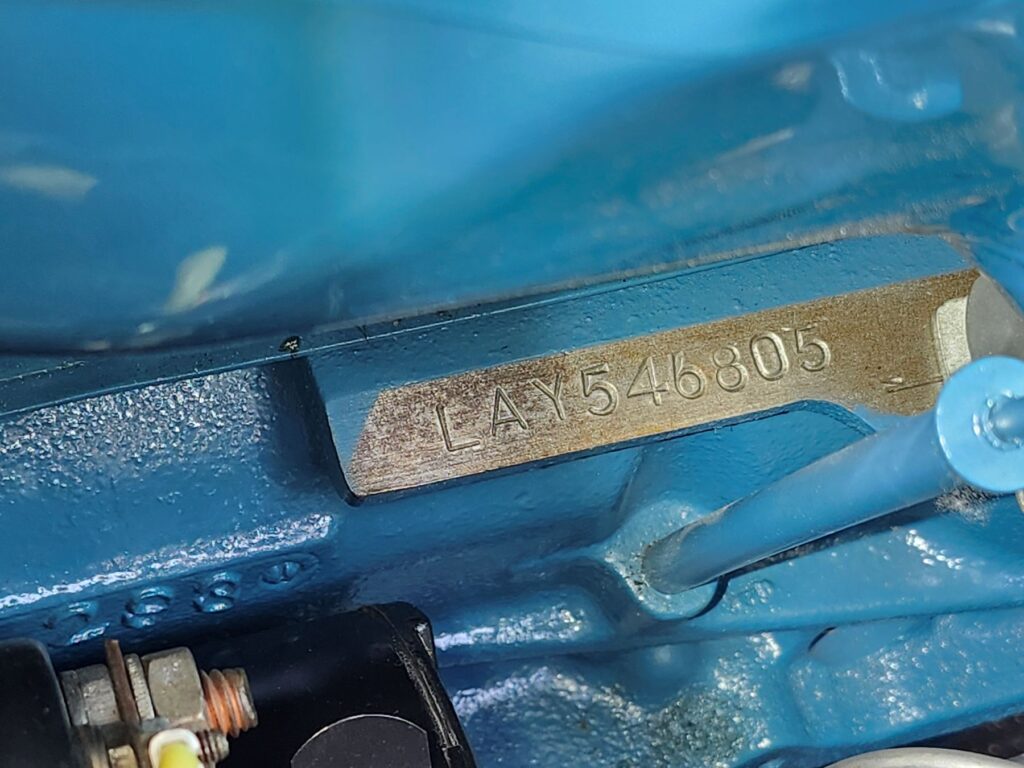
Here, the stamped engine identification shows LAY546805. The LAY suffix is one of the key identifiers associated with the 1953 Corvette specification and its original drivetrain pairing. Because stampings are more vulnerable to alteration than castings, I document them clearly. Whenever possible, I compare them to supporting information.
Cylinder head casting verification
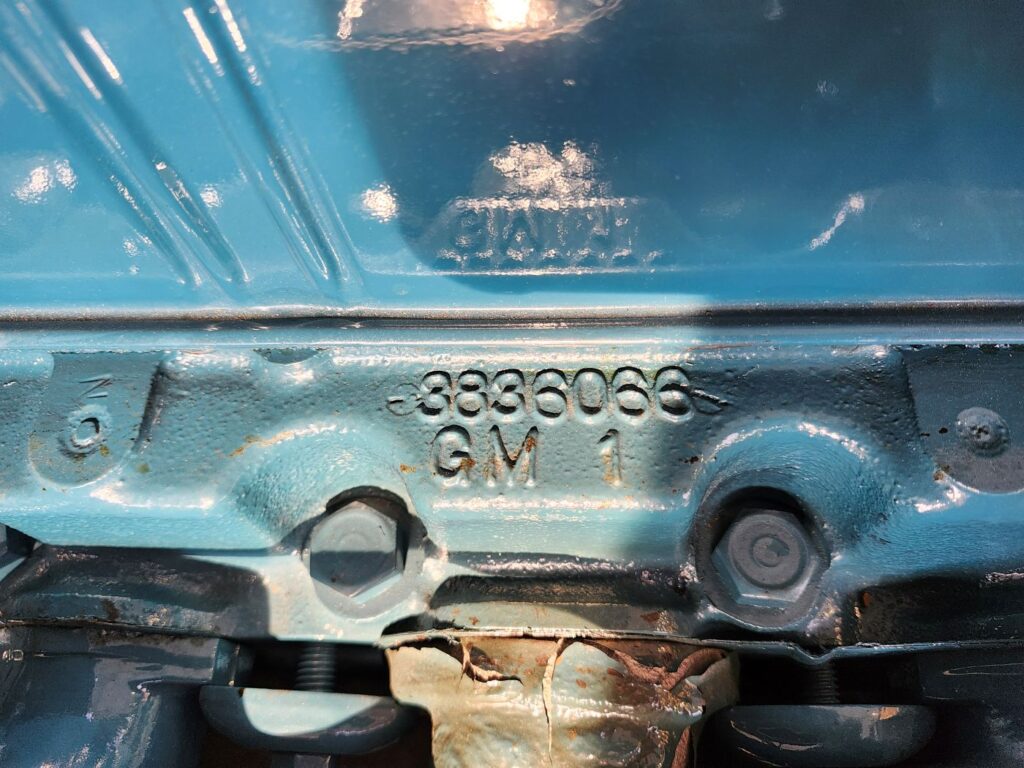
I located and documented the 3836066 GM 1 casting number clearly embossed on the head. Confirming this specific sequence is a vital step in my appraisal process, as it serves as a verified technical identifier for an original 1953 Corvette cylinder head. By cross referencing these physical markings with known factory specifications, I can confidently establish the mechanical authenticity and period correct nature of this Blue Flame powerplant.
Triple Carburetors and Carter Tag Documentation
One of the defining features of these early Corvette engines is the triple-carburetor arrangement. Therefore, I always try to capture at least one clear ID tag photo when possible. Those tags can support originality claims and help verify that the correct carburetor family is present.
What Does Numbers Matching Mean
Numbers matching is one of the most misunderstood topics in the collector car world. I explain how I verify casting numbers, stampings, tags, and date ranges when documenting originality.
Interior and Presentation Observations
After I document mechanical identifiers, I move to the interior because authenticity is not only about drivetrain components. Interior finish, gauge type, steering wheel style, and control layout often reflect the depth of a restoration.
My Take on Restoration Quality and Value Drivers
I observed that the restoration of this Corvette meticulously prioritizes presentation and period-correct aesthetics. However, the real value driver on early Corvettes is not only finish quality. The premium comes from verifiable authenticity, coherent component identification, and documentation that holds up under scrutiny.
That is why I treat early Corvettes differently than later mass-produced classics. In my opinion, the details matter more, and the inspection should be built around evidence.
Professional Classic Car Appraisals
Early Corvettes require careful verification of casting numbers, stampings, and restoration accuracy. I provide independent classic car appraisals with documentation that supports informed buying decisions.
Classic Car Pre Purchase Inspections
Before you commit to a high value collector purchase, I can inspect the vehicle and document key authenticity indicators so you are not relying on assumptions or auction descriptions alone.
Learn more about Classic Car Pre Purchase Inspection services
How many 1953 Chevrolet Corvettes were built?
Only 300 were produced for the 1953 model year, which is why the first year Corvette remains one of the most collectible production years.
What engine came in the 1953 Corvette?
The 1953 Corvette used the Blue Flame 235 cubic inch inline six, typically paired with a Powerglide automatic transmission.
What does numbers matching mean on a 1953 Corvette?
In practice, I use numbers matching to describe a vehicle that retains the correct casting numbers, stampings, tags, and date logic consistent with 1953 production and configuration.
Why do carburetor tags matter on early Corvettes?
Carburetor tags help support originality claims because they can confirm correct carburetor families and specifications for that engine setup.
Why should buyers consider an inspection at Mecum or other auctions?
Because auctions move quickly, an inspection helps confirm authenticity and condition using evidence like casting numbers, stampings, and restoration detail checks before bidding.