
 Call us now:

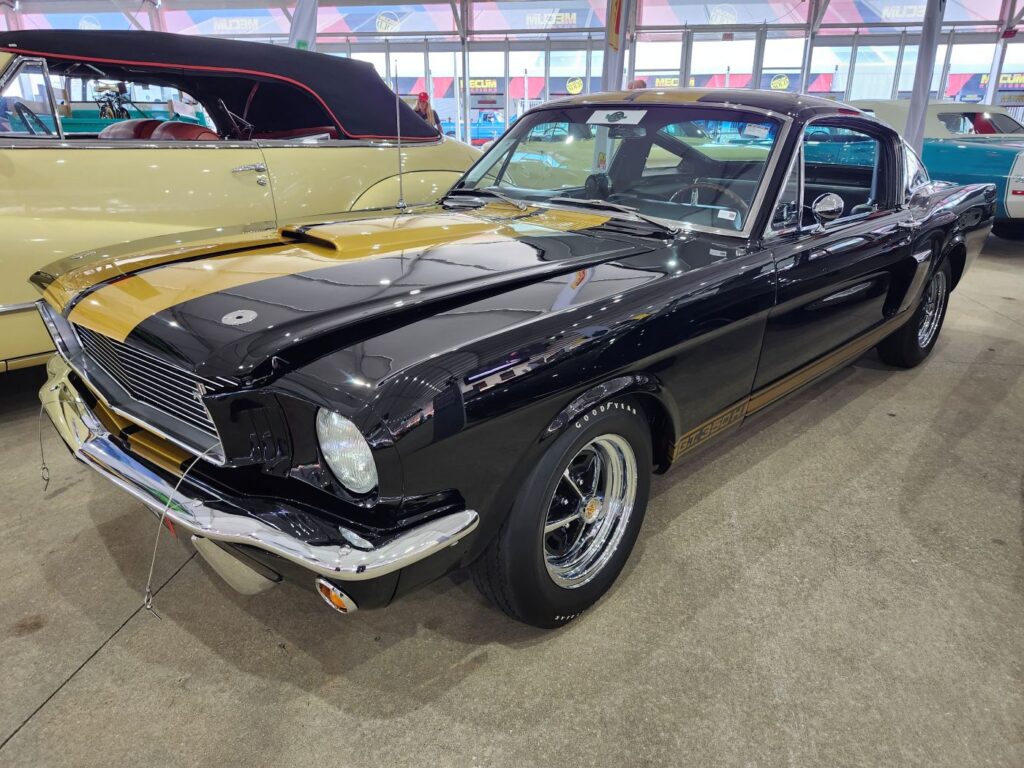
The 1966 Shelby GT350H occupies a rare and often misunderstood position in American automotive history. The groundbreaking Hertz ‘Rent-A-Racer’ program gave rise to the GT350H, an unprecedented collaboration between a major rental car company and Shelby American, one that placed genuine, high-performance Shelby vehicles into public circulation. Far from being novelty rentals, these cars were legitimate GT350s that blended motorsports credibility with mainstream exposure. Revisiting a 1966 Shelby GT350H in person helps separate myth from fact and clarifies why historians and collectors regard these cars as one of the most historically significant and collectible chapters in the Shelby lineage.
Observations of the 1966 Shelby GT350H at the 2026 Mecum Kissimmee Auction
The Shelby GT350H occupies a unique and often misunderstood place in American automotive history. Developed as part of the now-legendary Hertz “Rent A Racer” program, the GT350H represented an unprecedented collaboration between a major rental car company and Shelby American, placing genuine high-performance vehicles into the hands of everyday drivers, at least those brave enough to rent one.
During the 2026 Mecum Kissimmee auction, I personally inspected and documented this 1966 Shelby GT350H Fastback, capturing exterior and limited interior details and reviewing the auction provided documentation associated with the car. Although this was not a full mechanical inspection or appraisal, examining the vehicle clarified what makes GT350H models historically important and highly collectible today.
The Shelby GT350H and the Hertz “Rent-A-Racer” Program
In 1966, Hertz sought to elevate its performance image by offering a limited number of Shelby modified Mustangs through its rental fleet. Shelby American responded by building a special run of GT350s designated for Hertz, resulting in what would become known as the GT350H, with the “H” signifying Hertz.
These cars were based on the GT350 platform but featured several distinctions, including automatic transmissions on many examples to broaden renter appeal. Despite their rental status, they were genuine Shelby performance cars and not merely cosmetic packages. Today, GT350H models are recognized as an important chapter in Shelby history, blending motorsports credibility with mainstream exposure in a way that had never been done before.
1966 Shelby GT350H Vehicle Overview at Mecum Kissimmee 2026
The GT350H Fastback offered at Mecum Kissimmee 2026 was presented as a well-documented example of this historically significant model. According to auction provided information, key attributes included:
-
- 1966 Shelby GT350H Fastback configuration
-
- Period-correct drivetrain and Shelby-specific components
-
- Documentation references consistent with known GT350H production characteristics
-
- Presentation aligned with collector expectations for a historically important Shelby
Visual Observation & Documentation Notes
During my time with the vehicle on site, I performed a visual review and documentation of the exterior and limited interior areas that were accessible at the auction.
From a presentation standpoint, the vehicle showed the type of care and attention typically expected of a collector grade GT350H. Exterior details were consistent with the Shelby GT350H aesthetic, and the interior appeared representative of the period configuration. I did not perform mechanical disassembly, test driving, or component-level verification, and I offer no conclusions regarding mechanical condition or roadworthiness.
Classic Car Pre Purchase Inspections
Buying a classic or collector vehicle involves more than cosmetic appeal. A professional pre purchase inspection can help identify authenticity concerns, configuration issues, and condition factors before a purchase is finalized.
Learn more about our Classic Car Pre Purchase Inspection services
Collectibility and Market Significance
Shelby GT350H models remain highly sought after due to a combination of factors:
- Direct Shelby American involvement
- Limited production tied to a one-year program
- Unique cultural impact through the Hertz rental initiative
- Strong registry and documentation support within the Shelby community
Collectors tend to focus heavily on documentation, drivetrain configuration, and overall historical correctness when evaluating GT350H examples. While restoration quality matters, provenance and authenticity often carry greater long-term weight than cosmetic presentation alone.
Professional Perspective: What Enthusiasts Should Understand
One of the most common misconceptions surrounding GT350H cars is that their rental history inherently diminishes their value or significance. In reality, the opposite is often true. The Hertz program is precisely what gives these cars their unique identity, and surviving examples represent a fascinating intersection of performance engineering and 1960s automotive marketing.
Buyers evaluating a 1966 Shelby GT350H at auction or in private sale should focus less on rental-era myths and more on documentation quality, configuration accuracy, and verified Shelby production practices.
Classic Car Appraisals for Collector and Historic Vehicles
Vehicles like the Shelby GT350H require an appraiser who understands originality, documentation, and collector market behavior. Auto Praise provides independent classic and collector car appraisals completed by certified auto appraisers with experience in high-value and historically significant vehicles.
Where the 1966 Shelby GT350H Was Originally Built
Ford assembled all 1966 Shelby GT350H fastbacks as Mustang K-Code fastbacks at the San Jose Assembly Plant in Milpitas, California. At this stage, the vehicles were completed as high performance Mustangs, not as Shelby vehicles.
Once Ford completed assembly, Ford shipped the cars, unfinished in Shelby terms, to Shelby American at its facility located at the Los Angeles International Airport. Shelby American was responsible for converting these Mustangs into GT350H models under the Hertz performance rental program.
Shelby American GT350H Conversion Process
At the Shelby American facility, each vehicle received a series of mechanical, suspension, and cosmetic modifications. These changes transformed the Ford built Mustang into a Shelby GT350H.
The scope of modifications varied slightly by production period and configuration, but the conversion process followed a consistent engineering philosophy focused on performance, durability, and visual distinction.
GT350H Engine Specifications and Identification
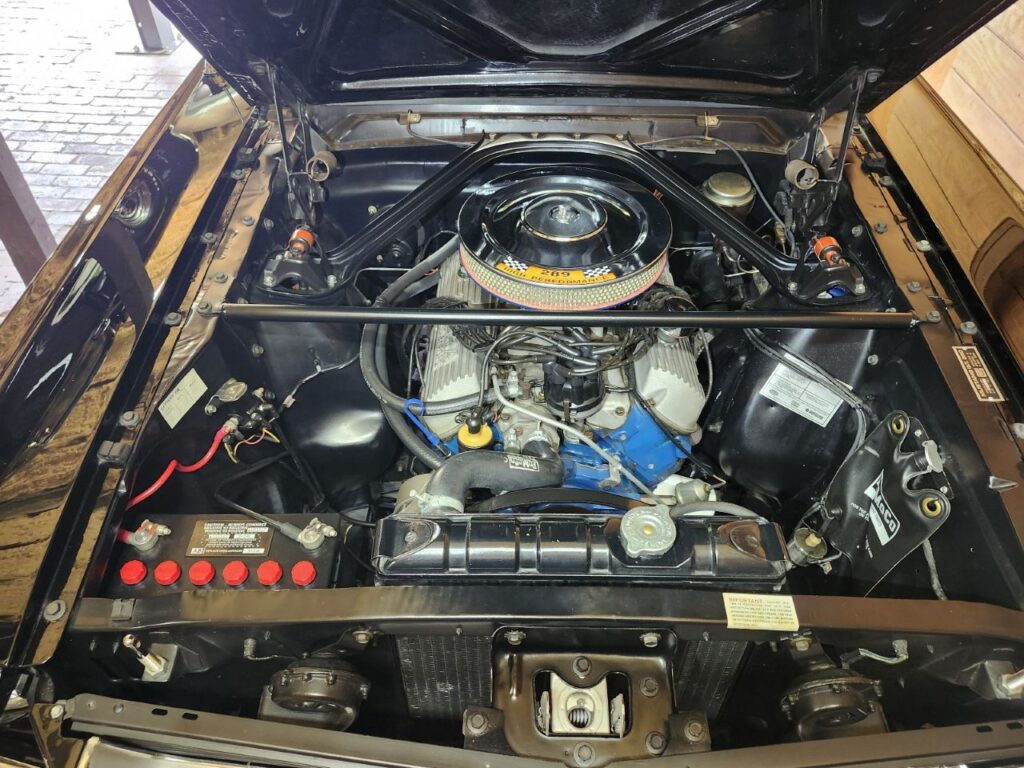
The 1966 Shelby GT350H was powered by the Ford 289 cubic inch High Performance V8 engine.
Key engine characteristics included solid lifters, higher compression, a performance camshaft profile, and Shelby-specific induction and dress components. Ford supplied the engines as 289 High Performance units, which Shelby American selected and modified as part of the conversion process.
Inspectors typically find engine block casting numbers on the side of the block and should align with known Ford Hi Po 289 production ranges. Date codes are cast into the block and indicate the month and year of casting. These dates should logically precede both the Ford vehicle assembly date and the Shelby conversion timeline.
Casting numbers and date codes help establish chronological plausibility but do not by themselves confirm originality.
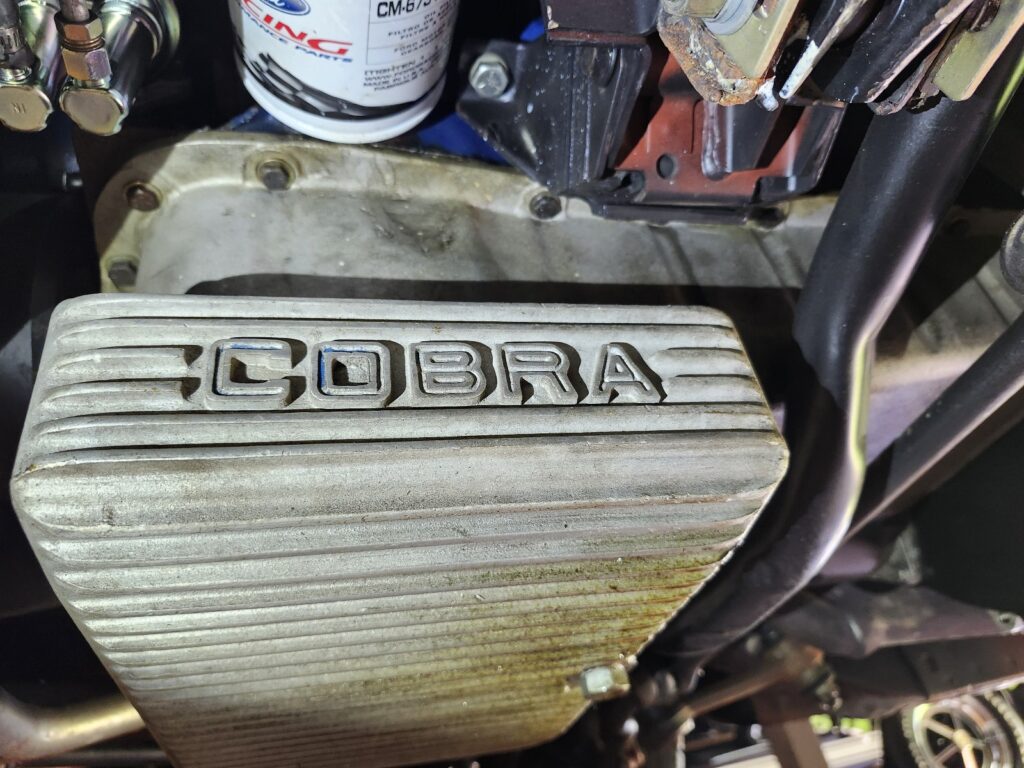
Transmission Options and Identification Tags
Shelby GT350H models were offered with two transmission configurations.
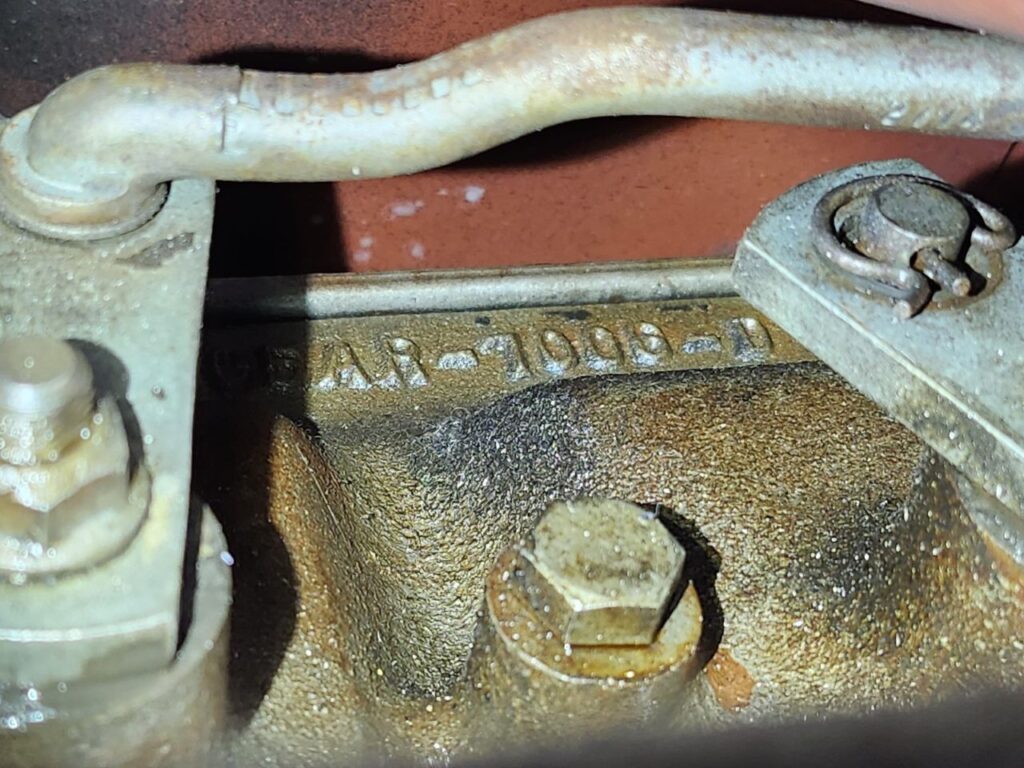
Manual transmission cars were equipped with a Ford Toploader four speed gearbox. These transmissions carry an identification tag bolted to the transmission case. The tag includes engineering numbers and assembly date codes that can be referenced against known Ford production data.
Automatic transmission cars were equipped with a Ford C4 automatic transmission. These were far more common in the Hertz rental fleet. The C4 transmission also uses an identification tag mounted to the case that lists transmission type and build date.
Transmission tags are often lost during restorations, making their presence particularly valuable when evaluating a car.
Ford Top Loader Casting Number
Rear Differential Specifications and Axle Tag Identification
All Shelby GT350H models used the Ford 9 inch rear axle assembly.
The rear axle originally carried a metal identification tag attached to one of the carrier bolts. This tag includes critical information such as gear ratio, assembly date, and axle type.
As with transmission tags, rear axle tags are frequently missing on restored cars. When present, they provide important supporting evidence but should be evaluated alongside other documentation.
Ford 9" Rear End Casting Number
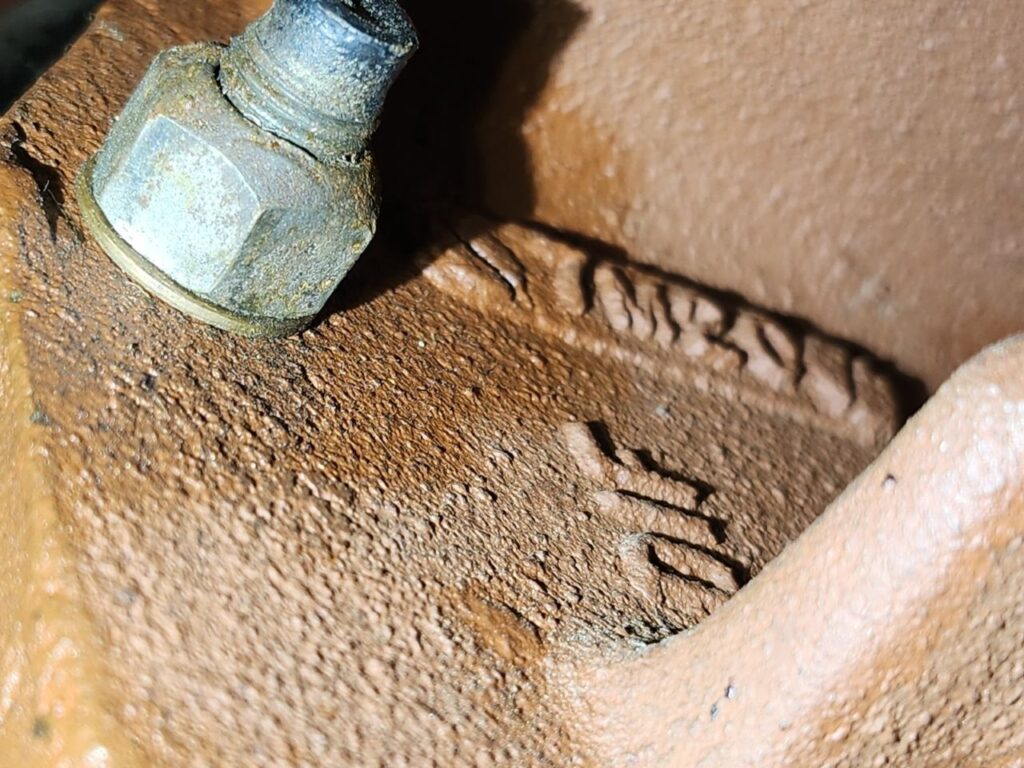
Suspension and Chassis Modifications by Shelby
Shelby American implemented several suspension and chassis upgrades to improve handling and durability.
These typically included lowering the front upper control arms, Shelby specific rear traction bars, lowered ride height, upgraded shocks, and front disc brakes. Many of these components are visually identifiable, though replacement over time is common.
Correct evaluation focuses on whether the configuration aligns with known Shelby practices rather than expecting every component to be original.
How 1966 Shelby GT350H Components Are Properly Identified
Accurate identification of a Shelby GT350H requires correlating multiple data points rather than relying on a single component.
Key areas of review include engine casting numbers and date codes, transmission identification tags, rear axle tags when present, Shelby American serial numbers, registry documentation, and period correct hardware and configuration details.
Because many GT350H cars have undergone restoration, missing tags and replaced components are common and do not automatically indicate an incorrect vehicle. Context and documentation are critical.
Quick Reference Table Ford Production vs Shelby Modifications
|
Area |
Ford Assembly Plant |
Shelby American Conversion |
|
Assembly Location |
San Jose Assembly Plant |
Los Angeles International Airport |
|
Base Vehicle |
Mustang K Code Fastback |
Shelby GT350H |
|
Engine |
Ford 289 Hi Po V8 |
Shelby modified Hi Po configuration |
|
Transmission |
Ford Toploader or C4 |
Shelby approved installation |
|
Rear Axle |
Ford 9 inch |
Shelby performance gearing |
|
Suspension |
Standard K Code components |
Shelby revised suspension and traction bars |
|
Identification |
Ford VIN and buck tags |
Shelby serial numbers and documentation |
Professional Perspective on GT350H Identification
Because the Shelby GT350H occupies a unique position between factory production and specialty manufacturer conversion, correct identification depends on understanding both stages of construction. Chronological consistency between casting dates, assembly timelines, and Shelby conversion practices is far more important than the presence of any single component.
This layered production process gives the GT350H its historical significance and makes careful, disciplined evaluation essential when discussing these cars.
Why This GT350H Stood Out at Mecum Kissimmee 2026
In the context of the 2026 Mecum Kissimmee auction, this Shelby GT350H Fastback stood out not because of exaggerated claims or speculation, but because it represented a tangible piece of Shelby and American performance history. Personally observing and documenting vehicles of this caliber reinforces the importance of careful, fact-based analysis when discussing collectible cars, especially those with complex histories.
For enthusiasts, collectors, and buyers navigating high-level auctions, understanding where observation ends and verification begins is critical. That distinction is what ultimately supports informed decision-making.
Summary
The 1966 Shelby GT350H represents a unique chapter in American performance history, created through the collaboration between Shelby American and Hertz’s Rent-A-Racer program. Observed at the 2026 Mecum Kissimmee auction, this GT350H illustrates how Shelby engineering, Ford high-performance components, and a limited one-year production run combined to create a historically significant and highly collectible model. Rather than diminishing its importance, the Hertz rental program defines the GT350H’s identity, making documentation quality, configuration accuracy, and historical context essential when evaluating surviving examples today.
Common Questions
Find answers to common questions about the Shelby GT350H and how collectors evaluate authenticity and significance.
+ What makes the Shelby GT350H different from a standard Shelby GT350?
The GT350H was built specifically for the Hertz Rent-A-Racer program and represents a unique collaboration between Shelby American and Hertz. While based on the GT350 platform, GT350H models were produced in limited numbers and often featured automatic transmissions to accommodate rental use, making them distinct within the Shelby lineage.
+ Where were Shelby GT350H vehicles originally built?
GT350H cars were assembled by Ford as Mustang K-Code fastbacks at the San Jose Assembly Plant in California. They were then shipped to Shelby American for conversion into GT350H models.
+ Did Shelby American build the engines for the GT350H?
The engines were Ford 289 High Performance V8 engines supplied by Ford. Shelby American modified and installed these engines as part of the conversion process but did not cast unique Shelby engine blocks.
+ How can original components on a GT350H be identified?
Identification typically involves reviewing engine casting numbers and date codes, transmission identification tags, rear axle tags when present, Shelby serial numbers, and supporting documentation. No single component confirms originality on its own.
+ Does rental history reduce the value of a Shelby GT350H?
Rental history is part of what defines the GT350H model. Rather than diminishing collectibility, the Hertz program is a key reason these cars are historically significant and desirable among collectors today.