
 Call us now:

Minor Accident Car Value Loss: What Changes vs Major Damage
Minor accident car value loss is real, but the amount depends on what actually happened to the vehicle. I’ve inspected and appraised vehicles for decades, and I can tell you this: the market doesn’t react the same way to a bumper repair as it does to structural damage.
That’s why it’s important to separate normal depreciation from accident-related depreciation. A vehicle can be repaired correctly and still sell for less simply because buyers and dealers discount accident history.
If you’re in Florida and you want the legal context for diminished value, start here: Florida diminished value law guide.Why Accident History Impacts Resale Value
Even when repairs look clean, accident history tends to reduce buyer confidence.
In practical terms, accident history can lead to:
- Lower trade-in offers
- Harder private-party negotiations
- Longer time on market
- Reduced lender/buyer confidence on late-model vehicles
As a result, accident history resale value is often lower than a comparable vehicle with a clean history.
Minor Accident vs Major Accident: What’s the Difference?
The biggest difference is severity and location of damage, not just the total repair bill.
What counts as a “minor” accident in the market?
A minor accident typically involves:
- Cosmetic panel damage
- Replace-and-paint components (bumper cover, fender, door skin)
- No structural repairs
- No airbag deployment
- No suspension or steering damage
Minor accident car value loss is usually smaller, but it still exists—especially on newer vehicles.
What counts as a “major” accident in the market?
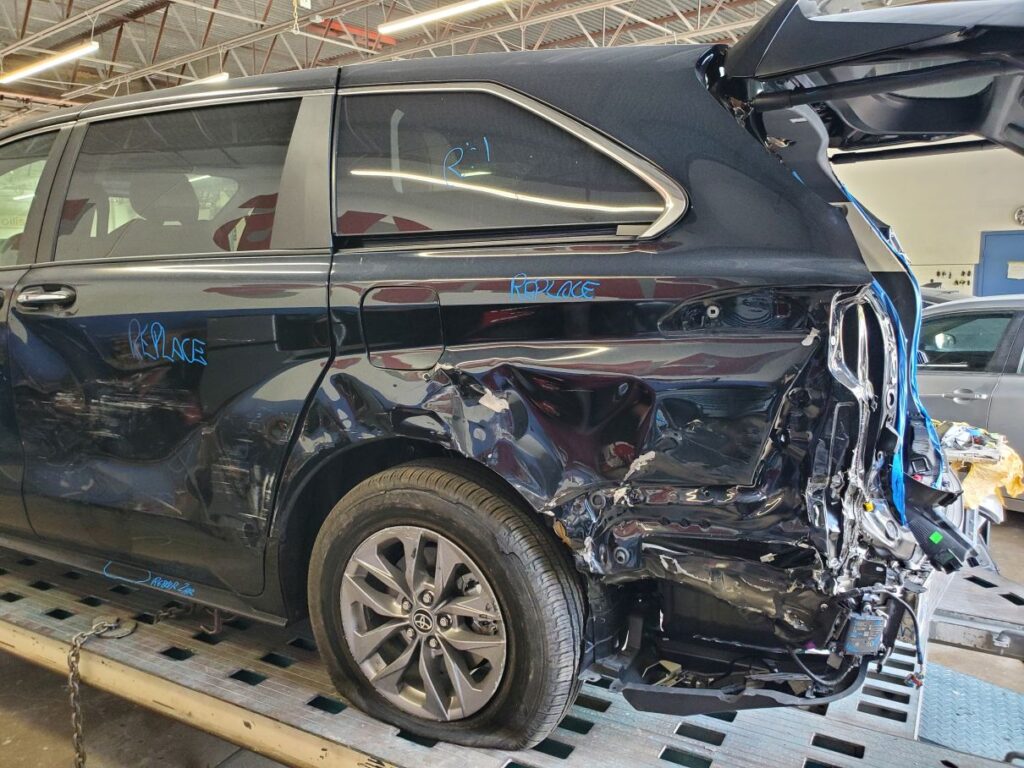
Major accidents often include:
- Structural repairs (frame/unibody pulls or sectioning)
- Airbag deployment
- Suspension/steering impact
- Multiple panels replaced and blended
- Intrusion into crumple zones or reinforcement areas
Major accident depreciation tends to be higher because buyers assume greater future risk, even when repairs meet standards.
The 5 Factors That Drive Value Loss After a Repair
When I evaluate diminished value, these factors consistently matter:
- Structural involvement
Structural repairs almost always increase market resistance. - Airbag deployment
Airbag events are a major “buyer hesitation” trigger. - Vehicle age and mileage
Late-model, low-mileage vehicles usually suffer greater market-based penalties. - Vehicle segment
Luxury, performance, and specialty vehicles tend to be more sensitive to history. - Market behavior in your area
Value impact is not theoretical. It is tied to real buying and selling patterns.
Why Repairs Don’t “Reset” a Vehicle’s Market Value
A common statement I hear is: “It’s repaired, so it’s worth the same.”
Mechanically, a vehicle can be restored to safe operating condition. However, market behavior doesn’t reset the history. Dealers, buyers, and data sources still treat the vehicle as higher risk.
That’s the core reason diminished value after accident exists.
What You Should Gather Before You Try to Prove Diminished Value
If you want to support a diminished value claim, you should collect:
- Final repair invoice (itemized)
- Photos of damage before repairs
- Any structural measurement documentation (if applicable)
- A clear statement of what was repaired and replaced
- Proof of pre-loss condition (service records, photos, etc.)
About Auto Praise and How We Help
Auto Praise provides independent diminished value appraisals in Florida, backed by real inspection and appraisal experience. When I review a claim, I focus on defensible methodology, repair documentation, and real market behavior so the value loss is supported with evidence, not assumptions.
If you want to learn how diminished value is evaluated, start here: diminished value appraisal service.
Free Florida Claim Review
Don’t leave money on the table.
If your vehicle was involved in an accident in Florida, you may be entitled to compensation for diminished value.
Speak directly with a certified independent appraiser for a no-obligation claim evaluation.
Call 754-210-9807
Helpful References on Vehicle Value and Disclosures
These resources can help you understand how vehicle values are discussed and why accident history can affect resale:
Talk to an Appraiser
Does a minor accident always reduce resale value?
Often yes on newer vehicles, but the amount depends on severity, documentation, and market behavior.
Why is major accident depreciation higher?
Structural repairs, airbags, and safety-related components create greater perceived risk for buyers and dealers.
Can diminished value exist even if repairs were done correctly?
Yes. Market perception and accident history typically remain even after quality repairs.
What documentation matters most for proving value loss?
Final repair invoices, damage photos, and any structural documentation are the most important starting points.
Should I get an appraisal for a minor accident?
If the vehicle is late-model, low-mileage, or high-end, a professional review often helps determine whether the loss is meaningful.