
 Call us now:

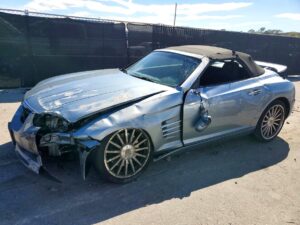
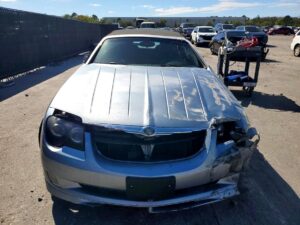
A 2005 Chrysler Crossfire SRT-6 Roadster, a low-production supercharged convertible with only 41,341 miles, was declared a total loss following a collision in the Orlando, Florida area. The carrier’s automated valuation software produced a base vehicle value of $11,321.00. That figure was built from two comparable vehicles sourced from New York and Oregon, the only matching inventory the system could locate. Auto Praise conducted an independent total loss appraisal and established an Actual Cash Value of $21,208.89, supported by three comparable SRT-6 Roadsters identified through a nationwide search. The appraisal clause was invoked, and the two appointed appraisers reached a binding appraisal award of $20,000.00, a recovery of $8,679 above the carrier’s base vehicle value.
Case Overview
|
Field |
Detail |
|
Vehicle |
2005 Chrysler Crossfire SRT-6 Roadster Convertible |
|
Exterior Color |
Silver |
|
Engine / Drivetrain |
3.2L Supercharged V6 / Automatic RWD |
|
Mileage at Time of Loss |
41,341 |
|
Location |
Orlando, FL / Tallahassee, FL area |
|
Service Type |
Independent total loss appraisal / Appraisal clause |
|
Insurer’s Base Vehicle Value |
$11,321.00 |
|
Auto Praise Independent Appraisal Value |
$21,208.89 |
|
Final Appraisal Award |
$20,000.00 |
|
Recovery Above Insurer’s Base Offer |
$8,679.00 |
Recovery at a Glance
Carrier’s base offer: $11,321
Final appraisal award: $20,000
Recovery above base offer: +$8,679
Florida Total Loss Appraisal & Claim Support
- Professional Authority: I-CAR Platinum & IACP Certified Appraisers with Florida 6-20 Adjuster Licensing.
- Industry Credentials: Over 30 years of specialized automotive and insurance claims experience.
- Valuation Experts: Independent Actual Cash Value (ACV) reports designed to accurately value your vehicle.
- Proven Reputation: Five-Star Rated Florida independent appraisal firm providing statewide remote and mobile support.
Tallahassee Market for Specialty Vehicles
Tallahassee presents a specific challenge, and opportunity, when it comes to specialty vehicle valuation. The capital city’s vehicle market is shaped by its dual identity as a government center and a college town. Florida State University, Florida A&M University, and the concentration of state agency employees along Apalachee Parkway and Blair Stone Road create a stable, educated buyer base with consistent demand for well-maintained vehicles across a wide range of segments.
The Chrysler Crossfire SRT-6 Roadster is a vehicle that resonates in markets like Tallahassee, a low-production, German-engineered sports convertible manufactured by Wilhelm Karmann GmbH on a Mercedes-Benz SLK platform, with a supercharged 3.2L engine producing 330 horsepower. It is the kind of vehicle that attracts serious buyers who know exactly what they are looking for. Those buyers exist in Tallahassee’s Midtown corridor, in the established neighborhoods along Thomasville Road and Timberlane, and throughout the broader Leon County market.
The problem with valuing a vehicle like the Crossfire SRT-6 is the same problem that exists in virtually every Florida market: there simply are not many of them available at any given time. The Crossfire was produced in limited numbers from 2003 to 2008, and the SRT-6 variant, with its supercharged engine and roadster body, is even rarer. When an automated valuation system searches for comparable vehicles and finds only a handful nationally, the characteristics of each individual listing carry enormous weight in the final calculation. A single low-priced unit from a distant market can compress the result in ways that do not reflect what a motivated buyer in Tallahassee, or anywhere in Florida, would actually pay for a clean, low-mileage SRT-6 Roadster.
Auto Praise provides total loss appraisal services to Tallahassee area vehicle owners and Florida vehicle owners statewide, including for specialty and limited-production vehicles where automated systems are most likely to produce results that miss the real market.
The Insurer’s Valuation — What the Automated Report Showed
The carrier’s automated market valuation report established a base vehicle value of $11,321.00 for this 2005 Chrysler Crossfire SRT-6. The report then applied a positive condition adjustment of +$1,273.00, producing an adjusted vehicle value of $12,594.00.
That positive condition adjustment is worth pausing on. The carrier’s own appraiser rated the vehicle’s seats as Exceptional, the dashboard as Exceptional, and the headliner as Exceptional. The mechanical components were rated Dealer Retail. In other words, the carrier acknowledged, in its own report, that this vehicle was in substantially better than average condition for its age. The condition adjustment moved the number upward, not downward. And yet even after that positive adjustment, the result was still less than 60% of what the independent appraisal found the vehicle to be worth.
The report used two comparable vehicles to establish the base vehicle value:
|
Comp 1 |
Comp 2 |
|
|
Year / Model |
2005 Chrysler Crossfire SRT-6 |
2005 Chrysler Crossfire SRT-6 |
|
Mileage |
77,352 |
98,250 |
|
List Price |
$10,800 |
$12,490 |
|
Location |
Latham, NY (1,073 miles from Orlando) |
Sublimity, OR (2,521 miles from Orlando) |
|
Adjusted Comparable Value |
$10,299 |
$12,251 |
Both comparables had significantly higher mileage than the loss vehicle’s 41,341 miles — and the automated report applied upward mileage adjustments to account for the difference, which partially closed the gap. But those adjustments brought the values upward only modestly, and the underlying list prices for both vehicles were low to begin with.
When appraisers source comparable vehicles from a wider geographic radius, that is a legitimate and standard practice when local inventory is not available. The appropriate question is whether the vehicles selected were truly equivalent, and whether the specific units chosen reflected the actual market for this model. In this case, both of the carrier’s comparables had mileage readings nearly double or more than the loss vehicle’s odometer, a significant difference for a rare sports car where low mileage is a meaningful value driver. The mileage adjustments applied did not fully bridge that gap.
The Auto Praise Independent Appraisal — Our Process
When reviewing the carrier’s valuation report on this 2005 Chrysler Crossfire SRT-6, the gap between the automated output and the real market was substantial. This appraisal was completed as a desk review using documentation, photos, and market data.
The Crossfire SRT-6 Roadster is a rare vehicle. Only a limited number were produced, and finding comparable inventory requires a nationwide search. Our independent analysis identified four matching SRT-6 Roadsters nationally. We selected the three closest in mileage to the loss vehicle’s 41,341 miles. All three were confirmed as having the same trim level (SRT-6), same engine (3.2L Supercharged V6), and same drivetrain (Automatic RWD).
|
Comp 1 |
Comp 2 |
Comp 3 |
|
|
Mileage |
31,293 |
81,162 |
18,846 |
|
List Price |
$20,795 |
$16,900 |
$25,995 |
|
Engine |
3.2L V6 SC |
3.2L V6 SC |
3.2L V6 SC |
|
Transmission |
Auto RWD |
Auto RWD |
Auto RWD |
|
Trim Level |
SRT-6 |
SRT-6 |
SRT-6 |
|
Condition Adjustment |
$0 |
$0 |
-$500 |
|
Prior Accidents |
No |
No |
No |
|
Mileage Adjustment |
-$602.88 |
+$2,389.26 |
-$1,349.70 |
|
Final Adjusted Price |
$20,192.12 |
$19,289.26 |
$24,145.30 |
Average of the three adjusted comparables: $21,208.89
The contrast with the carrier’s comparable selection is direct and significant. The carrier’s two comparables had adjusted values of $10,299 and $12,251, vehicles listed at $10,800 and $12,490 before adjustments. Our three comparables, all confirmed SRT-6 Roadsters, were listed at $20,795, $16,900, and $25,995 before adjustments. These were not different types of vehicles. They were the same vehicle, same trim, same engine, same drivetrain, trading at a substantially different price point in the real market.
The lost vehicle had 41,341 miles on the odometer — 75% fewer than the average mileage for this model according to the carrier’s own report. For a collectible sports car in a limited-production trim, low mileage is a meaningful value attribute. The independent appraisal value of $21,208.89 reflected what the market was showing for this specific vehicle in this specific configuration.
The Appraisal Clause Process
Under Florida law and most first-party auto insurance policies, a vehicle owner who disagrees with their carrier’s total loss valuation has the right to invoke the appraisal clause. This right belongs exclusively to the first-party insured, the vehicle owner filing the total loss claim through their own policy. On a third-party claim, where a different driver caused the damage and the vehicle owner is filing against the at-fault driver’s carrier, the appraisal clause is not available. Third-party claimants must pursue other means to challenge an unsatisfactory offer.
In this case, the vehicle owner was a first-party insured and retained Auto Praise as their appointed appraiser. The carrier appointed its own appraiser through Florida Inspection Associates. As required by Florida statute and the applicable policy language, a neutral umpire was also elected at the outset as standard protocol, available in the event the two appraisers could not reach mutual agreement.
The two appointed appraisers reviewed the valuation data and reached agreement on a binding appraisal award of $20,000.00, signed by both parties. That award is the amount the carrier is required to settle the claim for under the policy. The matter did not require umpire involvement.
Outcome Summary
Carrier’s base vehicle value: $11,321.00
Auto Praise independent appraisal: $21,208.89
Final appraisal award (binding): $20,000.00
Recovery above carrier’s base offer: +$8,679.00
The final appraisal award of $20,000 represented a 76.7% increase over the carrier’s base vehicle value of $11,321. For the vehicle owner, that difference was the gap between a settlement anchored to two high-mileage listings from New York and Oregon, and one that reflected what a 2005 Chrysler Crossfire SRT-6 Roadster with 41,341 miles was actually worth in the real market.
What This Case Illustrates
The Crossfire SRT-6 is not a typical used car — and automated software treats it like one.
The Chrysler Crossfire SRT-6 Roadster was produced in very limited numbers. It was assembled in Germany on a Mercedes-Benz SLK platform with a supercharged engine that produces 330 horsepower. It is not a high-volume domestic sedan with abundant comparable inventory. When automated valuation software searches for comparables and finds only a handful of matching vehicles nationally, the list prices of those specific units, wherever they happen to be listed, anchor the result. If those units are priced low, the base vehicle value will be low, regardless of what a well-informed buyer would actually pay for a clean, low-mileage example.
Mileage matters more for rare vehicles than automated adjustments capture.
The loss vehicle had 41,341 miles — 75% fewer than the model average. The carrier’s own report acknowledged this fact. Yet both of the carrier’s comparable vehicles had odometer readings of 77,352 and 98,250 miles respectively. The mileage adjustments applied by the automated system moved the adjusted values upward by modest amounts, but they did not fully reflect the premium that low-mileage examples of limited-production sports cars command in the actual market. Our independent comparable set, with mileage readings of 31,293, 81,162, and 18,846 miles — provided a more complete picture of where this vehicle sat in the market.
The carrier’s own condition assessment supported a higher value.
The insurer’s appraiser rated the seats, dashboard, and headliner as Exceptional, the highest condition rating available. The mechanical components were rated Dealer Retail. The condition adjustment in the carrier’s report was positive, not negative. The vehicle was acknowledged to be in excellent condition. A vehicle in exceptional condition with 75% fewer miles than the model average should command a premium in the marketplace. The independent appraisal reflected that reality; the automated base vehicle value did not.
Two comparables is too thin a foundation for a rare vehicle.
When only two listings anchor a base vehicle value, each individual unit carries 50% of the weight in the final calculation. A single low-priced listing from a distant market can suppress the result by thousands of dollars. Our independent analysis identified four matching vehicles nationally and used three, the maximum number closest in mileage to the loss vehicle. More data points mean a more stable, defensible value conclusion. If you believe the insurer undervalued your car in a total loss claim, the comparable selection in the automated report is the first place to look.
The appraisal clause resolved this case without litigation.
The $8,679 recovery above the carrier’s base value was achieved through the appraisal clause process, a structured, policy-based mechanism that brought both parties to a binding resolution through appointed appraisers. The process worked as designed. For a full explanation of how the total loss settlement process works and where the appraisal clause fits within it, see our dedicated guide.
Frequently Asked Questions
What made the Chrysler Crossfire SRT-6 difficult to value in a total loss claim?
The Crossfire SRT-6 Roadster is a low-production vehicle, assembled in Germany on a Mercedes-Benz platform with a supercharged engine and a convertible body style. Very few were built, and even fewer remain in active dealer inventory at any given time. When an automated valuation system searches for comparable vehicles and finds only a small number of matches, each individual listing has an outsized effect on the base vehicle value. If those listings are priced low relative to the market, or if they have significantly higher mileage than the lost vehicle, the resulting value will not reflect what a well-informed buyer would actually pay. For rare or limited-production vehicles, independent appraisal is especially important because it requires the appraiser to engage directly with the available data rather than relying on a weighted average of a thin comparable pool.
Why did the appraisal result in $20,000 rather than the full $21,208.89 appraisal value?
The appraisal clause process produces a binding award through agreement between two appointed appraisers, one representing the insured and one appointed by the carrier. The final award reflects a mutually agreed value, which may fall between the two appraisers’ independent conclusions. In this case, Auto Praise’s independent appraisal established a value of $21,208.89. The two appraisers reached agreement at $20,000, which is $8,679 above the carrier’s original base vehicle value and represents a binding settlement figure the carrier is required to pay under the policy.
What should Tallahassee vehicle owners do if their total loss offer seems too low?
Start by requesting a copy of the market valuation report from your carrier. Review the comparable vehicles listed, check the year, trim level, mileage, and location of each one. If the comparables have significantly higher mileage than your vehicle, are a different trim level, or are sourced from markets where pricing differs from Florida, that is the basis for a challenge. Auto Praise can review the report and determine whether there is a valid basis to pursue an independent appraisal. A free claim review is the right first step. Tallahassee vehicle owners have the same rights under Florida’s total loss statutes as vehicle owners anywhere else in the state, including the right to invoke the appraisal clause through their own first-party policy.
Does the positive condition adjustment in the carrier’s report help the vehicle owner?
It helps partially, but it does not fully address the underlying issue when the base vehicle value is significantly understated. In this case, the carrier’s appraiser rated the vehicle’s interior components as Exceptional and applied a positive condition adjustment of $1,273. That adjustment increased the adjusted vehicle value above the base, which is accurate and appropriate. The issue was that the base vehicle value of $11,321 — built from two high-mileage comparable vehicles listed in New York and Oregon, was itself far below what the market was showing for this vehicle. No condition adjustment can fully compensate for a base value that is anchored to underpriced comparables. The independent appraisal addressed the comparable selection directly, producing a value conclusion that reflected both the vehicle’s condition and the actual market.
Is the Chrysler Crossfire SRT-6 considered a specialty or collector vehicle for appraisal purposes?
The Crossfire SRT-6 occupies a position between a mainstream used vehicle and a specialty collector car. It was a production vehicle sold through Chrysler dealerships, but it was assembled in limited quantities by Karmann in Germany on a Mercedes-Benz SLK platform, a distinction that matters to knowledgeable buyers and affects resale value. The supercharged SRT-6 variant is rarer than the standard Crossfire, and examples with low mileage and clean history command a premium in the market. For appraisal purposes, what matters is that the comparable vehicles used in the valuation actually match the subject vehicle on the factors that drive value, trim level, engine, drivetrain, condition, and mileage. In this case, the independent comparable search identified SRT-6 Roadsters with clean histories trading in the $17,000–$26,000 range, which is a meaningfully different market picture than two high-mileage units priced under $13,000.
How does the appraisal clause work in Florida when the two appraisers disagree?
Florida’s total loss laws and most first-party auto insurance policies include an appraisal clause that allows either party to invoke an independent appraisal process when they disagree on vehicle value. Each party appoints their own licensed appraiser, and a neutral umpire is selected at the outset in the event that the two appraisers cannot reach mutual agreement. The umpire’s decision, if needed, is binding on both parties. In most cases, the two appointed appraisers are able to reach agreement without involving the umpire. The appraisal clause is only available on first-party claims, meaning the vehicle owner must be filing through their own policy. Third-party claimants filing against a different driver’s carrier do not have access to this process and must pursue other means to challenge the offer. See our full guide on invoking the appraisal clause for a detailed walkthrough.
If Your Total Loss Offer Seems Low
If the insurance company’s total loss offer seems too low, Auto Praise can review the market valuation report and identify errors that may be affecting your settlement amount. We assist Florida vehicle owners statewide by reviewing comparable vehicles, adjustments, options, condition ratings, and valuation methodology to determine whether the offer is accurate.
A free claim review can help you understand whether there is a valid basis to challenge the insurance company’s valuation and pursue a better settlement.
Call 754-210-9807 for a Free Review Florida Licensed Adjusters • I-CAR Platinum Certified • IACP Certified Auto Appraisers