
 Call us now:

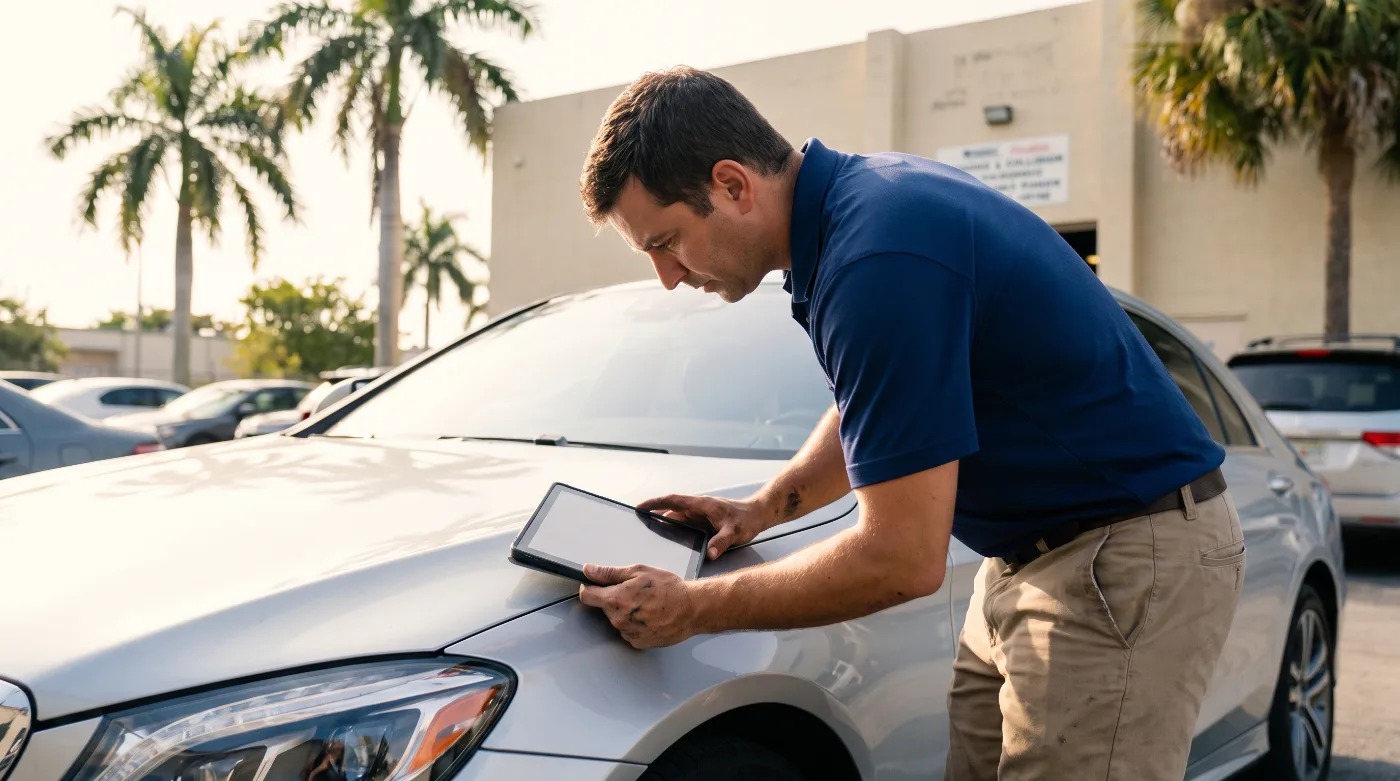
Buying a car that has been in an accident can be a smart move, but only when the repair was done right and the price reflects the history. A reported crash does not make a car a bad buy on its own. Then again, a low price can hide a weak repair that costs you far more later. So the real question is not whether the car was hit. It is where the damage was, who fixed it, and what proof exists. After more than 30 years of looking at damaged and repaired vehicles, I trust a repair invoice more than any history report. This guide covers what reports leave out, how to read a minor accident on Carfax, which frame and structural warning signs matter, and how accident history should shape your offer.
TL;DR: Accident history alone is not a deal breaker. What matters most is whether the damage reached the vehicle’s structure and whether the shop followed the automaker’s repair procedures. Before you sign, ask for the full repair invoice and get an independent inspection.
Is Buying a Car That Has Been in an Accident Ever a Smart Move?
Buying a car that has been in an accident is reasonable when three things line up. The damage was cosmetic or limited to bolt-on parts. The repair is documented. And the price is low enough to cover the resale penalty you will face later. When any one of those is missing, the risk usually outweighs the savings.
In practice, the good candidates tend to share a profile. For example, a car with a replaced bumper cover, a refinished door, and a shop invoice listing factory parts is often a fair buy at the right price. By contrast, a car with an unexplained “damage reported” entry and no paperwork is a guess.
Here is a quick way to sort the deals you see:
- Often worth a closer look: cosmetic damage, documented repairs, clean title, and a clear discount.
- Proceed with caution: airbag deployment, replaced structural parts, or a repair with no paperwork.
- Usually worth passing on: a branded title, a seller who will not allow an inspection, or a price close to a clean-history car.
Keep in mind that the discount you get today is not free money. When you sell, the next buyer will see the same history. That resale penalty is known as diminished value, and it follows the car from owner to owner.
What an Accident History Report Tells You and What It Leaves Out
An accident history report lists events that someone reported to a data provider, such as a police agency, an insurer, or a repair shop. It does not inspect the car. As a result, a crash paid for in cash, fixed at a shop that does not report, or never claimed may not appear at all.
That gap matters a great deal when buying a car that has been in an accident. A history report is a record of paperwork, not a record of metal.
What a report usually shows:
- The date and general location of a reported event
- A damage estimate or severity label from the reporting source
- Airbag deployment, when reported
- Title brands such as salvage, rebuilt, or flood
- Odometer readings and ownership changes
What a report usually leaves out:
- How the repair was done and whether it followed factory procedures
- Whether new, used, or aftermarket parts went on the car
- Whether safety sensors and cameras were recalibrated afterward
- Any accident that never reached an insurer or police report
For title problems specifically, the federal National Motor Vehicle Title Information System (NMVTIS) collects brand data from state titling agencies and insurers. It is a useful cross-check. Even so, it tracks titles, not repair quality. For a deeper look at how these reports affect a car’s worth, see our breakdown of how accident history reports anchor a car’s value.
Minor Accident on Carfax: How Much Should It Worry You?
A minor accident on Carfax usually means the reporting source estimated limited damage, often cosmetic. However, that label is an estimate built from reported data, not a finding from an inspection. An entry labeled minor can still involve a replaced bumper reinforcement, a damaged sensor, or a panel that needed refinishing.
In other words, “minor” describes the report, not the repair. The label depends on what the reporting source knew at the time. Sometimes that was only a police report with a rough damage note.
So how do you check it? Start with three steps:
- Ask for the repair invoice. The dollar total and the line items tell you far more than a one-word label.
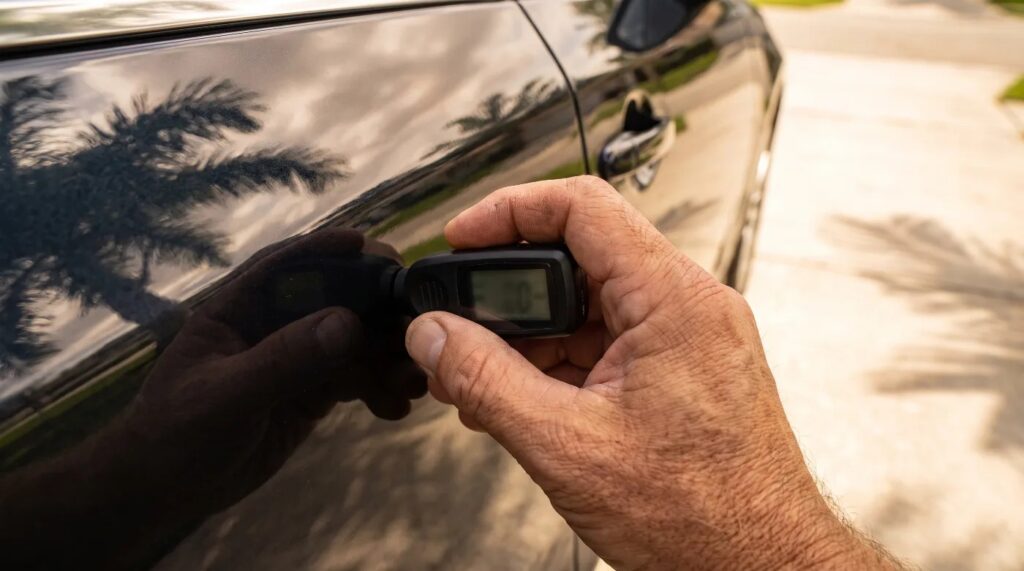
- Look for refinished panels. A paint thickness gauge shows which panels were repainted. Factory paint commonly measures in the 4 to 7 mil range, and refinished panels often read noticeably higher.
- Check what sits behind the damage. A light rear impact can still bend a bumper reinforcement or a trunk floor.
Most of the time, a minor entry with clean paperwork is a modest concern. It becomes a bigger one when the seller cannot explain it.
Buying a Car With Frame Damage: Red Flags to Take Seriously
Buying a car with frame damage is risky because the frame holds the suspension in place and manages crash energy. Most modern passenger cars use a unibody design, so “frame damage” usually means damage to the rails, aprons, pillars, or floor pan. Warning signs include uneven panel gaps, clamp marks, and an alignment that will not hold.
That unibody point changes how you should inspect. There is no separate ladder frame to look at on most sedans and crossovers. Instead, the structure is the body itself.
Red flags worth taking seriously:
- Clamp or pull marks on the pinch welds under the rocker panels
- Wrinkled, kinked, or heat-marked frame rails under the hood or trunk
- Welds or seam sealer that do not match the factory pattern
- Doors, hood, or trunk with uneven gaps or that close poorly
- Uneven tire wear or a car that pulls after a fresh alignment
Still, a structural repair is not an automatic pass. Repair shops measure the structure before and after a frame pull. Therefore, a printed measurement report showing the car back within factory specifications is strong evidence of a proper fix. If a seller cannot produce one, treat buying a car with frame damage as a pricing and safety unknown.
Buying a Car With Structural Damage vs. Cosmetic Repairs
Structural damage affects parts that carry loads or manage crash energy, such as rails, pillars, and the floor. Cosmetic damage affects outer panels, bumper covers, and paint. Buying a car with structural damage carries more safety and resale risk. Cosmetic repairs mainly affect appearance and a smaller share of value.
The difference shows up clearly when you line the categories up side by side:
| Damage type | What it usually involves | How it often appears on reports | Where to focus the inspection | Typical effect on value |
| Cosmetic | Bumper covers, outer panels, paint, trim | Minor damage or no entry at all | Paint readings, panel fit, color match | Smallest discount |
| Structural, documented | Rails, pillars, aprons, floor sections | Moderate or severe damage, structural damage reported | Measurement report, weld quality, alignment | Larger discount, wider resale gap |
| Branded title | Salvage, rebuilt, or flood history | Title brand on the report and NMVTIS | Rebuild records, state inspection, full structure | Largest discount, limits on loans and coverage |
Modern cars add one more layer. Many bumpers, mirrors, and windshields hold cameras and radar sensors for driver assistance systems. After a repair, those sensors often need calibration to the automaker’s specifications. A repaired car that skipped this step may look perfect yet behave poorly on the road. For that reason, ask whether the invoice lists a calibration line item. To see how this kind of damage plays out in resale numbers, read our guide on how structural damage affects a car’s value.
How Accident History Should Shape the Price You Pay
Accident history should lower the price by at least the amount the market will deduct when you sell. Carfax, for example, offers a History-Based Value that adjusts for reported events. Even so, the right discount depends on where the damage was, how well it was fixed, the vehicle’s age, and how much of its value depends on a clean record.
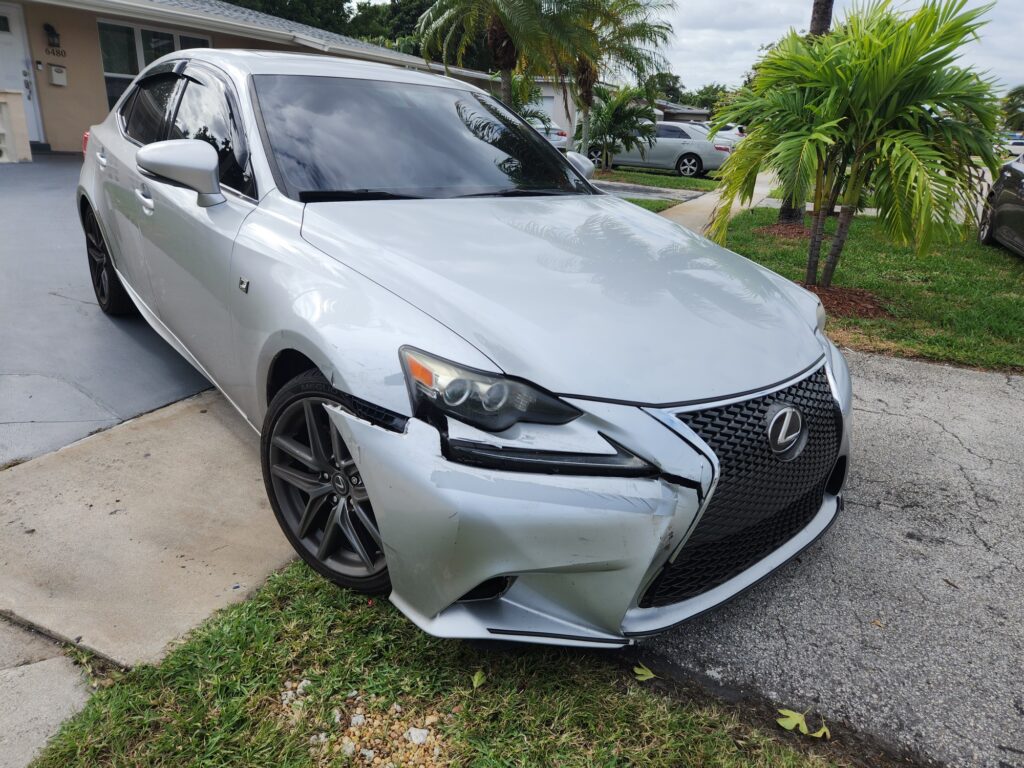
When buying a car that has been in an accident, think in two numbers. First, there is what you pay today. Second, there is what the next buyer will pay you. The deal only works when the first discount is at least as large as the second.
A few patterns tend to hold:
- Newer and higher-value cars take bigger hits. Buyers of late-model luxury vehicles care more about a clean record.
- Older, high-mileage cars take smaller hits. History matters less once a car’s value rests mostly on condition.
- Branded titles change the math entirely. Many lenders limit loans on rebuilt titles, and some insurers limit coverage.
There is also a quiet trap at dealerships. A retail price for an accident car may sit only slightly below a clean one. Yet when you trade that same car in later, the dealer’s appraiser will deduct for the history at wholesale. As a result, the buyer can lose twice.
Why an Independent Inspection Matters Before You Sign
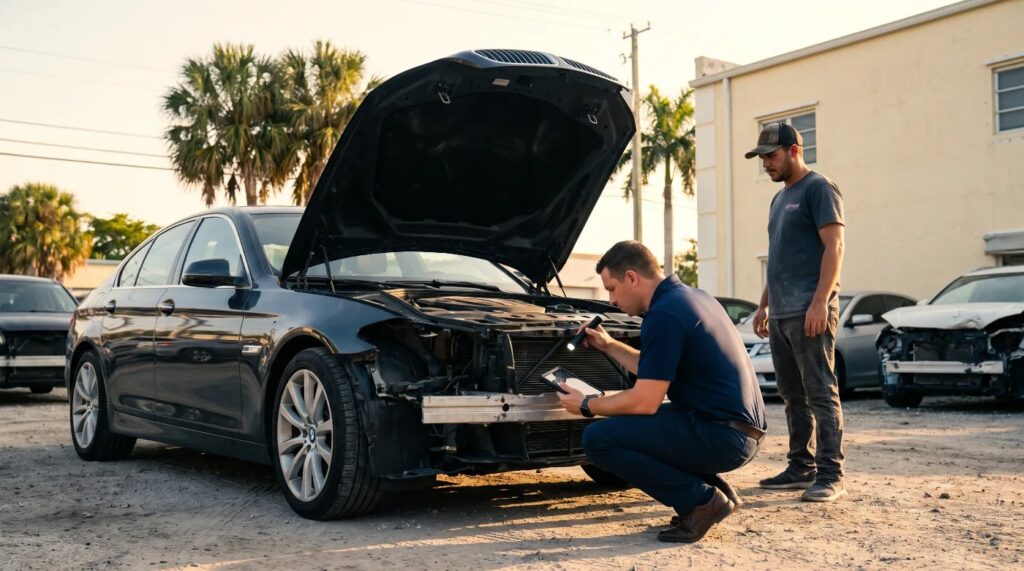
An independent inspection gives you an assessment from someone with no stake in the sale. A dealer’s checklist ultimately answers to the dealer. In contrast, an independent inspector can measure paint, check structural areas, scan for stored fault codes, and compare the repair against what the automaker requires.
If you are buying a car that has been in an accident, a thorough review usually follows this order:
- Pull the reports. Run a history report and an NMVTIS title check using the VIN.
- Request the paperwork. Ask for the repair invoice, any measurement printouts, and before and after photos.
- Inspect the body in daylight. Check panel gaps, paint readings, and color match on every panel.
- Look underneath. Examine the rails, pinch welds, and floor for pull marks or non-factory welds.
- Scan the electronics. Read stored fault codes and confirm that safety sensors were calibrated.
- Drive it. Listen for wind noise or rattles, and watch for pulling or uneven braking.
Above all, get the findings in writing. A written report gives you leverage to negotiate, or a clear reason to walk away. A qualified independent inspector can cover these steps before any money changes hands.
Trading In a Car With Accident History? How Auto Praise Helps
Now flip the situation around. Say you already own a car with an accident in its history, and you are about to trade it in. The dealer will run the same history report and knock money off your offer because of it, even when the repair was done right. That drop is a diminished value, and at the trade-in table it comes straight out of your pocket.
If the accident was not your fault, you may be able to recover that loss through a diminished value claim against the at-fault driver’s insurance company. Auto Praise prepares independent, USPAP-compliant diminished value appraisals that document how much value the accident history took from your car, using real market data instead of an insurance company formula.
Daryl Zelinski leads that work. He is a Florida Licensed All Lines Adjuster, an I-CAR Platinum Auto Physical Damage Appraiser, an American Society of Certified Auto Appraisers (ASCAA) Certified Auto Appraiser, a Bureau of Certified Automobile Appraisers (BCAA) Certified Appraiser, an IACP Certified Auto Appraiser, and an ASE Master Technician with more than 30 years of experience. One honest note: an appraisal documents the loss, but it does not guarantee what an insurer will pay, and it is not legal advice.
In the end, buying a car that has been in an accident works best when the structure is sound, the repair is documented, and the price accounts for future resale. And if you are the one trading in a car with a not-at-fault accident on its record, a diminished value appraisal shows what that history is costing you before you sign the paperwork.
Find Out What Your Older Vehicle Is Worth
Age alone doesn’t rule out a loss of value claim. Auto Praise can establish your vehicle’s actual pre-accident value with comparable sales specific to its make, model, and condition, so you know whether a claim is worth pursuing before you file.
Frequently Asked Questions
Is it a bad idea to buy a car that has been in an accident?
Not always. Buying a car that has been in an accident can make sense when the damage was cosmetic, the repair is documented, and the price is discounted enough to cover future resale loss. It becomes a bad idea when structural damage has no repair records or the seller refuses an independent inspection.
How much less should you pay for a car that has been in an accident?
There is no fixed percentage. The discount should at least match what the market will deduct when you sell. That amount depends on damage severity, repair quality, the vehicle’s age, and its value. Newer and luxury vehicles usually need a larger discount than older, high-mileage cars with the same history.
What is considered a minor accident on Carfax?
This entry generally reflects a reporting source’s estimate of limited damage, often cosmetic. The label comes from reported data such as police or insurance records, not from an inspection. Because of that, a minor entry can still involve hidden parts, so verify it with the repair invoice and an inspection.
Does an accident lower a car’s value even after it is repaired?
Yes, in most cases. Many buyers will pay less for a car with reported accident history, even when the repair was done well. That loss is called diminished value. It tends to be largest on newer, higher-value vehicles and smaller on older cars whose value already reflects age and mileage.
What paperwork should I ask for before buying a repaired car?
Ask for the final repair invoice with itemized parts and labor. If the car had structural work, request the before and after measurement printouts. Also ask for any calibration records for cameras and radar sensors, plus photos of the damage. Missing paperwork does not prove a bad repair, but it shifts more risk to you.
Should I still get an inspection if the Carfax report is clean?
Yes. A clean report only means no accident reached the sources that feed it. Accidents paid in cash or repaired at shops that do not report may never appear. An independent inspection with a paint thickness gauge and an underbody check can reveal repairs that a history report missed entirely.
Does a rebuilt title in Florida mean the car was in a major accident?
Not necessarily. In Florida, a rebuilt title means the vehicle was previously declared salvage, repaired, and then passed a state rebuilt inspection. Salvage status can come from a collision, but also from flood or theft recovery. Either way, a rebuilt title affects financing, insurance, and resale, so ask for the full rebuild records.