
 Call us now:

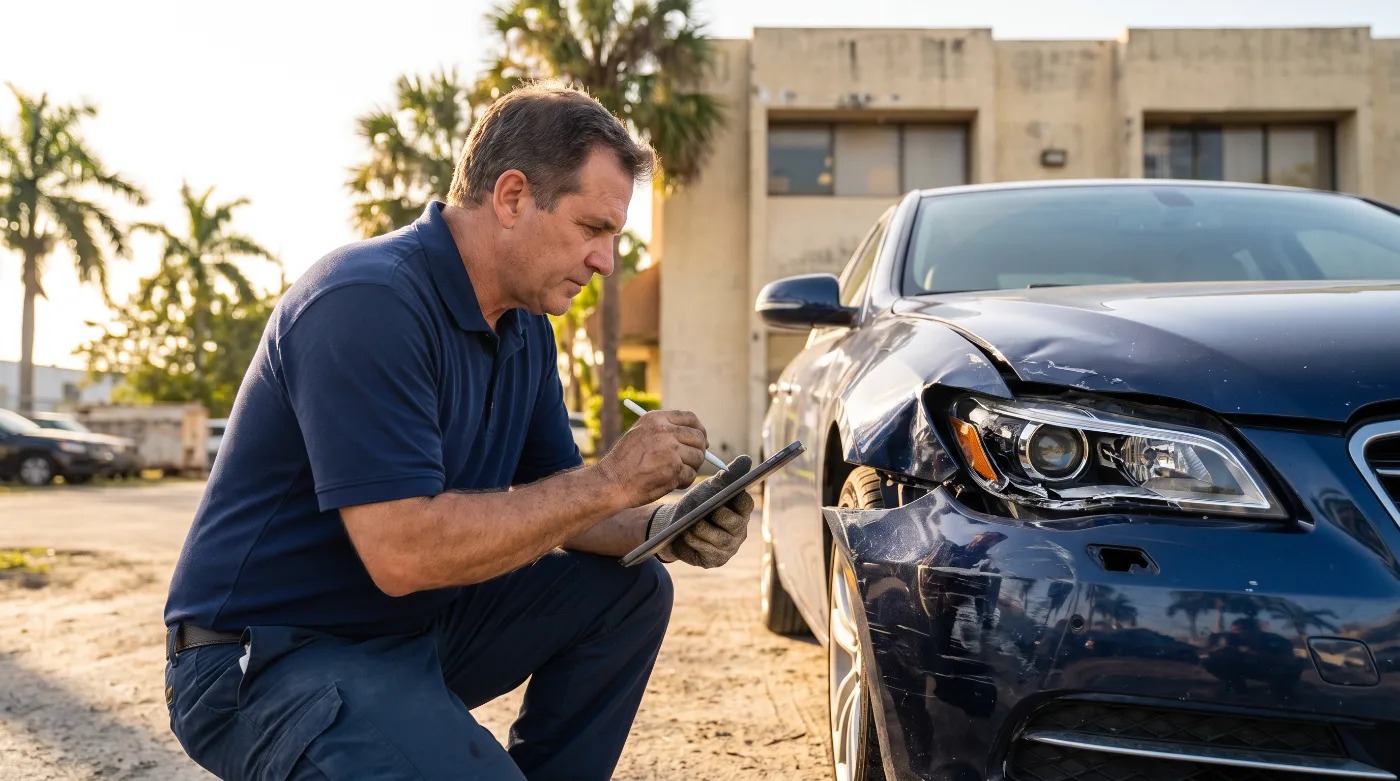
What happens if you crash a leased car comes down to one fact: you drive the car, but the leasing company owns it. You still report the crash, pay your deductible, and keep making monthly payments. Meanwhile, the leasing company has a say in how the car gets repaired, and it collects the insurance check if the car is totaled. That split between driver and owner shapes almost every decision after a leased car accident in Florida. After decades on the adjuster side of these claims, I can tell you the lease contract often matters as much as the insurance policy. This guide covers the first steps, repair rules, and lease-end inspections. It also explains not-at-fault claims, what happens if a leased car is totaled, and who is owed the value a car loses.
TL;DR: A crash does not end your lease. Report it to the police, your insurer, and the leasing company, then repair the car to the lease’s standards. If the car is totaled, the insurer pays the leasing company, and any shortfall falls on you unless gap coverage applies.
What Happens If You Crash a Leased Car? The Short Answer
When you crash a leased car, the lease stays in force. You report the accident, file the claim, and pay your deductible just as you would with a car you own. The difference is ownership. Because the leasing company holds the title, it sets repair standards and receives any total loss payout.
Here is what happens if you crash a leased car in the most common situations:
- If the car can be repaired: the shop fixes it, your payments continue, and the lease runs to the end of its term.
- If the car is totaled: the insurer pays the car’s actual cash value to the leasing company, and the lease ends early.
- In both cases: your lease contract controls details such as reporting rules, approved shops, and required parts.
Insurance is part of the picture from day one. Florida requires every registered vehicle to carry at least $10,000 in personal injury protection (PIP) and $10,000 in property damage liability. That minimum comes from the Florida Department of Highway Safety and Motor Vehicles. Leases almost always ask for more. In practice, many lease contracts require liability limits near $100,000 per person, $300,000 per accident, and $50,000 for property damage, plus collision and comprehensive coverage.
Who Owns the Car, and Why That Changes the Claim
The leasing company holds the title to a leased car, while the lessee holds the right to use it. For that reason, the leasing company is usually listed on your policy as the loss payee and an additional insured. Any payment for the car itself, especially a total loss check, goes to the owner first.
A few terms explain most of what follows:
- Lessor: the leasing company or the automaker’s finance arm. It owns the car.
- Lessee: you. You make the payments, carry the insurance, and return the car in good condition.
- Loss payee: the party the insurer pays for damage to the car.
- Residual value: the car’s projected value at lease end, set in your contract. Your buyout price is based on it.
Ownership is the key to what happens if you crash a leased car. It also explains most of the surprises lessees run into. For example, an owner can sometimes keep a totaled car through a salvage buyback. A lessee usually cannot, because the car was never theirs to keep. Likewise, a claim for the car’s lost market value generally belongs to the owner, not the driver.
First Steps to Take After a Leased Car Accident
After a crash in a leased car, the first steps match any other crash. Check for injuries, call the police, and document the scene. Then add one step that owners never need. Notify the leasing company, because most lease contracts require prompt notice of any accident or damage.
Work through this list in order:
- Get to safety and get medical care. Florida PIP pays toward your own injury costs up to your policy limit, no matter who caused the crash.
- Call the police. Ask for the report number before you leave the scene.
- Photograph everything. Capture the damage, the other vehicle, license plates, road conditions, and your VIN.
- Exchange information. Get the other driver’s name, insurer, and policy number.
- Notify your insurer. Open the claim and write down the claim number and adjuster’s name.
- Notify the leasing company. Find the accident or “loss and damage” section of your lease, and ask in writing what the lessor needs from you.
- Keep one file. Save estimates, invoices, photos, and every email in a single place.
Before you approve any repair, read that loss and damage section closely. In many ways, it decides what happens if you crash a leased car. It usually spells out notice rules, approved shops, and what happens if the car is a total loss.
Repairs, Approved Shops, and the Lease-End Inspection
Leased cars usually must be repaired to the manufacturer’s standards, and some leases require approved or certified repair shops. The real test comes at lease end. An inspector checks for poor repairs, mismatched paint, and non-factory parts, and the lessee pays for damage beyond normal wear and use.
That timing creates a trap. Your insurer’s estimate may call for aftermarket or recycled parts to control cost. Your lease, on the other hand, may expect factory parts. If the two do not match, the difference can come back to you as a turn-in charge, often long after the claim has closed.
So ask the shop a few direct questions before work starts:
- Will the repair follow the automaker’s published repair procedures?
- Which parts are factory (OEM), and which are aftermarket or used?
- Will cameras and radar sensors be recalibrated after the repair?
- Does the shop put its warranty in writing?
Finally, keep the final invoice. Many lessors use third-party inspectors, and some measure paint thickness to find refinished panels. A detailed invoice from a reputable shop shows that a repaint was a proper repair, not hidden damage.
Leased Car Accident Not My Fault: Who Pays and Who Gets Paid
When a leased car accident is not your fault, the at-fault driver’s property damage liability coverage pays to repair the leased car. You can claim with their insurer directly, or use your own collision coverage and let your insurer recover the cost. Either way, your own Florida PIP still handles your injury costs first.
Who actually gets paid depends on the item:
- Repairs: payment goes to the shop, or to you and the leasing company jointly.
- Your deductible: if you used your own collision coverage, your insurer may recover it from the other side and refund you.
- Rental or loss of use: the at-fault insurer may cover a rental while the car is in the shop.
However, Florida’s minimum property damage liability is only $10,000. Many late-model leased vehicles cost more than that to repair after a moderate crash. When the at-fault driver carries only the minimum, your own collision coverage often has to fill the gap. That is one reason lessors require you to carry it.
Fault also does not change the lease’s rules about what happens if you crash a leased car. The car still needs repairs that meet the lease standard. It also now carries an accident history, which raises the question of lost value.
What Happens If a Leased Car Is Totaled
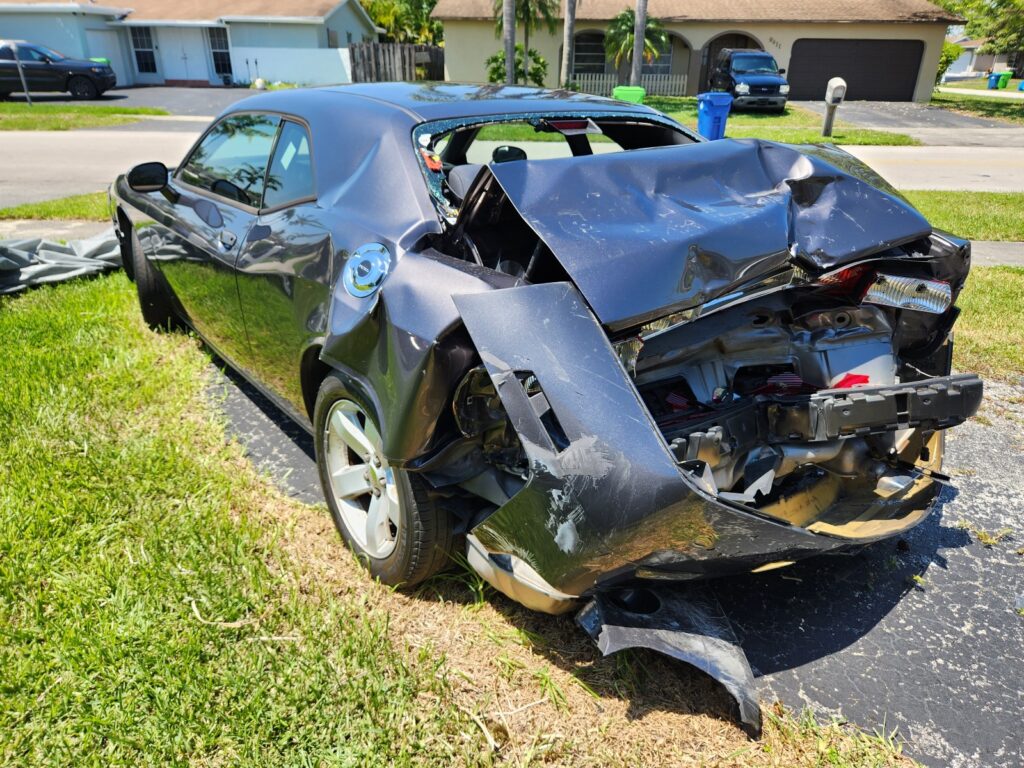
When a leased car is totaled, the insurer pays the vehicle’s actual cash value to the leasing company, and the lease ends. If that payment is less than the lease payoff, you owe the difference unless gap coverage or a gap waiver applies. In Florida, a car is generally treated as a total loss when repairs reach 80% of its value.
Consider a simple example. Your lease payoff is $32,000. The insurer values the car at $28,500 and subtracts your $1,000 deductible. As a result, the leasing company receives $27,500, and $4,500 remains unpaid. So what happens if a leased car is totaled and you have no gap protection? That balance is yours.
Many leases include a gap waiver. Still, gap protection rarely covers everything. Common exclusions include:
- Your collision deductible
- Past-due lease payments and late fees
- Excess mileage and wear and use charges
- Amounts above a coverage cap, which some payoff products set as a percentage of the car’s value
This is why the actual cash value still matters to a lessee, even with gap coverage. A higher valuation shrinks the part gap may not cover. Furthermore, if the valuation exceeds the payoff, the surplus may go to you. Because the collision coverage is on your policy, you can usually question the insurer’s number. Our breakdown of the Florida total loss process explains how that valuation works. For a real comparison against an insurer’s figure, see our Ford F-150 total loss case study.
Get a Total Loss Appraisal Review
If you believe your insurer’s total loss offer may not accurately reflect your vehicle’s value, Auto Praise can provide an independent review and valuation consultation before you accept a settlement.
Does a Leased Car Lose Value After an Accident, and Who Is Owed That Loss?
Yes. A leased car with accident history is usually worth less than the same car with a clean record, even after a quality repair. That loss is called diminished value. Because the leasing company owns the car, the right to recover that lost value generally sits with the owner, not the lessee.
Who absorbs the loss in practice depends on how your lease ends:
| How the lease ends | What you pay | Who absorbs the lost value | What to check first |
| Return at lease end | Turn-in charges for poor repairs or excess wear | Usually the leasing company | Your lease’s wear and use guide |
| Buy out the car | The residual price set before the crash | You, since the price does not drop | Market value versus the buyout price |
| Trade in early | The full payoff, regardless of the trade offer | You, through a lower trade-in value | Dealer offer versus payoff amount |
The buyout row surprises many lessees. The residual price was fixed on the day you signed. After a crash, the car is worth less, yet the buyout price stays the same. In effect, you would pay a clean-history price for a car with a history. Some lease contracts also shift part of the value loss back to the lessee, so check yours.
For this reason, Auto Praise does not take diminished value claims on leased vehicles. The lessee does not hold title, so the claim is not theirs to bring. If you finance or own your vehicle instead, our guide on how to file a diminished value claim walks through that process.
How an Independent Appraisal Helps Lessees and Leasing Companies
An independent appraisal gives both parties to a lease a value that does not come from the insurer paying the claim. For lessees, it can test a total loss offer or inform a buyout decision. For leasing companies, it can document the market value lost on a vehicle they own.
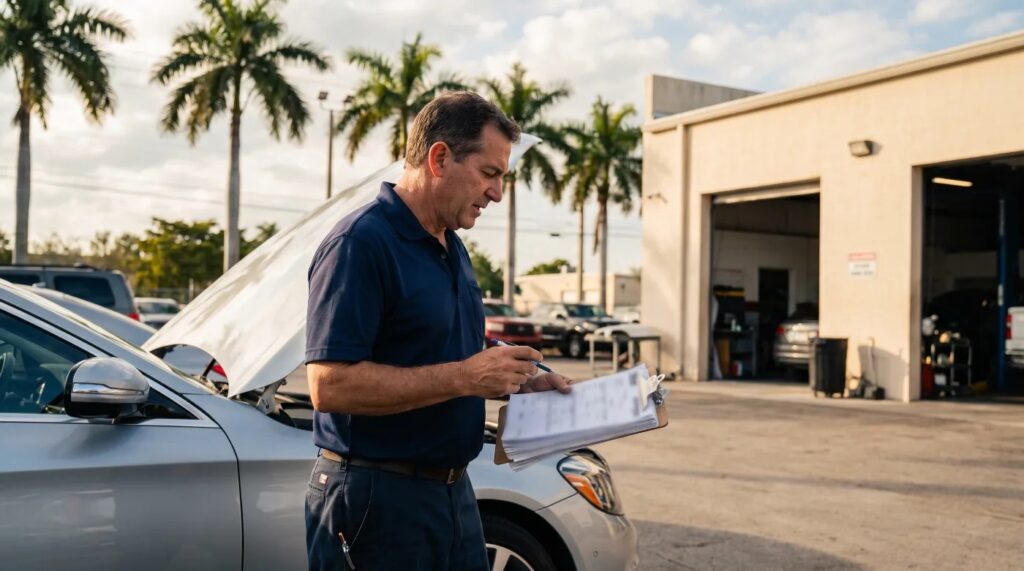
At Auto Praise, Daryl Zelinski leads that work. He is a Florida Licensed All Lines Adjuster, an I-CAR Platinum Auto Physical Damage Appraiser, an American Society of Certified Auto Appraisers (ASCAA) Certified Auto Appraiser, a Bureau of Certified Automobile Appraisers (BCAA) Certified Appraiser, an IACP Certified Auto Appraiser, and an ASE Master Technician with more than 30 years of experience. Reports follow the Uniform Standards of Professional Appraisal Practice (USPAP), so the method and data are documented for review.
For anyone sorting out what happens if you crash a leased car, an independent number helps most in three places:
- Total loss disputes: a valuation built from verified comparable sales, not only the insurer’s internal tools.
- Buyout decisions: a clear read on what the car is worth now compared with your contract price.
- Leasing companies: a diminished value appraisal that documents the owner’s loss with market evidence.
An appraisal has limits. It cannot change your lease terms, and it is not legal advice. If a dispute turns on what your contract says, an attorney is the right resource.
In the end, what happens if you crash a leased car depends on the damage, the lease, and the numbers behind the claim. Report early, repair to the lease standard, and check any total loss value before you accept it. Our overview of the Florida total loss process is a good next read.
Frequently Asked Questions
Do I have to tell my leasing company about an accident?
Yes, in nearly every case. Most lease contracts require you to notify the leasing company of any accident or damage, often within a set period. The leasing company owns the car and is usually the loss payee on your policy, so it needs to know. Check the loss and damage section of your lease for the exact rules.
Can you return a leased car after an accident?
Not as a way out of the lease. A repairable car must be fixed to the lease’s standards, and payments continue until the term ends. You can return it at lease end once it is repaired, but the inspector may charge you for poor repairs, mismatched paint, or non-factory parts.
Does a leased car accident raise my monthly lease payment?
No. Your monthly payment is fixed by the lease contract, and an accident does not change it. However, your insurance premium may rise after an at-fault claim. You may also face a deductible, turn-in charges for weak repairs, or a gap shortfall if the car is totaled.
Does gap insurance cover everything if a leased car is totaled?
Usually not. Gap coverage or a lease gap waiver typically pays the difference between the insurer’s payout and the lease balance. It often excludes your deductible, past-due payments, late fees, excess mileage, and wear charges. Some lease payoff products also cap the benefit at a percentage of the car’s value.
Can I file a diminished value claim on a leased car in Florida?
Generally, the lessee cannot. Diminished value is a loss to the vehicle’s owner, and on a lease the leasing company holds title. For that reason, Auto Praise does not accept diminished value claims on leased vehicles. If the lease terms raise questions about who owns that claim, an attorney can review your contract.
Will a repaired accident affect my lease-end inspection?
It can. Lease-end inspectors look for refinished panels, uneven gaps, and aftermarket parts, and some use paint thickness gauges. A professional repair with a detailed invoice usually passes without trouble. A low-cost repair that skipped factory procedures or parts may lead to turn-in charges months after the claim closed.
Should I buy out a leased car after an accident?
It depends on the numbers. Your buyout price was set before the crash and does not drop afterward, while the car’s market value usually does. Compare the buyout price with what the car is worth today with its history. An independent appraisal can give you that figure before you decide.