
 Call us now:

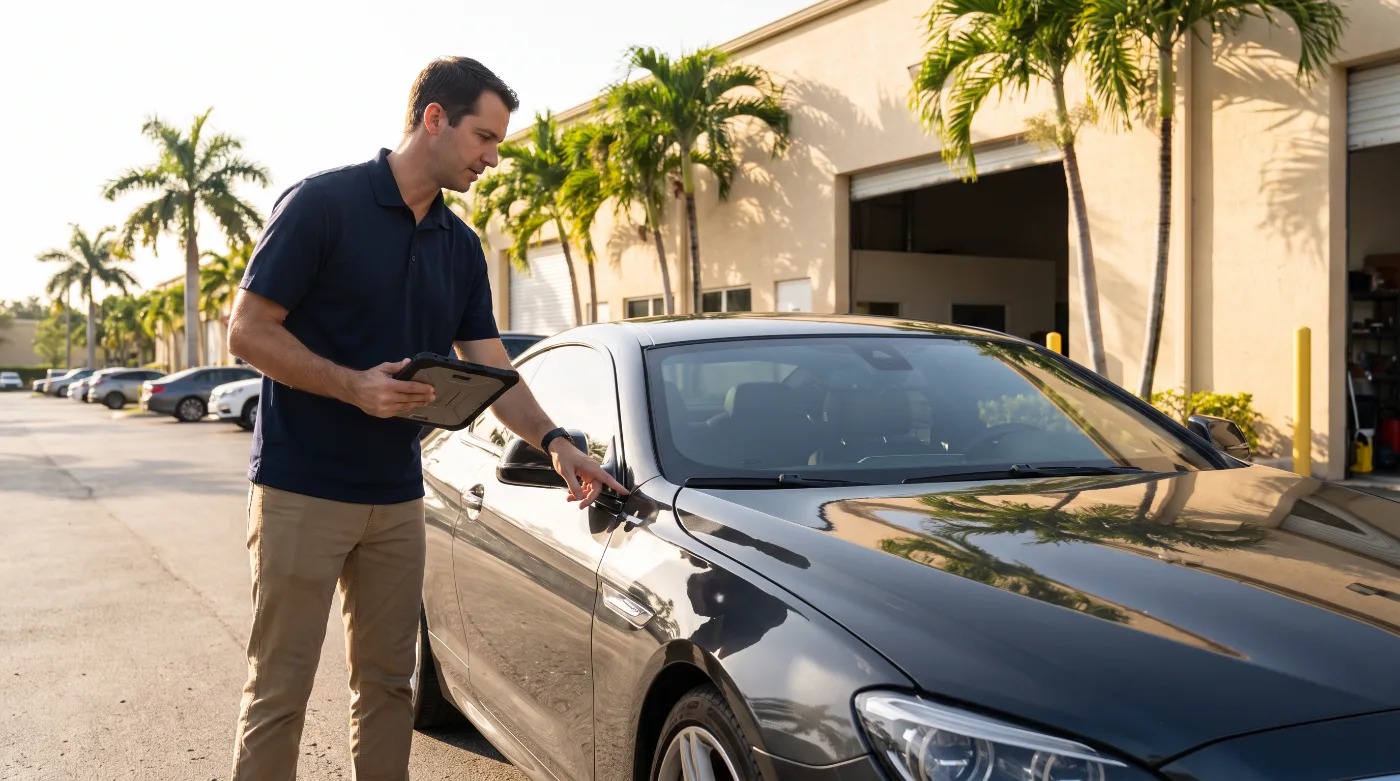
Rebuilt title car value is usually well below the value of the same car with a clean title, often by a fifth to two-fifths, and sometimes more. The size of that gap depends on why the car was totaled, how well it was repaired, and how much paperwork proves it. A rebuilt brand tells buyers the car was once a total loss. It does not tell them whether the repair was good. I have valued damaged and repaired vehicles for years. In that time, I have seen two rebuilt cars of the same model land thousands of dollars apart. This guide explains how a car earns a rebuilt title, how Florida handles it, and what moves the number up or down.
TL;DR: A rebuilt title usually lowers a car’s value well below a clean-title twin, but no single percentage fits every car. Damage type, repair quality, and documentation drive the real number. Before you buy, sell, or keep one, get a value built from comparable rebuilt-title sales, not a guide book.
What a Rebuilt Title Means and How a Car Gets One
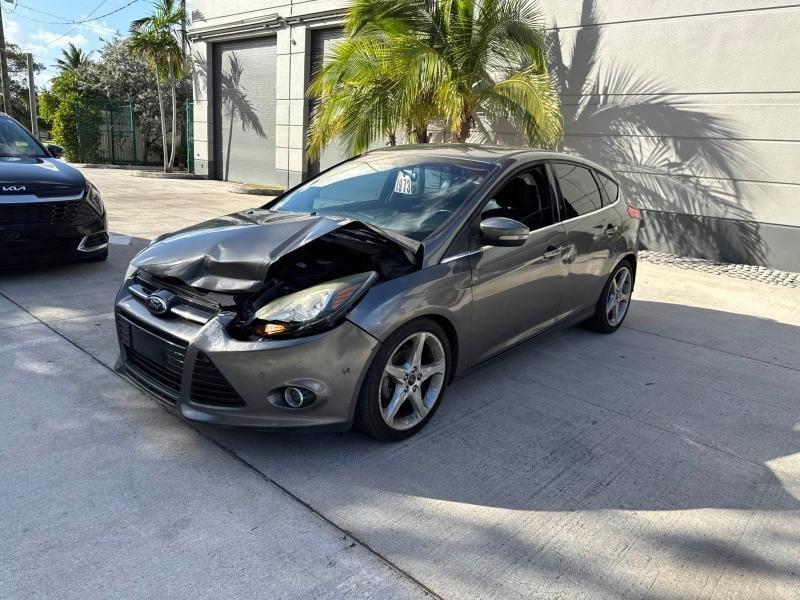
A rebuilt title is a brand for a vehicle that was once declared a total loss and given a salvage title. The car was then repaired and passed a state inspection. The brand stays with the vehicle permanently. In other words, it records the car’s past even after it is legal to drive again.
The path usually runs in four steps:
- The insurer declares a total loss. In Florida, that generally happens when repair costs reach 80% of the car’s value.
- The state issues a salvage title. The car cannot be registered or driven on public roads in that status.
- Someone repairs the car. That might be the original owner, a rebuilder, or a dealer who bought it at auction.
- The car passes a state rebuilt inspection. After that, the title is branded “rebuilt,” and the car can be registered again.
Not every total loss comes from a crash. Flood, fire, theft recovery, and hail can all lead to a salvage title. For that reason, the cause of the original loss matters a great deal when you judge rebuilt title car value.
Salvage Title vs Rebuilt Title: The Key Differences
The difference in salvage title vs rebuilt title comes down to road status. A salvage title means the car is a declared total loss and cannot legally be driven. A rebuilt title means the car was repaired and passed a state inspection, so it can be registered, insured, and driven again.
Here is how the two compare side by side:
| Factor | Salvage title | Rebuilt title |
| Can it be registered and driven? | No | Yes |
| Typical buyer | Rebuilders, parts buyers, auctions | Consumers looking for a lower price |
| Repairs completed | Not yet, or not inspected | Yes, and inspected by the state |
| Insurance options | Very limited | Liability is common; full coverage varies by insurer |
| Value compared with a clean title | Lowest, often based on parts and repair cost | Higher than salvage, but still discounted |
Florida also has a third outcome. Some vehicles receive a certificate of destruction instead of a salvage title. Those vehicles can only be used for parts or scrap, so they can never become rebuilt.
Understanding salvage title vs rebuilt title helps you read a listing correctly. A “rebuildable salvage” car is a project, not a finished vehicle, and it should be priced that way.
Rebuilt Title Florida Requirements and the State Inspection
To get a rebuilt title in Florida, a salvage vehicle must be repaired and pass a state rebuilt inspection. The Florida Department of Highway Safety and Motor Vehicles oversees that process. The owner submits an application, the salvage title, and records showing where the replacement parts came from.
In practice, a rebuilt title Florida inspection usually asks for:
- The salvage certificate of title
- A completed application for rebuilt inspection
- Receipts or invoices for major replacement parts, showing the seller and the source vehicle’s VIN where required
- Photos of the vehicle before repairs
- Payment of the state inspection fee
Here is the part most buyers miss. The state inspection mainly confirms the car’s identity and the source of its parts. Its main job is to keep stolen parts out of rebuilt cars. It is not a guarantee that the structure was straightened correctly or that airbags and sensors work as designed.
As a result, “passed state inspection” and “repaired to factory standards” are two different claims. Rebuilt title car value depends far more on the second one.
How Much Does a Rebuilt Title Devalue a Car?
How much does a rebuilt title devalue a car? An industry range of 20% to 40% below a comparable clean-title vehicle is widely cited, and some rebuilt cars sell for half of clean value or less. The real discount depends on the car’s age, price point, type of past damage, and repair records.
Percentage rules are a starting point, not an answer. For example, consider two rebuilt cars:
- A 10-year-old commuter sedan with a documented rear bumper and quarter panel repair. Its clean value is already low, so the rebuilt discount in dollars is modest.
- A 3-year-old luxury SUV rebuilt after a flood. Buyers fear hidden electrical and corrosion problems. As a result, its discount can be far deeper than any average suggests.
Popular pricing guides add another wrinkle. Most online guide values assume a clean title. So when a seller quotes a guide book number for a rebuilt car, the starting point is already wrong.
The most reliable way to answer how much a rebuilt title devalues a car is to look at what similar rebuilt cars actually sold for. That data is thinner than clean-title data, which is why an appraiser’s judgment matters.
What Pushes Rebuilt Title Car Value Up or Down
Rebuilt title car value rises with clear documentation, cosmetic-only past damage, and quality repairs. It falls with flood or fire history, structural or airbag damage, and missing records. Mileage, condition, and local demand still matter too, just as they do with any used car.
Factors that tend to support value:
- Before-repair photos and an itemized repair invoice
- Factory (OEM) parts and repairs that followed the automaker’s procedures
- A structural measurement printout, if the frame or unibody was repaired
- Proof that airbags, cameras, and radar sensors were replaced or recalibrated
- A clear cause of loss that buyers understand, such as theft recovery with light damage
Factors that tend to pull value down:
- Flood or fire history, which buyers associate with hidden problems
- Structural damage without measurement records
- Airbag deployment without documented replacement
- Mismatched paint, uneven panel gaps, or warning lights on the dash
- No records at all, which forces buyers to assume the worst
In my experience, documentation is the single biggest lever an owner controls. Two cars with the same history can differ widely in value simply because one owner kept the paperwork.
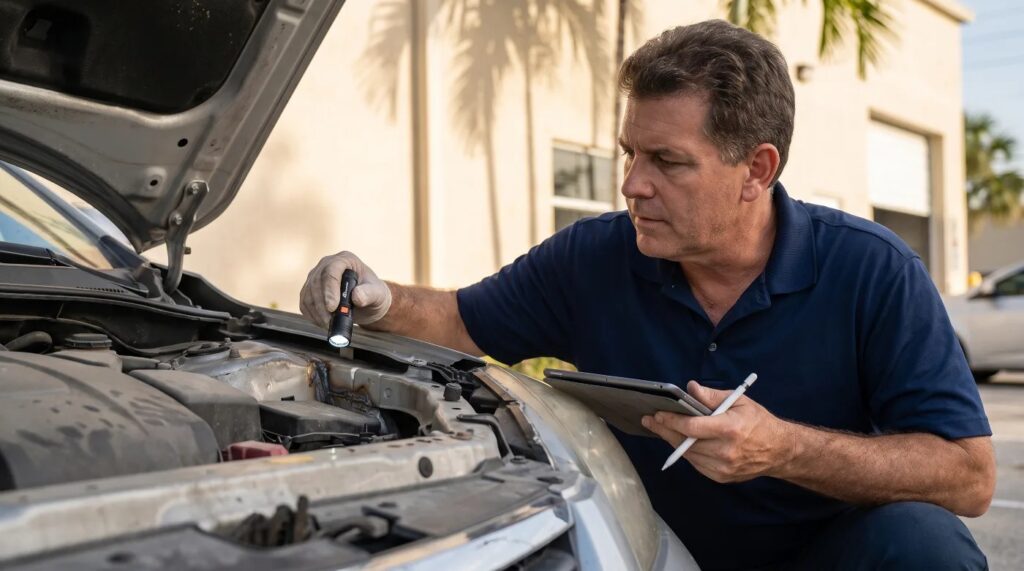
Insurance, Financing, and Resale Hurdles to Expect
A rebuilt title affects more than the sale price. Some insurers limit coverage to liability, many lenders decline rebuilt-title loans or charge more, and future buyers will see the brand on every history report. Each of these hurdles narrows the pool of buyers, which lowers market value.
Here is what owners and buyers commonly run into:
- Insurance: Many insurers will write liability coverage, but some limit or decline collision and comprehensive. Others ask for an inspection or photos first.
- Total loss payouts: If a rebuilt car is totaled again, the insurer values it as a rebuilt car. That means a lower actual cash value than a clean-title twin.
- Financing: Many banks and credit unions will not lend on rebuilt titles, so buyers often need cash or a specialty lender.
- Resale: The brand is permanent. Title brands are reported to the federal National Motor Vehicle Title Information System (NMVTIS), so moving the car to another state does not erase its history.
These hurdles are also why buyers expect a discount. Much of the gap reflects the stigma buyers attach to accident history, not just the physical condition of the car.
How to Get an Accurate Value Before You Buy, Sell, or Keep
An accurate rebuilt title car value comes from comparable sales of similar rebuilt vehicles, adjusted for condition, damage history, and repair records. A professional appraisal inspects the car in person, reviews the repair file, and documents how the number was reached. That written record is useful in a negotiation, an insurance discussion, or a dispute.
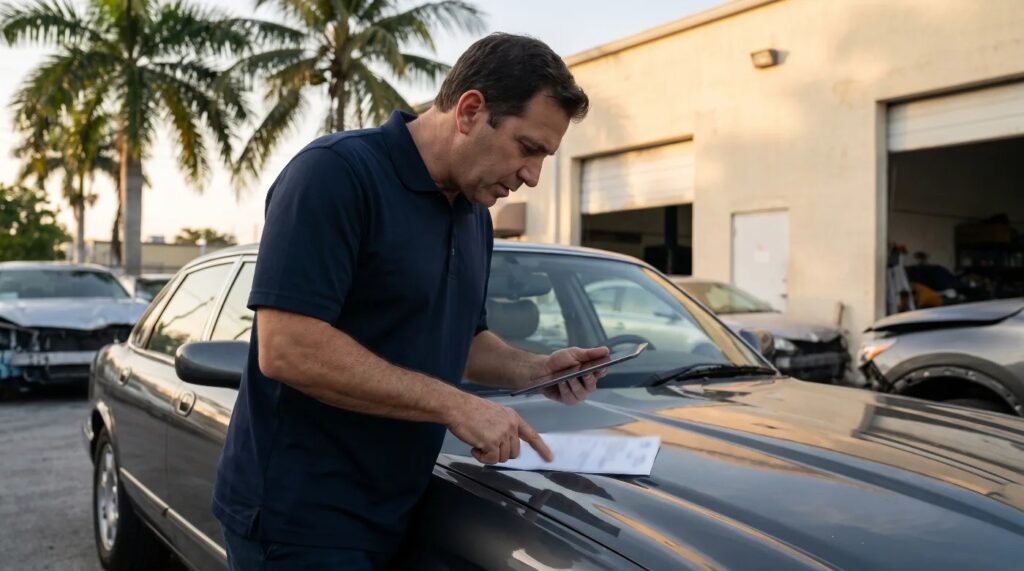
What you need depends on your situation:
- Buying: an inspection that looks past the state rebuilt inspection. A thorough independent inspection checks the structure, paint, and electronics before you pay.
- Selling: a documented value you can show buyers, along with your repair records.
- Keeping a totaled car: a clear view of the salvage deduction and the car’s rebuilt value. Our guide on keeping your car after a total loss in Florida explains how that decision works.
At Auto Praise, Daryl Zelinski handles this kind of valuation. He is a Florida Licensed All Lines Adjuster, an I-CAR Platinum Auto Physical Damage Appraiser, an American Society of Certified Auto Appraisers (ASCAA) Certified Auto Appraiser, a Bureau of Certified Automobile Appraisers (BCAA) Certified Appraiser, an IACP Certified Auto Appraiser, and an ASE Master Technician with more than 30 years of experience. A fair market valuation from Auto Praise follows USPAP standards and explains how each conclusion was reached.
In the end, rebuilt title car value is set by evidence, not by the brand alone. Paperwork, repair quality, and real sales data turn a guess into a defensible number.
Get a Total Loss Appraisal Review
If you believe your insurer’s total loss offer may not accurately reflect your vehicle’s value, Auto Praise can provide an independent review and valuation consultation before you accept a settlement.
Frequently Asked Questions
Is a rebuilt title car worth buying?
It can be, if the price reflects the brand and the repair is documented. A rebuilt car with cosmetic past damage, quality repairs, and full records may be a fair value. However, flood, fire, or undocumented structural damage raises the risk. Always get an independent inspection before you buy one.
Can a rebuilt title ever be changed back to a clean title?
No. A rebuilt brand is permanent and stays with the vehicle through every future sale. Title brands are also reported to the federal NMVTIS database, so registering the car in another state does not remove its history. Any listing that claims to have “cleaned” a rebuilt title deserves serious caution.
Why is rebuilt title car value lower than salvage repair costs suggest?
Because buyers price in risk, not just repair cost. Even a well-repaired rebuilt car faces limited financing, tougher insurance, and a smaller pool of buyers. As a result, the market discount often exceeds the cost of the original repair. That gap is a form of stigma, and it rarely disappears with time.
How much does a rebuilt title devalue a car in Florida?
There is no Florida-specific percentage. A range of 20% to 40% below clean-title value is widely cited, and flood-related rebuilds in Florida often sit at the deeper end. The best measure is recent sales of similar rebuilt vehicles in your region, adjusted for condition and repair records.
Can you get full coverage insurance on a rebuilt title car?
Sometimes. Many insurers offer liability coverage, but collision and comprehensive vary by company. Some insurers ask for photos, an inspection, or repair records first. If a rebuilt car is totaled again, the payout is based on its value as a rebuilt vehicle, which is lower than a clean-title equivalent.
What does the Florida rebuilt inspection actually check?
It mainly verifies the vehicle’s identity and the source of major replacement parts. Inspectors compare VINs, receipts, and photos to help keep stolen parts out of rebuilt cars. The inspection is not a full review of repair quality, so a separate inspection of the structure and safety systems is still worth getting.
Does a rebuilt title affect a diminished value claim?
Usually, yes. A vehicle with a branded title already carries a large value discount, so a later accident may add little measurable loss. Many diminished value claims also depend on the car having no prior major damage. Any question about whether a claim applies to your situation is best reviewed case by case.