
 Call us now:

A 2007 Jaguar XK 2-door Coupe in Aluminum Silver was declared a total loss following a collision. The vehicle was garaged in the Lake Park area of Palm Beach County and carried a documented mileage of 105,754 miles at the time of loss. The carrier’s automated valuation software returned a base vehicle value of $7,178.00 — a figure that failed to reflect what this vehicle was actually selling for in the real market. Auto Praise conducted an independent total loss appraisal and established an Actual Cash Value of $14,817.87. The appraisal clause was invoked, and both appointed appraisers reached a binding appraisal award of $11,900.00 — recovering $4,722 above the carrier’s base vehicle value.
Case Overview
| Field | Detail |
| Vehicle | 2007 Jaguar XK Base Coupe |
| Exterior Color | Aluminum Silver |
| Engine / Drivetrain | 4.2L V8 / Automatic RWD |
| Mileage at Time of Loss | 105,754 |
| Location | Tallahassee, FL area / Palm Beach County |
| Service Type | Independent total loss appraisal / Appraisal clause |
| Insurer’s Base Vehicle Value | $7,178.00 |
| Auto Praise Independent Appraisal Value | $14,817.87 |
| Final Appraisal Award | $11,900.00 |
| Recovery Above Insurer’s Base Offer | $4,722.00 |
Recovery at a Glance
Carrier’s base offer: $7,178
Final appraisal award: $11,900
Recovery above base offer: +$4,722
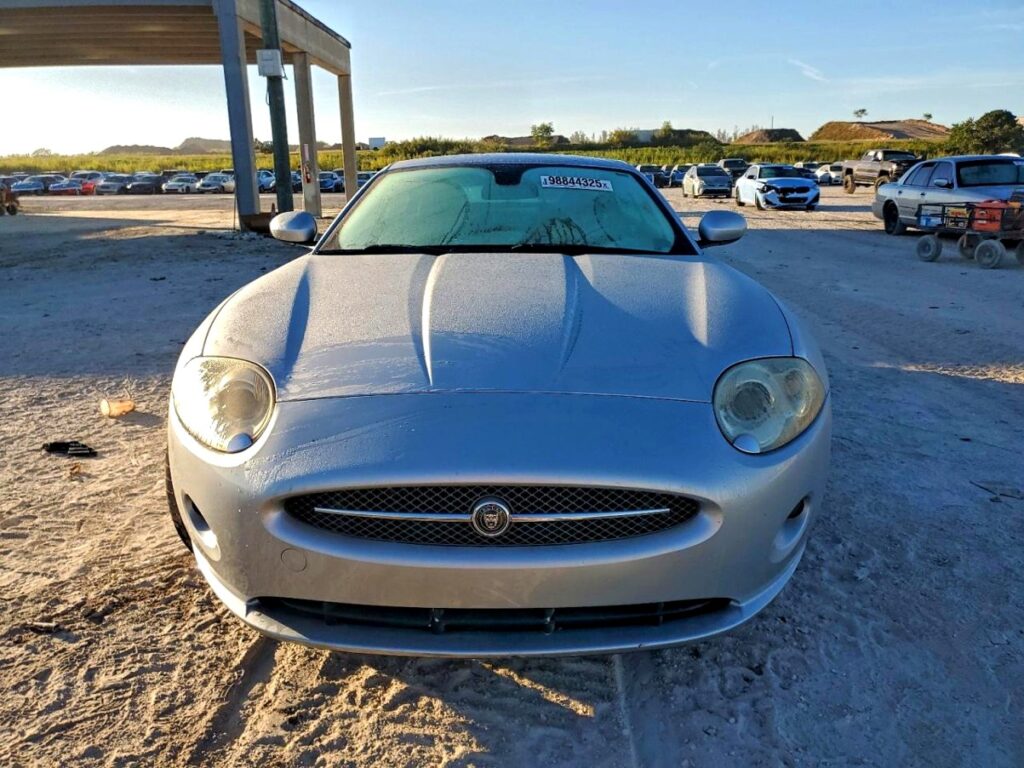
2007 Jaguar XK coupe front view in Tallahassee assessed for total loss appraisal.
Florida Total Loss Appraisal & Claim Support
- Professional Authority: I-CAR Platinum & IACP Certified Appraisers with Florida 6-20 Adjuster Licensing.
- Industry Credentials: Over 30 years of specialized automotive and insurance claims experience.
- Valuation Experts: Independent Actual Cash Value (ACV) reports designed to accurately value your vehicle.
- Proven Reputation: Five-Star Rated Florida independent appraisal firm providing statewide remote and mobile support.
Tallahassee and the North Florida Luxury Vehicle Market
Tallahassee is a distinctly different vehicle market than South Florida, and that distinction matters when a total loss claim involves a European luxury coupe.
The capital city sits at the intersection of a state government and university corridor, with a vehicle ownership profile anchored by Florida State University, Florida A&M University, and the sprawling state agency campuses along Apalachee Parkway and Capital Circle. The Thomasville Road corridor — running north from midtown toward the Georgia border, is home to some of the highest household incomes in the region and a buyer pool that actively seeks well-maintained luxury and performance vehicles. This is not a market where a 4.2L V8 Jaguar coupe in clean condition is a curiosity. It is a sought-after vehicle in a market with limited local comparable inventory.
The Tallahassee MSA extends through Leon County and into surrounding Wakulla, Gadsden, and Jefferson Counties. The primary commercial and retail corridors — Monroe Street, Tennessee Street near FSU's campus, and the Capital Circle NE loop, generate significant traffic and a healthy used vehicle economy. I-10 and US-19 connect the region to both the Panhandle and South Georgia, giving the Tallahassee buyer access to a regional used vehicle market that often extends beyond Leon County lines.
When the pool of locally available comparable vehicles is limited, as it is for a 2007 Jaguar XK coupe in virtually any Florida market, appraisers are required to search a wider radius and apply appropriate market adjustments. That is standard practice. The question is not whether the search went wider, but whether the vehicles selected were genuinely equivalent and whether the adjustments applied were appropriate. In this case, the answer on both counts pointed to a valuation that left significant money on the table. Auto Praise assists Tallahassee vehicle owners and Florida vehicle owners statewide when a total loss offer does not reflect the real market for the subject vehicle.
The Insurer's Valuation — What the Automated Report Showed
The carrier's automated market valuation report established a base vehicle value of $7,178.00 for the subject 2007 Jaguar XK. After a condition adjustment of $96.00, the adjusted vehicle value came to $7,082.00.
The report used only two comparable vehicles to arrive at that figure:
| Comp 1 | Comp 2 | |
| Year / Model | 2007 Jaguar XK 8 4.2L | 2008 Jaguar XK 8 4.2L |
| Mileage | 128,270 | 67,927 |
| List Price | $6,990 | $9,900 |
| Location | Montgomery, AL (537 miles away) | New Port Richey, FL (190 miles away) |
| Adjusted Comparable Value | $6,579 | $7,895 |
Several issues with this comparable selection warrant examination.
Year mismatch on Comp 2. The second comparable was a 2008 model year vehicle, one year newer than the 2007 loss vehicle. A one-year difference in a vehicle like the Jaguar XK, which underwent updates between the 2007 and 2008 model years, is not a neutral distinction. A negative make/model/trim adjustment of $525 was applied to Comp 2 to account for the year difference. Whether that adjustment fully captured the market premium of the newer model year is a legitimate question.
Two comparables is a thin foundation. A base vehicle value derived from two vehicles — one from Alabama, one from New Port Richey, gives the automated system very little data to work with. For a vehicle like the Jaguar XK, where national inventory is limited and pricing can vary significantly by condition and configuration, two comparables produce a result that is sensitive to the characteristics of each individual unit. One low-priced vehicle in a distant market can meaningfully suppress the final number.
Condition adjustments. The automated report applied a condition adjustment of negative $917 to each comparable to normalize them to Private Owner condition. This adjustment compressed the adjusted comparable values before they were averaged into the base vehicle value. The impact of this single adjustment, applied identically to two very different vehicles, is worth understanding when reviewing what the report actually captures.
The insurer's report noted that the loss vehicle had 37% fewer miles than the average mileage of 167,000 for this model. That is a meaningful positive fact about this vehicle. Yet the base vehicle value produced by the report — $7,178 — was substantially below what the actual market was showing for comparable inventory. When the comparable set is thin and pulled from geographically distant markets, automated software can produce a result that technically follows its own methodology while still missing the real market number.
For a detailed overview of how comparable vehicles factor into total loss valuation, and where automated reports can fall short, see our guide on the topic.
The Auto Praise Independent Appraisal — Our Process
When we reviewed the insurer's report and its comparable selection on this 2007 Jaguar XK, the gap between the automated output and the real market for this vehicle was immediately apparent.
This appraisal was completed as a desk review using documentation, photos, and market data provided for our review. The vehicle's FLHSMV title record, vehicle history data, and available market listings were all cross-referenced in building the independent value conclusion.
Comparable selection. The insurer's report used two comparables. Our independent analysis identified five matching vehicles nationally, vehicles with the same year, make, model, drivetrain, and base trim configuration. One of those five carried a salvage title and was excluded as non-comparable. The remaining four were reviewed. We selected the three with mileage closest to the loss vehicle's 105,754 miles — the most directly relevant comparables available in the national market for this specific vehicle.
| Comp 1 | Comp 2 | Comp 3 | |
| Mileage | 58,499 | 51,866 | 78,349 |
| List Price | $17,000 | $16,890 | $15,991 |
| Engine | 4.2L V8 | 4.2L V8 | 4.2L V8 |
| Transmission | Auto RWD | Auto RWD | Auto RWD |
| Trim | Base | Base | Base |
| Prior Accidents | No | No | Yes |
| Mileage Adjustment | -$2,362.75 | -$2,694.40 | -$1,370.25 |
| History Adjustment | $0 | $0 | -$1,000.00 |
| Final Adjusted Price | $14,637.25 | $14,195.60 | $15,620.75 |
Average of the three adjusted comparables: $14,817.87
The Black Book Clean Retail value for this vehicle as of the date of loss was $12,800.00. The average of the book value and comparable sales data produced our final independent Actual Cash Value conclusion of $14,817.87.
Every comparable selected matched the loss vehicle on the three factors that matter most: model year, engine/drivetrain configuration, and base trim level. Mileage adjustments were applied to account for the difference between each comparable's odometer and the loss vehicle's 105,754 miles. A $1,000 history adjustment was applied to the comparable with a prior accident on record.
The result was a value conclusion of $14,817.87 — nearly double the carrier's base vehicle value of $7,178. This is not an outlier claim. This is what the market was showing for 2007 Jaguar XK coupes in clean condition with comparable mileage.
The Appraisal Clause Process
Under Florida law and most first-party auto insurance policies, a vehicle owner who disagrees with their carrier's total loss valuation has the right to invoke the appraisal clause. This right belongs exclusively to the first-party insured, meaning the vehicle owner must be filing the claim through their own insurance policy. On a third-party claim, where a different driver caused the damage and the vehicle owner is filing against the at-fault driver's carrier, the appraisal clause is not available. Third-party claimants must pursue other means to challenge an unsatisfactory offer.
In this case, the vehicle owner was a first-party insured and retained Auto Praise as their appointed appraiser. The carrier appointed its own appraiser. As required by Florida statute and the applicable policy language, a neutral umpire was also selected at the outset of the process, available to render a binding decision in the event the two appointed appraisers could not reach agreement.
The two appointed appraisers worked through the valuation data and reached a mutual agreement without the matter proceeding to umpire. The result was a binding appraisal award of $11,900.00, signed by both appraisers. That award is the figure the carrier is required to settle the claim for under the policy.
The appraisal clause worked as designed. The process produced a result that was $4,722 higher than the carrier's original base vehicle value, without litigation and without extended delay.
Outcome Summary
Carrier's base vehicle value: $7,178.00
Auto Praise independent appraisal: $14,817.87
Final appraisal award (binding): $11,900.00
Recovery above carrier's base offer: +$4,722.00
The appraisal award of $11,900 represented a 65.8% increase over the carrier's base vehicle value of $7,178. For the vehicle owner, that difference translated directly into a meaningfully larger settlement, the difference between an offer that reflected the floor of the automated valuation range and an award grounded in what comparable vehicles were actually selling for in the real market.
What This Case Illustrates
A thin comparable set produces a thin result. The automated report in this case used two comparable vehicles, one from Alabama, one from New Port Richey, to establish a base vehicle value for a vehicle with limited national inventory. When only two vehicles anchor the average, the characteristics of each individual unit carry outsized influence over the final number. A low-priced outlier in a distant market can pull the result down in ways that do not reflect what the broader market was showing. Our independent analysis found five matching vehicles nationally. Three were used after excluding one with a salvage title. The result was a value nearly double what the automated report produced.
Automated software has no obligation to find the highest value — only to follow its own methodology. The insurer's automated report did what it was designed to do. It searched a database, selected comparables, applied adjustments, and produced a weighted average. The methodology is documented and internally consistent. The issue is not that the process was broken, it is that the specific inputs in this case produced a result that did not reflect the actual market for this specific vehicle. An independent appraisal reviews the inputs, not just the output.
Book value is a reference point, not a ceiling. The Black Book Clean Retail value for this vehicle was $12,800 — a figure that on its own was $5,622 higher than the carrier's base vehicle value. Published guidebook values represent a useful data point, but they are one input in a complete appraisal, not the final answer. When market comparable data and book value are analyzed together, as they were in our independent appraisal, the result reflects the full picture of what the market was actually showing.
Inventory scarcity creates valuation risk. The 2007 Jaguar XK is a low-production-volume vehicle. When Auto Praise searched nationally for comparable inventory, only five matching vehicles were found, and one carried a salvage title, removing it from consideration. Vehicles with thin national inventory are especially vulnerable to undervaluation when an automated system draws from a limited pool. The fewer the comparable vehicles available, the more each individual unit influences the final number. That reality argues strongly for independent review when the subject vehicle is not a high-volume domestic model. If you believe the insurer undervalued your car in a total loss claim, an independent appraisal can identify the specific data behind that gap.
The appraisal clause is a policy right, not an escalation. Vehicle owners sometimes hesitate to invoke the appraisal clause because they assume it means a dispute or a fight. It does not. The appraisal clause is a structured process built into the policy for exactly this situation, when the vehicle owner and the carrier reach different conclusions about value. In this case, the two appraisers worked through the data and reached agreement through a binding total loss settlement without the matter going further. The process worked as designed.
Frequently Asked Questions
How does the appraisal clause work for Florida vehicle owners?
The appraisal clause is a provision in most first-party auto insurance policies that allows the vehicle owner to request an independent appraisal when they disagree with the carrier's total loss valuation. The insured appoints their own appraiser, the carrier appoints theirs, and the two work toward a mutually agreed value. If they cannot agree, a neutral umpire renders a binding decision. Importantly, the appraisal clause is only available to first-party insureds, meaning the vehicle owner must be filing the claim through their own policy. Owners filing against a different driver's carrier on a third-party claim do not have access to the appraisal clause and must pursue other avenues to challenge an unsatisfactory offer. For a full walkthrough of the process, see our guide on invoking the appraisal clause in Florida.
What should I do if my total loss offer seems low in Tallahassee?
The first step is to request a copy of the market valuation report from your carrier. That document will show you exactly which comparable vehicles were used, where they were located, what mileage adjustments were applied, and what condition ratings were assigned. Review the comparables for year equivalency, trim match, and mileage range. If the comparables used do not accurately represent the market for your specific vehicle, or if the number of comparables is limited, that is the basis for an independent review. Auto Praise can evaluate the report and determine whether there is a valid basis to challenge the offer. A free claim review is the appropriate starting point.
Why did the insurer's valuation differ so significantly from the independent appraisal in this case?
The carrier's report used two comparable vehicles to establish a base value of $7,178. One of those comparables was a 2008 model year, one year newer, and required a downward adjustment to account for the year difference. The independent appraisal identified five matching vehicles nationally, used the three with the most comparable mileage, and found that adjusted market values for this vehicle were running in the $14,000–$16,000 range. The difference was not a methodology dispute, it was a data gap. When the comparable pool is thin, individual vehicle characteristics carry outsized influence over the result.
Does it matter that comparable vehicles were sourced from outside Florida?
When local inventory is limited or unavailable, appraisers on both sides will search a wider geographic radius and apply market adjustments to account for regional differences. This is standard and appropriate practice. What matters is whether the vehicles selected were genuinely equivalent, same year, make, model, trim, engine, and drivetrain, and whether the adjustments were reasonable. In this case, both the carrier's comparables and Auto Praise's comparables were sourced outside the immediate local market, because the 2007 Jaguar XK simply does not generate enough local inventory for a purely local comparable search. The issue was not the geography of the comparables, it was the number of comparables used and the specific vehicles selected.
Is a Jaguar XK commonly undervalued in total loss claims?
Low-volume luxury and performance vehicles present a consistent valuation challenge in automated total loss systems. The 2007 Jaguar XK is a limited-production vehicle with thin national resale inventory. When an automated system searches for comparables and finds only a handful of matching vehicles, the result is sensitive to the price of each individual unit. A single low-priced listing in a distant market can compress the average meaningfully. That dynamic is not unique to the Jaguar XK — it applies to any vehicle where comparable inventory is scarce. Independent appraisal is especially valuable in these situations because it requires the appraiser to engage with the data directly, rather than relying on a weighted average of a limited pool.
How long does the appraisal clause process typically take in Florida?
Timelines vary depending on the carrier, the complexity of the valuation, and how quickly both appointed appraisers can work through the data. In straightforward cases where the two appraisers are able to reach agreement, the process can resolve in a matter of weeks following the formal invocation of the clause. Cases that require umpire involvement take longer. Auto Praise works to move the process efficiently once engaged. The appraisal clause does not suspend the claim, it runs alongside it, with the final award binding on the carrier once signed by both appraisers.
If Your Total Loss Offer Seems Low
If the insurance company's total loss offer seems too low, Auto Praise can review the market valuation report and identify errors that may be affecting your settlement amount. We assist Florida vehicle owners statewide by reviewing comparable vehicles, adjustments, options, condition ratings, and valuation methodology to determine whether the offer is accurate.
A free claim review can help you understand whether there is a valid basis to challenge the insurance company's valuation and pursue a better settlement.
Call 754-210-9807 for a Free Review Florida Licensed Adjusters • I-CAR Platinum Certified • IACP Certified Auto Appraisers
When a model trades thinly and usable comparables are scarce, Auto Praise total loss appraisal services widen the search and document why each comparable was selected.