
 Call us now:

Classic and collector vehicles are rarely insured the same way as daily drivers. Standard auto policies are not designed to account for rarity, restoration quality, provenance, or market volatility. This is why many owners choose agreed value insurance policies.
An agreed value policy establishes the value of the vehicle upfront. If a covered loss occurs, that agreed amount becomes the basis for settlement. The accuracy of that number depends entirely on the quality of the appraisal supporting it.
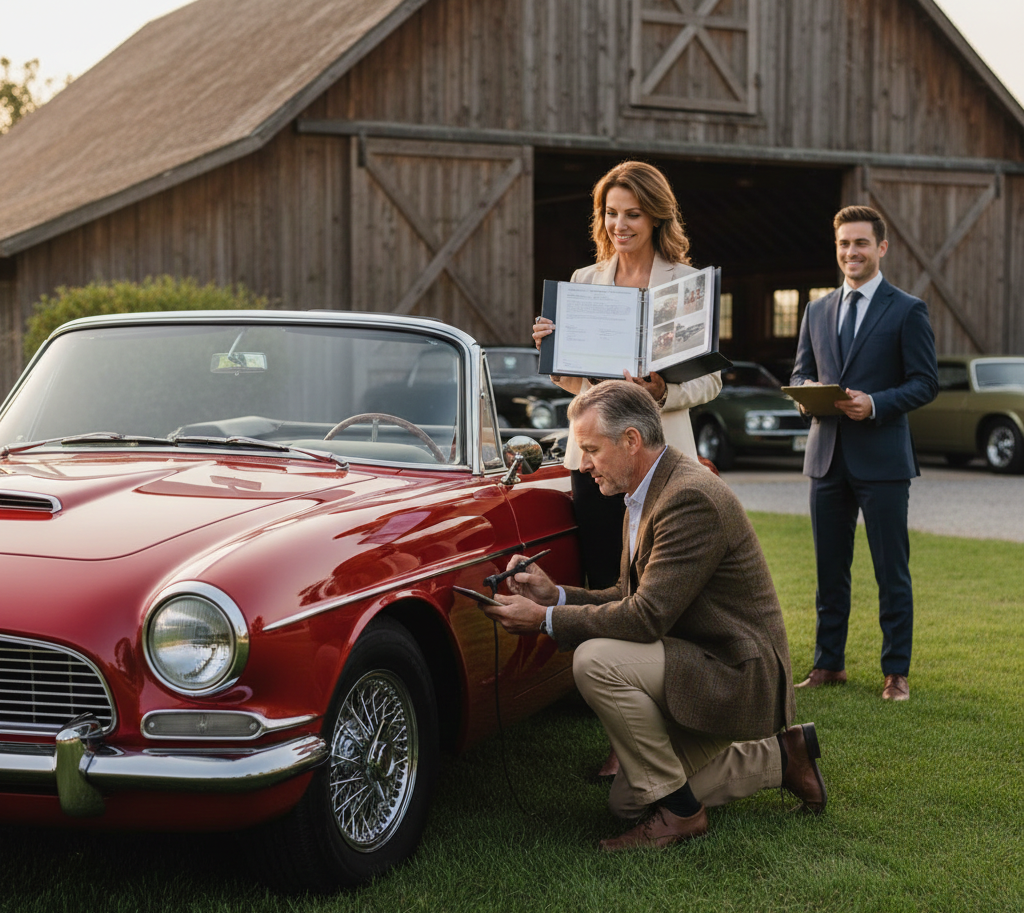
What Agreed Value Insurance Really Means
Agreed value insurance is often misunderstood. It is not simply a number chosen by the owner or the insurance company. It is a mutually accepted value supported by documentation.
Unlike actual cash value coverage, agreed value does not rely on depreciation formulas at the time of loss. The value is established in advance, which provides clarity and protection when claims arise.
Without a proper appraisal, agreed value coverage can be challenged or limited.
Why Insurance Companies Require Professional Appraisals
Insurance carriers rely on appraisals to justify risk exposure. For classic vehicles, this includes verifying condition, originality, restoration quality, and current market demand.
A professional appraisal provides objective support for the agreed value. It helps prevent disputes during underwriting and reduces complications if a claim occurs.
Generic estimates or informal opinions rarely meet underwriting standards.
Service Resource
Classic Car Appraisal Services by a Certified Independent Appraiser
Classic Car Appraisal Services by a Certified Independent Appraiser
Agreed Value vs Stated Value Policies
Agreed value and stated value policies are not the same. With stated value coverage, the insurer may still default to actual cash value at the time of loss.
Agreed value policies are designed to lock in the value, but only when the supporting appraisal is credible and current. This distinction becomes critical when vehicles appreciate or when market conditions shift.
Understanding this difference helps owners avoid unpleasant surprises during claims.
What a Proper Classic Car Appraisal Should Include
A defensible classic car appraisal includes detailed condition analysis, originality assessment, documentation review, and current market research. Restoration quality, modifications, rarity, and historical significance are all evaluated.
Photographic documentation and market data support the conclusions. The goal is to reflect how knowledgeable buyers and sellers actually value the vehicle.
An appraisal prepared without market context or inspection detail can leave the agreed value vulnerable.
Related Reading
Classic Car Appraisal How to Get an Accurate Valuation
Classic Car Appraisal How to Get an Accurate Valuation
When Agreed Value Appraisals Should Be Updated
Classic car values change over time. Market trends, restoration work, mileage accumulation, and collector demand all influence value.
Many insurers recommend updating appraisals every few years or after significant changes. Failing to update an appraisal can result in underinsurance if values increase.
Regular reviews help ensure coverage remains aligned with real market conditions.
Related Reading
Classic Car Values Top Influencing Factors
Classic Car Values Top Influencing Factors
Why Independent Appraisals Matter for Collectors
Independent appraisals protect the interests of both the owner and the insurer. They provide unbiased valuation based on experience and market evidence rather than assumptions.
For collectors, this independence is critical. It ensures the agreed value reflects the vehicle’s true position in the market and not a conservative estimate designed to limit exposure.
Is an appraisal required for agreed value insurance
Most insurers require a professional appraisal to support agreed value coverage, especially for higher value or highly modified vehicles.
How often should a classic car appraisal be updated
Many owners update appraisals every two to three years or after restoration work or significant market changes.
Can I choose any value I want for agreed value coverage
No. The value must be supported by documentation and accepted by the insurer based on appraisal evidence.
Does agreed value guarantee full payout
Agreed value policies generally pay the agreed amount in a covered total loss, provided policy terms are met and documentation is valid.
Are modified classic cars eligible for agreed value insurance
Yes, but modifications must be documented and properly reflected in the appraisal to support the agreed value.
Classic Car Insurance Resources
Hagerty Classic Car Insurance
Grundy Insurance
American Collectors Insurance
Hagerty Classic Car Insurance
Grundy Insurance
American Collectors Insurance