
 Call us now:

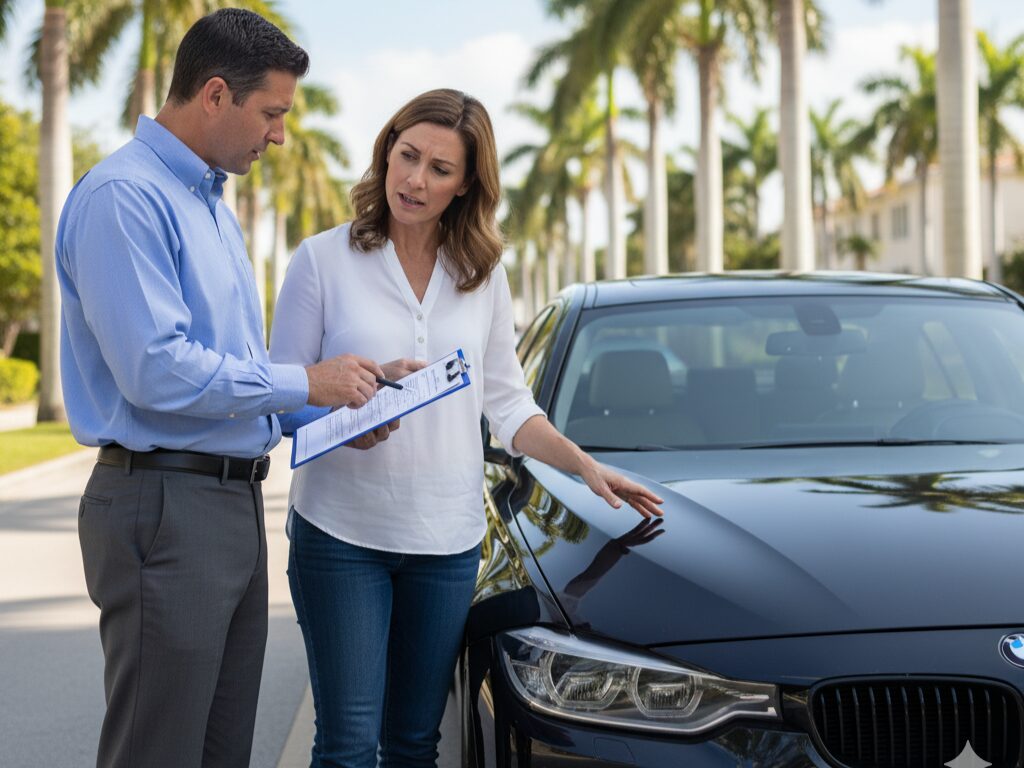
After an accident, a vehicle can lose value even if repairs look perfect. That loss is called diminished value. In Florida, not every driver or every claim qualifies, and misunderstanding eligibility is one of the main reasons people waste time arguing with an insurer.
In this guide, I explain who can typically pursue diminished value in Florida, who usually cannot, what documentation matters most, and when it makes sense to hire a certified independent appraiser.
What Is Diminished Value?
Diminished value is the reduction in a vehicle’s market value after it has been damaged and repaired because it now has an accident history. Even when repairs meet industry standards, the market often treats an accident history as a negative. That reality can affect trade in offers, dealer buy bids, and private party resale.
A simple way to think about it is this:
Pre accident value is what your vehicle would have sold for immediately before the crash.
Post repair value is what your vehicle would sell for after repairs, with the accident history attached.
The difference is the diminished value.
Florida Diminished Value Eligibility Basics
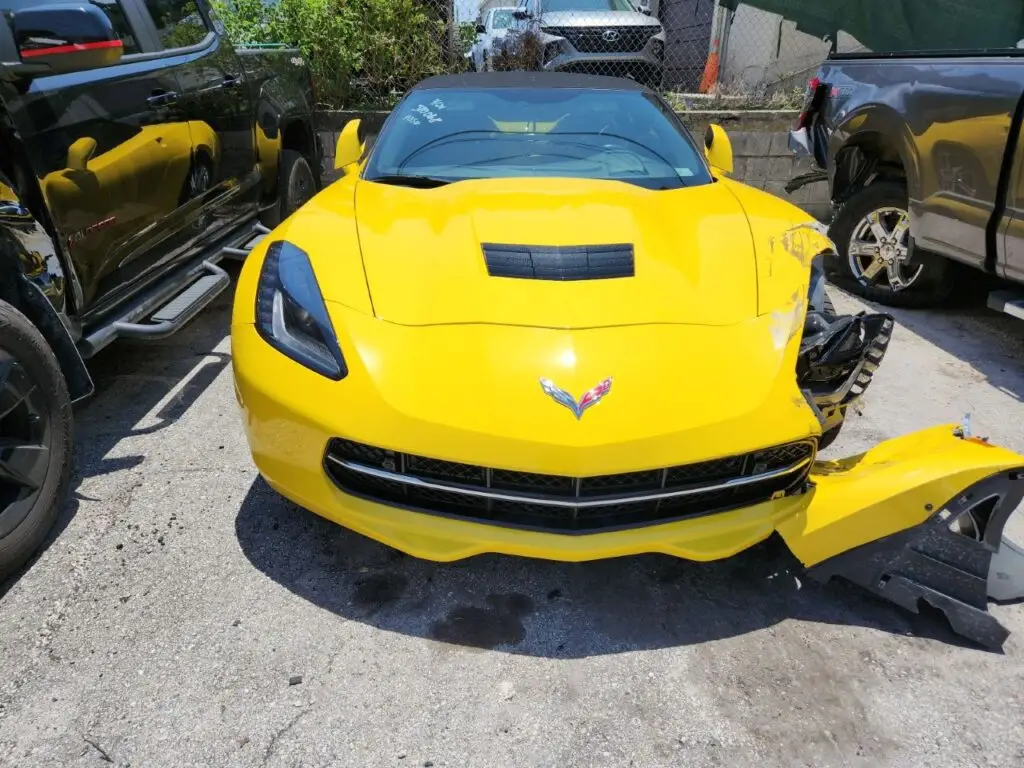
In Florida, diminished value recovery is most commonly pursued in third party claims. That means another driver was at fault, and you are presenting the claim to the at fault driver’s insurance company under property damage liability.
This matters because first party insurance claims are controlled by your own policy language. In most Florida policies, diminished value is not paid to the insured unless the policy specifically includes it, which is rare.
Use this rule of thumb:
If someone else caused the crash and their insurer accepted liability, diminished value may be on the table.
If you are using your own collision coverage, diminished value is usually not.
Before filing, it is important to understand how Florida handles diminished value and when it is legally recognized as part of a property damage claim. For a detailed legal overview, review our Florida diminished value law guide.
Who Can Typically File a Diminished Value Claim in Florida?
You are more likely to be eligible when all of the following are true:
You are the vehicle owner of record.
The accident was not your fault and the other driver is liable.
The vehicle was repaired and you have the final repair documentation, including supplements.
The vehicle did not already have a prior accident history that impacts resale value.
The vehicle is late model, higher value, or otherwise sensitive to accident history in the resale market.
It is also common for diminished value to be easier to document when damage severity is meaningful. Structural repairs, airbag deployment, major panel replacement, and extensive refinishing often create measurable market resistance.
Who Cannot File a Diminished Value Claim
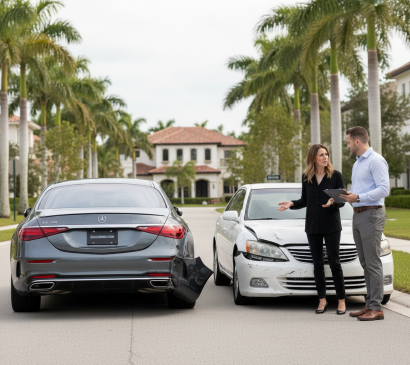
First party claims under your own policy
If you are filing under your own collision coverage, you are in a first party claim. In most cases, diminished value is not owed to the insured unless your policy includes an endorsement or specific coverage for it.
Leased vehicles
In many lease situations, the titled owner is the leasing company. Even if you make the payments, you may not be the owner of record. Some claims still move forward depending on how the vehicle is titled and how the lessor handles it, but leases can complicate eligibility and settlement authority.
Vehicles with prior accidents or claims
A prior accident history does not automatically eliminate diminished value, but it often becomes harder to prove. If a vehicle already has a loss history, insurers frequently argue that the market stigma already existed.
Low value or high mileage vehicles
Some vehicles can still qualify, but many insurers push back hard on older high mileage vehicles because the measurable market impact is smaller and harder to support.
Why “Owner of Record” Matters More Than People Realize
Insurance companies are not evaluating who uses the vehicle day to day. They are evaluating who has the legal interest tied to the property damage claim and who can legally recover damages. This is why the title, registration, lienholder status, and lease structure matter.
If you are not sure whether you are the owner of record, check the registration and title status before you spend time arguing diminished value with an adjuster.
Practical Reality: The Burden of Proof Usually Falls on the Vehicle Owner
Diminished value is not automatic. In the real world, most carriers do not calculate diminished value unless it is presented properly with documentation and a defensible valuation basis.
That means the owner typically has to provide:
The repair estimate of record and supplements.
The final invoice showing what was actually repaired.
Photos of the damage and repair work when available.
Vehicle identification and option confirmation when equipment affects value.
Market evidence supporting pre accident value and post repair market impact.
A clean appraisal report packages these items and supports a demand with market based evidence rather than opinion.
After Repairs, Your Vehicle May Still Be Worth Less
Even properly repaired vehicles often lose market value. A professional diminished value appraisal documents that loss
for insurance or legal purposes.
Call to Discuss Your DV Claim: 754-210-9807
If you want a structured breakdown of documentation, timelines, and how to present your claim properly, I recommend reviewing my diminished value claim guide before submitting anything to the insurer.
Example: When Diminished Value Applies
A simple illustration:
| Scenario | Fault | Ownership | Eligible for DV? |
| Rear ended at a stoplight | Other driver | Owned (not leased) | Yes |
| Single vehicle collision | You | Owned | No |
| Minor hit with prior accident history | Other driver | Owned | Usually No |
| Collector car appreciating in value | Other driver | Owned | Possibly (case by case) |
How Diminished Value Is Calculated in a Defensible Way
Diminished value is not a one size fits all number. A credible approach compares pre accident market value to post repair market value based on the vehicle’s configuration, condition, and real market behavior.
Key factors that often affect the result include:
Damage severity and repair scope.
Structural involvement versus cosmetic repairs.
Airbag deployment.
Panel replacement versus repair.
Refinishing extent and blend lines.
Vehicle segment and resale sensitivity.
Mileage, condition, and prior history.
Local market behavior and comparable availability.
At Auto Praise, I rely on market based data and recognized valuation references where appropriate, but the core of a defensible analysis is comparable market evidence and correct vehicle configuration.
This page explains the mechanics of the calculation process in more detail:
If you want to understand how the numbers are built, including what actually moves the value up or down, read how to calculate diminished value after a car accident.
Common Reasons Insurance Companies Deny or Minimize Diminished Value
In practice, most denials fall into predictable patterns:
They claim diminished value is not owed without evaluating market evidence.
They apply internal carrier guidelines that are not legal requirements.
They argue the damage was minor and created no market resistance.
They rely on formulas that do not reflect actual market behavior.
They challenge vehicle condition, options, or prior history.
They focus on trade in values only, ignoring private market behavior.
They delay responses and request unnecessary documents.
This is why documentation quality and the way the claim is presented matters.
When to Hire a Diminished Value Appraiser
• After repairs have been completed and you have the final repair bill or the estimate of record.
• The carrier disputes the amount of loss despite solid repairs.
• You need a credible, independent valuation to support negotiation.
Professional Diminished Value Appraisals
If your vehicle was involved in an accident and later repaired, a diminished value appraisal documents the
loss in market value that may remain. Appraisals are prepared independently for insurance, legal, and
claim-related use.
View Diminished Value Appraisal Services
Step by Step: Presenting a Diminished Value Claim Properly
The most common mistake I see is people arguing value before the documentation is organized. A better approach is to get the sequence right:
Confirm liability is accepted.
Complete repairs and collect the full repair file, including supplements.
Confirm vehicle configuration, trim, and options.
Compile photos and vehicle history documentation.
Prepare a market supported appraisal and demand package.
Submit to the insurer with a clear request and reasonable deadline.
Track all communication attempts.
Why Choose Auto Praise
Auto Praise provides certified diminished value appraisals recognized by insurers and attorneys. Our appraisers hold IACP, I‑Car Platinum, and Florida adjuster credentials with 30+ years of automotive experience.
Key Takeaways
In Florida, diminished value recovery is usually pursued as a third party claim against the at fault driver’s insurer.
First party claims under your own policy usually do not qualify unless there is specific coverage.
Ownership status matters, and leases can complicate who has recovery rights.
The burden of proof usually falls on the vehicle owner to present market based evidence.
A certified appraisal report improves clarity and strengthens negotiation.
FAQs
Can I file diminished value with my own insurance?
No. Florida limits DV to third‑party claims against the at‑fault driver’s insurer.
Does diminished value apply if my car is leased?
No. You must be the titled owner (financed or paid off is fine).
What if my car is older than 10 years?
Most older vehicles do not qualify unless they are high‑value or investment‑grade classics.
Do I need to finish repairs first?
Yes. Appraisers measure the market loss after repairs or with complete repair documentation.
How do I prove diminished value?
You prove it with repair documentation, vehicle details, and market based evidence showing measurable post repair loss. A certified appraisal report packages this evidence in a defensible format.
Related Reading
For a plain language explanation of what diminished value is and why it exists, read diminished value explained after an accident.
For an example of how accident history affects resale and trade in behavior, read how cars lose value after repair.
Reference: Florida Statutes – Property damage liability framework and related insurance requirements: https://www.flsenate.gov/Laws/Statutes/
Insurers often rely on specific valuation formulas or third-party data providers when reviewing a claim. I explain how these calculations work and what actually impacts the numbers in calculate diminished value after car accident.