
 Call us now:

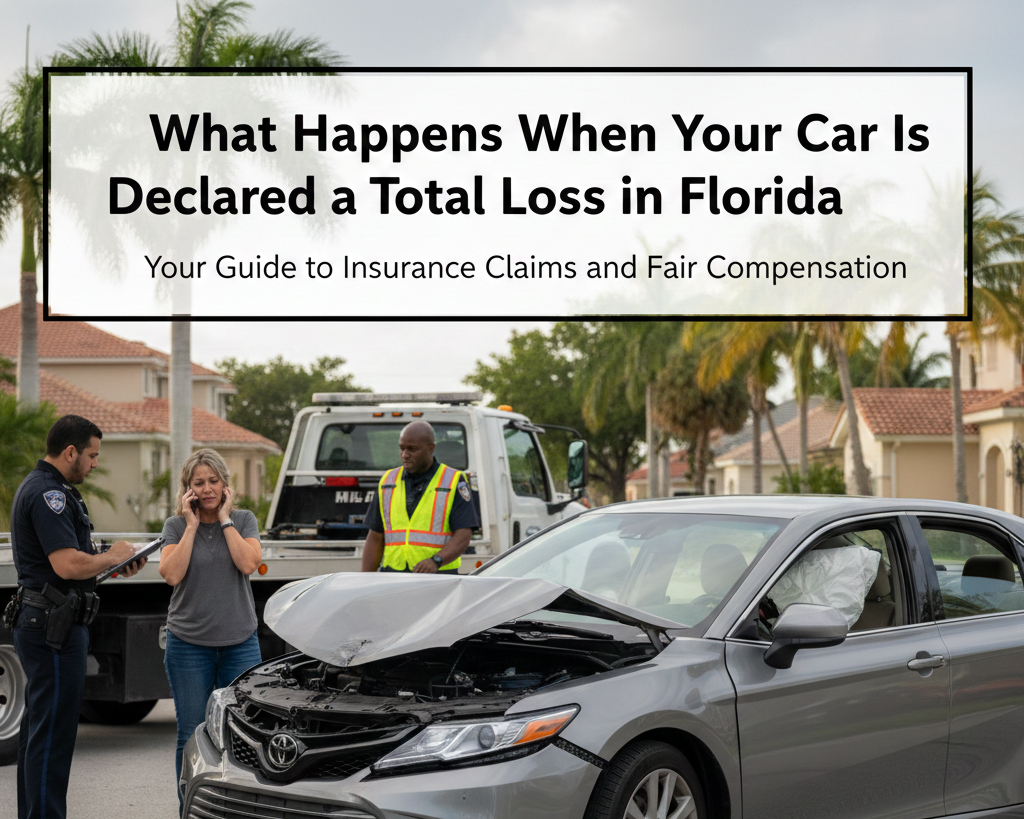
When your car is declared a total loss in Florida, it can feel overwhelming. Most vehicle owners are not prepared for how quickly the process moves or how much control the insurance company has early on. Understanding what happens next is critical because decisions made at this stage directly affect how much money you receive.
If you need a certified valuation to challenge an insurance settlement, review our independent total loss appraisal services for Florida vehicle owners.
A total loss does not automatically mean the insurance company has handled your claim fairly. It simply means they believe the cost to repair your vehicle meets or exceeds the legal threshold under Florida law.
For a step-by-step overview of the entire claims process, you can review our Total Loss Claim Guide.Key Takeaways About the Total Loss Claim Process
- When a car is declared a total loss in Florida, the insurance company typically pays the vehicle’s actual cash value based on market data.
- The insurer will usually obtain a valuation report using comparable vehicle listings to estimate the vehicle’s pre-loss market value.
- After the settlement amount is calculated, the vehicle owner may accept the settlement or review the valuation report for potential discrepancies.
- Errors involving comparable vehicles, mileage adjustments, or missing options can sometimes affect the final settlement amount.
- If a dispute arises in a first-party claim, policyholders may have the option to invoke the appraisal clause to resolve valuation disagreements.
How Florida Determines a Total Loss
Florida follows what is commonly known as the total loss 80% threshold. If the cost to repair your vehicle reaches eighty percent or more of its actual cash value, the insurer will declare it a total loss.
This calculation is not as straightforward as many people expect. Insurance companies rely on internal estimating systems, vendor data, and market comparisons that are often flawed or incomplete. The value assigned to your vehicle becomes the foundation for the entire settlement.
If that value is inaccurate, every number that follows will be inaccurate as well.
For the legal framework and valuation rules behind total loss determinations, see our guide to Florida total loss law and valuation rules.
What Happens After the Total Loss Declaration
Once the vehicle is declared a total loss, the insurance company will calculate what they believe your vehicle was worth immediately before the loss. This is referred to as actual cash value.
You will receive a valuation report that includes comparable vehicles, condition adjustments, mileage adjustments, and option adjustments. Many vehicle owners assume this report is final. It is not.
You are not required to accept the first offer.
At this stage, the insurer will also take possession of the vehicle if it has not already been moved to a salvage facility. Title transfer and lien payoff discussions usually begin shortly after.
Why Total Loss Offers Are Often Too Low
Total loss offers are frequently undervalued due to several common issues. Comparable vehicles may not truly match your vehicle. Options may be missing. Condition adjustments may be excessive. Mileage adjustments may not align with real market behavior.
In some cases, the insurer may use vehicles from outside your market area or rely on outdated sales data. These errors can reduce your settlement by thousands of dollars.
This is where most policyholders lose leverage without realizing it.
Once a vehicle is declared a total loss, the insurance company must determine the vehicle’s pre-loss market value. Our guide on how insurance companies determine the value of a total loss vehicle explains how insurers calculate these settlements.
Your Right to Challenge the Valuation
Florida policyholders have the right to challenge an inaccurate total loss valuation when the claim is with their own insurance policy. This is often done through supporting documentation, market analysis, or the appraisal clause contained in most auto insurance policies.
An independent total loss appraisal focuses on real world market data and proper vehicle condition analysis. It does not rely on insurer preferred vendors or automated systems.
If the value is corrected, the settlement must be adjusted accordingly.
Common Mistakes to Avoid After a Total Loss
Many vehicle owners unintentionally weaken their position by accepting the settlement too quickly. Others sign documents without fully understanding them. Some assume that repairs or maintenance history do not matter.
Every total loss claim is time sensitive. Once paperwork is finalized, options become limited.
Before accepting a settlement, the valuation should be reviewed carefully for accuracy, completeness, and market relevance.
Some vehicle owners choose to retain the vehicle instead of surrendering it to the insurance company. Our article discussing keeping your car after a total loss in Florida explains how that option works and how it affects the settlement amount.
When a Professional Appraisal Makes Sense
A professional total loss appraisal is most useful when the offer feels low, the vehicle is above average condition, or the market data used by the insurer is questionable.
An independent appraisal provides documented support that can be used in negotiations or formal appraisal clause proceedings. It ensures that the valuation reflects the vehicle as it actually existed before the loss.
For many owners, this is the difference between accepting an unfair settlement and being properly compensated.
Get a Free Total Loss Claim Review
If you’re currently dealing with a vehicle total loss claim, it is important to know that insurance company valuation reports are not always accurate. Errors involving comparable vehicles, mileage adjustments, or vehicle options can result in a settlement that is lower than your vehicle’s true pre-loss value. Auto Praise can review the insurance company’s valuation report and determine whether the settlement offer is accurate. We assist vehicle owners with total loss claims throughout Florida.
Call Now – Free Claim Review754-210-9807
Florida Licensed Adjusters • I-Car Platinum Certified Auto Physical Damage Appraisers • IACP Certified Auto Appraisers
How long does the total loss process take in Florida?
The timeline varies, but most total loss claims move quickly once declared. Valuation reports are often issued within days. Delays usually occur when values are disputed or lien information is involved.
Can I keep my car after it is declared a total loss?
In some cases yes. This is known as owner retention of salvage. The insurer deducts the salvage value from the settlement. Not all vehicles qualify and title branding rules apply.
Does a total loss affect future insurance or registration?
Once branded as salvage or rebuilt, the vehicle may face restrictions on registration and insurance coverage. This is another reason valuation accuracy matters.
Is the insurance company required to use local market vehicles?
They are expected to use comparable vehicles from a reasonably similar market area. However, this is frequently done incorrectly and can be challenged.
Do I need an attorney for a total loss claim?
In Florida you only need an independent appraiser. Many valuation disputes can be resolved with proper documentation and an independent appraisal. Attorneys are typically involved when legal disputes arise.