
 Call us now:

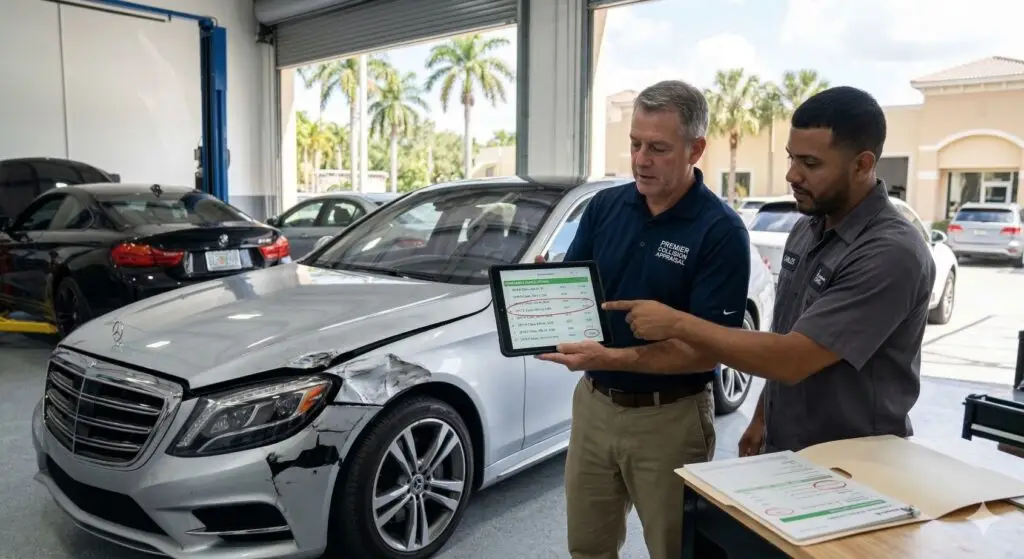
When a vehicle is declared a total loss after an accident, one of the most important questions becomes how the insurance company determines the value of the vehicle. Understanding how insurance companies determine total loss value is critical because the settlement amount is based entirely on that calculation.
Key Takeaways About Total Loss Valuation
- Insurance companies determine the value of a total loss vehicle by estimating the vehicle’s actual cash value immediately before the accident.
- Valuation reports typically rely on comparable vehicles, mileage adjustments, and equipment differences to estimate market value.
- Even small differences between comparable vehicles can influence the settlement amount offered by the insurance company.
- If the valuation report contains incorrect comparable vehicles or missing options, the settlement may not accurately reflect the vehicle’s true market value.
- In first-party insurance claims, policyholders may be able to invoke the appraisal clause to resolve disputes regarding the vehicle’s value.
How Insurance Companies Determine Total Loss Value
Insurance companies determine total loss value by estimating the vehicle’s actual cash value (ACV) immediately before the accident occurred. The process typically relies on automated valuation reports that analyze comparable vehicle listings, vehicle options, mileage, and regional market data.
Most insurers obtain these reports from third-party valuation providers such as CCC Intelligent Solutions, Mitchell, or Audatex. These systems analyze recent vehicle listings and apply adjustments to estimate what the loss vehicle would likely sell for in the open market.
Although these reports are widely used across the insurance industry, the accuracy of the final value depends heavily on the quality of the comparable vehicles selected and the adjustments applied during the valuation process.
In most cases, insurance companies rely on third-party valuation reports that analyze comparable vehicle sales, vehicle condition, and market data. While these reports are commonly used across the insurance industry, they are not always accurate. Errors in comparable vehicles, vehicle options, mileage adjustments, or condition ratings can significantly affect the final settlement value.
As someone who has worked for many years in vehicle inspections, claims analysis, and appraisal work, I regularly review total loss valuation reports. Many vehicle owners are surprised to learn that the settlement amount often depends heavily on how the data was selected and interpreted, not just the vehicle itself.
What Is a Total Loss Valuation?
A total loss valuation is the process used by an insurance company to determine the fair market value of a vehicle immediately before the accident occurred.
Insurance policies generally require insurers to pay the actual cash value (ACV) of the vehicle at the time of loss. Actual cash value represents the vehicle’s market value based on similar vehicles sold in the same geographic area.
To determine this value, insurers typically use valuation reports produced by companies such as:
- CCC Intelligent Solutions
- Mitchell
- Audatex / Solera
These reports rely on automated data analysis and comparable vehicle listings.
While the process is standardized across the industry, the accuracy of the result depends heavily on the quality of the comparable vehicles and the adjustments applied to them.
The Role of Comparable Vehicles in Total Loss Valuation
The foundation of most insurance valuation reports is the comparable vehicle analysis. This process involves identifying vehicles that are similar to the one that was declared a total loss.
Comparable vehicles should generally match the following criteria:
- Same make and model
- Similar model year
- Similar mileage
- Similar trim level and options
- Sold within the same regional market
The goal is to determine what buyers are actually paying for similar vehicles in the marketplace.
However, problems often arise when comparable vehicles are not truly comparable. For example, a valuation report may include vehicles that:
- Have significantly higher mileage
- Lack important options
- Are located in distant markets
- Have different trim levels or packages
Even small differences between vehicles can significantly impact value.
One of the most important factors used in insurance valuation reports is comparable vehicle data. Our article explaining comparable vehicles in total loss valuation explores how these comparisons affect the settlement amount.
How Insurance Valuation Reports Apply Adjustments
Once comparable vehicles are identified, valuation software applies a series of adjustments to estimate what each comparable vehicle would be worth if it matched the insured vehicle.
Common adjustments include:
Mileage Adjustments
Vehicles with higher or lower mileage are adjusted to match the mileage of the loss vehicle.
Options Adjustments
Features such as:
- navigation systems
- upgraded audio systems
- driver assistance packages
- premium wheels
may receive value adjustments.
Condition Adjustments
Some reports apply condition ratings based on assumptions about the vehicle’s condition prior to the accident. If a vehicle is rated below average, the settlement value may decrease.
Geographic Market Adjustments
Insurance valuation reports also attempt to account for regional market differences.
Vehicle prices vary significantly depending on location. For example, vehicles in South Florida may sell for different prices than similar vehicles in other states due to demand, inventory levels, and regional buying patterns.
If the valuation report includes vehicles from distant markets, the final value may not accurately reflect the local market.
Why Total Loss Valuation Reports Can Be Incorrect
Although valuation software is widely used, errors can occur for several reasons.
Some of the most common issues I see when reviewing total loss valuations include:
- Incorrect vehicle trim levels
- Missing factory options
- Improper mileage adjustments
- Comparable vehicles that are not truly similar
- Listings that are no longer available or were inaccurately priced
Even small discrepancies in the data can significantly affect the calculated settlement value.
This is one reason why vehicle owners sometimes dispute the insurance company’s settlement offer.
If the valuation report contains inaccurate comparable vehicles or missing options, the settlement amount may appear too low. Our guide explaining what to do if your insurance company undervalued your car in a total loss explains how these situations are often addressed.
What Happens If the Insurance Valuation Is Incorrect?
If a valuation report contains incorrect comparable vehicles, missing options, or inaccurate adjustments, the resulting settlement offer may be lower than the vehicle’s true market value. In these situations, policyholders may have the option to dispute the valuation through negotiation or, in certain cases, by invoking the appraisal clause contained within their insurance policy.
The appraisal clause allows both the policyholder and the insurance company to appoint independent appraisers to determine the vehicle’s pre-loss value. Each appraiser reviews market data, comparable vehicle listings, and valuation methodology. If the two appraisers cannot agree on a value, an impartial umpire may be selected to help determine the final settlement amount.
It is important to understand that the appraisal clause generally applies only to first-party claims filed under your own insurance policy, such as a collision coverage claim. When the claim is filed against another driver’s insurance company in a third-party liability claim, the appraisal clause usually does not apply.
In situations where the appraisal clause is invoked, vehicle owners often hire independent appraisers experienced in insurance valuation disputes. Firms such as Auto Praise, staffed by I-Car Platinum Certified Auto Physical Damage Appraisers, IACP Certified Auto Appraisers, and Florida licensed adjusters, provide independent vehicle appraisal services that can assist policyholders during the appraisal clause process.
When a Professional Vehicle Appraisal May Be Needed
In some situations, the valuation report used by the insurance company may not accurately reflect the true market value of the vehicle.
When this occurs, a professional vehicle appraisal may be used to independently evaluate the vehicle’s pre-loss value.
A proper appraisal typically includes:
- detailed comparable vehicle research
- analysis of vehicle options and condition
- verification of market listings
- explanation of the valuation methodology
Independent appraisals are sometimes used to support negotiations or formal dispute processes.
When disagreements arise about the vehicle’s value, the claim may move into negotiation. Our article on total loss settlement negotiation explains how these disputes are typically resolved.
When valuation disputes reach this stage, vehicle owners sometimes retain independent appraisers experienced in insurance valuation disputes. Auto Praise provides independent total loss appraisal services for policyholders involved in appraisal clause proceedings and valuation disputes.Understanding the Total Loss Valuation Process
For many vehicle owners, the total loss settlement process is unfamiliar and confusing. Insurance valuation reports often contain large amounts of technical data, adjustments, and comparable vehicle listings that can be difficult to interpret.
However, understanding how the value was calculated is the first step toward determining whether the settlement offer is reasonable.
By carefully reviewing the valuation report and verifying the comparable vehicles used, vehicle owners can better understand how the final settlement value was determined.
Total Loss Claim Resources
Understanding how insurance companies determine total loss settlements can help vehicle owners make informed decisions during the claims process. If you are currently dealing with a total loss claim, the following resources provide detailed explanations of Florida insurance law, valuation methods, and the options available when a settlement offer appears inaccurate.
- Total Loss Claim Guide – Step-by-step explanation of the total loss claim process and how to review settlement offers.
- Florida Total Loss Law – Explanation of the laws and regulations that govern total loss claims and insurance settlement procedures in Florida.
These guides explain how total loss values are calculated, how comparable vehicles affect settlement amounts, and when vehicle owners may consider additional steps such as invoking the appraisal clause under their insurance policy.
Get a Free Total Loss Claim Review
If you’re currently dealing with a vehicle total loss claim, it is important to know that insurance company valuation reports are not always accurate. Errors involving comparable vehicles, mileage adjustments, or vehicle options can result in a settlement that is lower than your vehicle’s true pre-loss value. Auto Praise can review the insurance company’s valuation report and determine whether the settlement offer is accurate. We assist vehicle owners with total loss claims throughout Florida.
Call Now – Free Claim Review754-210-9807
Florida Licensed Adjusters • I-Car Platinum Certified Auto Physical Damage Appraisers • IACP Certified Auto Appraisers
How do insurance companies determine the value of a total loss vehicle?
Insurance companies typically determine the value of a total loss vehicle using third-party valuation reports that analyze comparable vehicle sales, vehicle options, mileage, and market data. These reports estimate the vehicle’s actual cash value immediately before the accident occurred. The valuation is usually based on recent listings or sales of similar vehicles within the regional market, with adjustments applied for differences in mileage, equipment, and condition.
What is actual cash value in a total loss claim?
Actual cash value (ACV) refers to the fair market value of the vehicle immediately before the loss occurred. In a total loss claim, the insurance company calculates ACV by analyzing comparable vehicle listings and applying adjustments for factors such as mileage, options, and condition. The goal is to estimate what the vehicle would have sold for in the open market right before the accident.
What companies produce total loss valuation reports?
Several companies provide valuation reports used by insurance companies in total loss claims. The most commonly used systems include CCC Intelligent Solutions, Mitchell, and Audatex. These companies compile vehicle listing data and apply automated adjustments to estimate market value. While widely used, the reports can sometimes contain errors depending on the data selected.
Can a total loss valuation report contain mistakes?
Yes, total loss valuation reports can contain mistakes. Errors may include incorrect vehicle options, inaccurate mileage adjustments, or comparable vehicles that are not truly similar to the loss vehicle. These discrepancies can affect the calculated settlement value and may lead vehicle owners to question whether the settlement offer accurately reflects the vehicle’s market value.
What should I do if I disagree with the insurance company’s valuation?
If you disagree with the insurance company’s valuation, the first step is to carefully review the valuation report and verify the comparable vehicles used. You may be able to provide additional comparable vehicle listings or documentation to support a higher value. In some cases, vehicle owners choose to obtain an independent appraisal to evaluate the vehicle’s true market value and support further negotiation with the insurance company.