
 Call us now:

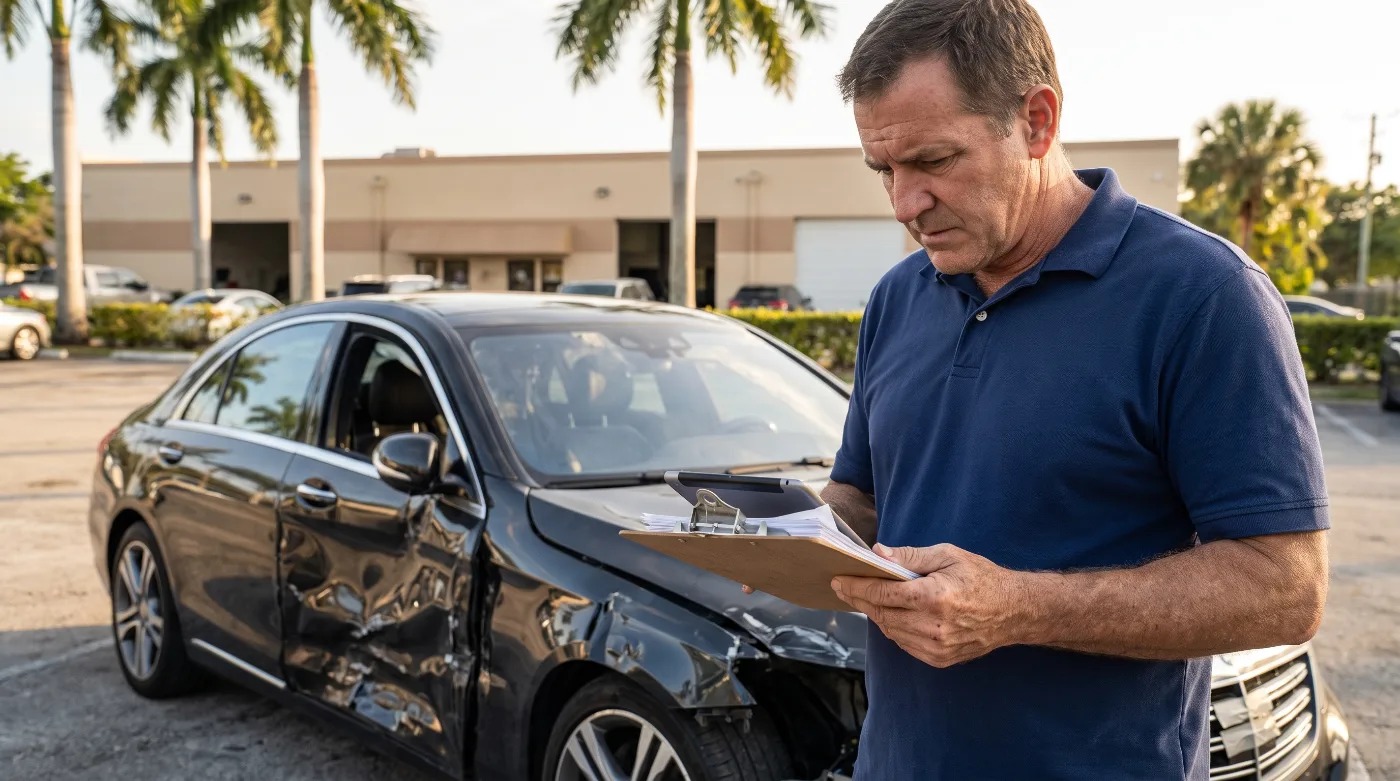
Car totaled, still owe money on it? Your loan does not disappear with the car. The insurer pays the car’s actual cash value, minus your deductible, to your lender first. If that payment falls short of your loan balance, you owe the difference unless gap coverage picks it up. In more than 30 years of handling total loss claims, I have seen many shortfalls shrink once the valuation was checked. This guide explains how the payout gets split, why balances and values drift apart, what gap really covers, and what to do when money is still owed.
TL;DR: A total loss pays off your lender with the car’s actual cash value, not your loan balance. Any shortfall stays with you unless gap coverage applies, and gap often excludes rolled-over negative equity and fees. Before you accept the number, check the valuation, because every dollar it rises is a dollar you no longer owe.
Car Totaled, Still Owe Money? How the Payout Gets Split
When a financed car is totaled, the insurer pays the vehicle’s actual cash value, minus your deductible, directly to the lender. If the payment exceeds the loan payoff, you receive the remainder. If it falls short, the leftover balance stays on your loan and remains your responsibility.
Here is a simple example of a car totaled, still owe situation:
| Item | Amount |
| Loan payoff on the day of loss | $26,000 |
| Insurer’s actual cash value | $22,500 |
| Your collision deductible | minus $1,000 |
| Payment to the lender | $21,500 |
| Balance you still owe | $4,500 |
In addition, the loan keeps running while the claim is open. Interest accrues daily, and payments stay due. So keep paying until the lender confirms the loan is closed. A missed payment during a slow claim can add late fees and damage your credit.
Your lender is also usually the “loss payee” on your policy. That is why the check goes to the lender first and you see only what is left over.
Why Your Loan Balance and Your Car’s Value Rarely Match
Your loan balance and your car’s value rarely match because they move at different speeds. A car loses value fastest in its first few years, while a loan pays down slowly at first, mostly through interest. Small down payments, long terms, and rolled-over debt widen that gap even further.
A few forces drive most of the mismatch:
- Early depreciation. Kelley Blue Book estimates that new cars lose about 30% of their value in the first two years.
- Long loan terms. Edmunds reported that 84-month loans reached a record 22.9% of new auto loans in early 2026.
- Smaller down payments. Edmunds also found the average down payment fell to $6,206 in the same period.
- Add-ons in the loan. Service contracts, extended warranties, and other products raise the balance but add nothing to the car’s market value.
In other words, the shortfall in a car totaled, still owe situation is often built into the loan from day one. The crash simply reveals it.
What an Upside Down Car Loan Means When the Car Is Gone
An upside down car loan means you owe more than the car is worth. While you still drive the car, that gap is just a number on paper. After a total loss, however, the car is gone and the gap becomes a real bill, owed on a vehicle you can no longer use.
That shift is why a car totaled, still owes a situation that catches so many owners off guard. Before the crash, an upside down car loan only mattered if you sold or traded the car. After the crash, the lender expects the full balance, and the insurer has no duty to pay more than the car’s value.
There is one detail many people miss. When a car is totaled, add-on products such as extended warranties and service contracts can often be canceled. The unused portion is usually refunded, and that refund typically goes to the lender. As a result, it can reduce what you owe. Ask your lender or dealer for a cancellation and refund on every add-on in the loan.
What a Negative Equity Car Loan Means for Your Settlement
A negative equity car loan is one where the balance includes debt carried over from a previous vehicle. When you traded in a car you still owed money on, the dealer likely rolled that unpaid amount into the new loan. After a total loss, the insurer pays only for the car you have now, not the old debt.
That rolled-over amount is the hardest part of the shortfall to cover. Here is why:
- The insurer’s payment is based only on the current car’s market value.
- Many gap contracts exclude or cap carried-over debt from a prior vehicle.
- The old debt keeps accruing interest as part of the new loan.
For example, say you rolled $5,000 from an old car into a new loan. A year later, the new car was totaled. Even if the insurer values the new car fairly, that $5,000 is likely still sitting in the balance. Whether the gap covers it depends entirely on your contract.
So if you financed a negative equity car, find your gap contract now. The terms matter far more than the name of the product.
Does GAP Insurance Cover Negative Equity?
Sometimes, but often only in part. Gap coverage pays the difference between the insurer’s settlement and your loan balance, subject to the contract’s limits. Many gap contracts cap the payout at a set loan-to-value percentage or exclude debt rolled over from a previous vehicle. The answer to “does gap insurance cover negative equity” lives in your specific contract.
Gap contracts commonly limit or exclude:
- Negative equity carried over from a prior vehicle
- Amounts above a loan-to-value cap, such as 125% or 150% of the car’s value
- Your collision deductible, although some contracts cover part of it
- Past-due payments, late fees, and deferred payments
- Add-on products financed in the loan
For a plain-language overview, the Consumer Financial Protection Bureau explains how gap coverage works. For a Florida-focused look at how gap claims are processed, see our page on gap insurance claims.
Keep one more point in mind. Gap pays the difference between the loan and the insurer’s number. If that number is too low, the gap contract has to cover more, and a cap may leave you short. Either way, the valuation still matters. That is why asking “does gap insurance cover negative equity” is only half the question.
Checking the Insurer’s Number Before the Shortfall Grows
The insurer’s actual cash value is an estimate, not a final verdict. It often comes from a valuation report built on comparable vehicles, condition ratings, and option data. When any of those inputs are wrong, the value drops, and your shortfall grows dollar for dollar.
Start by requesting the full valuation report. Then check it line by line:
- Comparable vehicles. Are they the same year, trim, and options, and from your local market?
- Mileage adjustments. Do the mileage deductions look reasonable for your car?
- Condition rating. Does the rating match your car’s real condition before the loss?
- Options and packages. Are factory packages, upgrades, and recent major repairs included?
- Taxes and fees. Does the settlement include sales tax and title and registration fees where applicable?
Our guide to actual cash value in auto appraisals explains how each of these inputs works. If several look off, our breakdown of what to do when insurance undervalued your car walks through next steps.
Timing matters in any car totaled, still owe claim. Every week the claim stays open, interest keeps adding to the balance. So review the report as soon as you receive it.
Your Options When a Balance Remains
In a car totaled, still owe situation, the remaining balance is yours under the loan agreement. Common options include paying it from savings, setting up a payment plan with the lender, taking a personal loan, or rolling it into a new car loan. Each option carries a different cost over time.
Here is how the main paths compare:
- Pay it off directly. This is the cleanest option and stops the interest.
- Ask the lender for a payment plan. Many lenders will work out terms once the insurer has paid.
- Use a personal loan. It may carry a lower rate than a rolled-over car loan balance.
- Roll it into your next car loan. This is the easiest option today, but it starts your next loan upside down and adds interest.
Before choosing, first make sure the balance is accurate. Confirm that the insurer paid the full settlement, that add-on refunds were applied, and that gap paid everything its contract allows. Rolling an unchecked balance into a new loan repeats the same cycle with a bigger number.
How Auto Praise Helps When the Valuation Looks Low
Auto Praise prepares independent actual cash value appraisals for Florida drivers whose total loss offer looks low. A higher, well-documented value reduces what you owe after the insurer pays the lender. The appraisal relies on local comparable vehicles and verified factory options rather than the insurer’s internal tools alone.
Daryl Zelinski leads that work. He is a Florida Licensed All Lines Adjuster, an I-CAR Platinum Auto Physical Damage Appraiser, an American Society of Certified Auto Appraisers (ASCAA) Certified Auto Appraiser, a Bureau of Certified Automobile Appraisers (BCAA) Certified Appraiser, an IACP Certified Auto Appraiser, and an ASE Master Technician with more than 30 years of experience. Reports follow USPAP standards, so the method and market data are documented for review by an insurer, attorney, or appraisal umpire.
If the claim is under your own policy, most policies include an appraisal clause. It lets each side hire an appraiser, with an umpire to settle differences. Auto Praise also supports gap claims with damage estimates and market valuations when the paperwork is missing.
An appraisal has limits, too. It cannot erase a loan, and it is not legal advice. What it can do is make sure the starting number is right.
In the end, a car totaled, still owe situation is mostly a math problem. Check the value, apply every refund, and read your gap contract before you pay a dollar more than you owe. Our total loss appraisal page explains how an independent valuation works.
Get a Total Loss Appraisal Review
If you believe your insurer’s total loss offer may not accurately reflect your vehicle’s value, Auto Praise can provide an independent review and valuation consultation before you accept a settlement.
Frequently Asked Questions
What happens if my car is totaled and I still owe money?
The insurer pays your lender the car’s actual cash value, minus your deductible. If that amount is less than your loan balance, you still owe the difference. Gap coverage may pay some or all of it. Otherwise, you remain responsible under the loan, and payments stay due until the account is closed.
Do I have to keep making payments after my car is totaled?
Yes. The loan stays active until the insurer’s payment, any gap payment, and any remaining balance clear it. Interest keeps accruing while the claim is open. Missing payments during that time can lead to late fees and credit damage, so keep paying until your lender confirms a zero balance.
Does gap insurance cover negative equity from a trade-in?
Often not in full. Many gap contracts exclude debt carried over from a prior vehicle or cap the payout at a set loan-to-value percentage. Some contracts do cover part of it. Read the exclusions and limits section of your gap contract, or ask the gap administrator for a written answer.
Can I negotiate the actual cash value on a totaled car?
Yes. The insurer’s value is an estimate built from comparable vehicles, condition, and options. You can request the valuation report and challenge errors with your own evidence. If the claim is under your own policy, the appraisal clause may also let you bring in an independent appraiser.
Will a total loss hurt my credit if I still owe money?
The total loss itself does not hurt your credit. However, missed payments while the claim is open, or an unpaid balance after the settlement, can. Keep payments current and work out a plan for any shortfall with your lender. That keeps the account in good standing while the claim finishes.
Can I get a refund on add-ons after my car is totaled?
Often, yes. Extended warranties, service contracts, and similar add-ons can usually be canceled after a total loss. The unused portion is typically refunded to your lender, which lowers your balance. Contact the dealer or the product administrator, and ask for written confirmation of each refund.
Why is the insurance payout lower than what I paid for the car?
Because the insurer pays what the car was worth on the day of the loss, not what you paid. Depreciation, mileage, and condition all lower that figure. Errors in comparable vehicles or missing options can lower it further, which is why checking the valuation report is worth the time.