
 Call us now:

USPAP compliance means an appraiser conducted and documented a vehicle appraisal according to the Uniform Standards of Professional Appraisal Practice. This is the recognized standard for appraisal method, documentation, and reporting across appraisal fields in the United States. For a vehicle appraisal, compliance means the report follows a defined process for supporting a value conclusion. It doesn’t just present a number with no documented reasoning behind it.
TL;DR: USPAP compliance is a documentation and method standard, not a certification of a single number. A compliant report shows its work: the data used, the reasoning applied, and the appraiser’s basis for the conclusion. If you’re comparing appraisal options, our fair market valuation service reflects this standard directly.
Get a USPAP-Compliant Valuation
Whether you need a documented valuation for an insurance dispute, a legal proceeding, or a financial decision, Auto Praise builds every report around USPAP’s scope of work and reporting standard from the inspection forward.
What Is USPAP, and Why Does It Exist?
The Uniform Standards of Professional Appraisal Practice is a set of ethics and performance standards. These standards govern how appraisers across fields, real estate, personal property, and vehicles among them, develop and communicate an appraisal. USPAP exists to give every appraisal a steady, hard-to-challenge structure, no matter what the appraiser is valuing.
Before standards like this existed industry-wide, an appraisal report’s quality depended entirely on the individual appraiser’s own habits. One appraiser’s “thorough” could be another’s “adequate,” with no shared baseline between them. USPAP creates a floor instead. It sets specific things every compliant report must do, no matter who wrote it or what vehicle it covers. That floor is exactly what gives a report weight in a dispute that an informal valuation doesn’t carry.
What Does USPAP Compliant Actually Mean?
“USPAP compliant” means an appraisal report meets the standard’s requirements for scope of work, data analysis, and reporting. It’s not enough for the appraiser to simply claim good practices. The report itself has to show compliance: what it contains, and how the appraiser reached the conclusion, not just a label.
In practical terms, a compliant appraisal report does four things. It identifies the problem it’s solving. The report also states the scope of work the appraiser performed. From there, it discloses the data and method behind the analysis. And finally, it reports a conclusion that the data actually supports. A report missing any of those elements isn’t fully USPAP compliant, no matter what it calls itself.
What a USPAP Compliant Auto Appraisal Report Must Include
A USPAP compliant auto appraisal report must include a clear statement of the appraisal’s purpose and a description of the vehicle’s condition. It also needs the valuation approach and data sources, plus a reasoned conclusion tied directly to that data. Vague reasoning or an unsupported final figure rules out a report from meeting the standard.
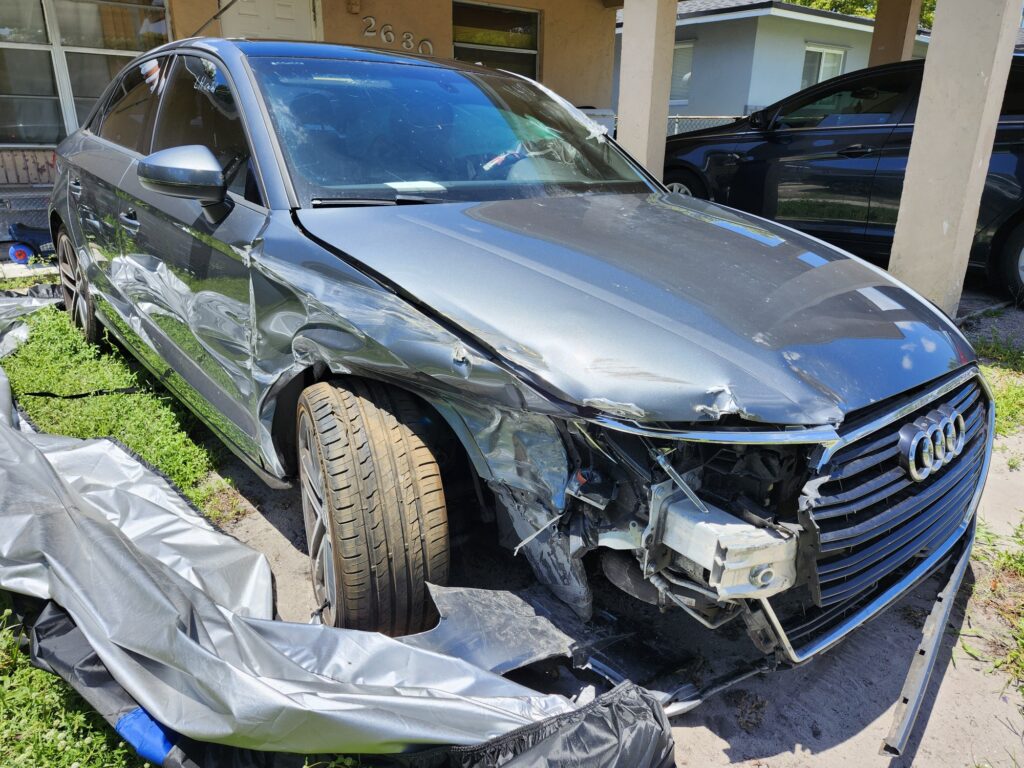
Specific elements typically include vehicle identification and condition documentation, plus comparable sales data with enough detail to evaluate its relevance. The report should also explain any adjustments made to those comparables, and include a certification statement confirming the appraiser’s independence and adherence to USPAP guidelines. Our breakdown of what belongs in a certified appraisal report covers this in more operational detail.
A report that skips the certification statement is missing a required element, no matter how detailed the rest of the analysis looks. The same goes for a certification statement without the appraiser’s actual signature and license information. That certification is what an insurer, court, or lender checks first when deciding how much weight to give the report.
How USPAP Standards Differ From a Basic Valuation Estimate
USPAP standards require a documented method and disclosed reasoning. A basic valuation estimate typically doesn’t. The real difference isn’t the final number. It’s whether that number comes with enough supporting work for someone else to check how the appraiser reached it.
A basic estimate, whether from a dealer trade-in tool or an online valuation calculator, can produce a figure without much disclosure. It won’t say which comparable vehicles it used, how it factored in condition, or what adjustments it applied. The standard closes that gap. It requires the reasoning to stay visible, which is exactly what makes a compliant report usable in a dispute where the other side will ask how the appraiser reached the number. A trade-in tool’s output might be accurate. Still, there’s no way to check, since the calculation happens inside a black box the owner never sees.
Why USPAP Compliance Matters for Insurance, Legal, and Financial Situations
USPAP compliance matters most when a valuation needs to withstand scrutiny from someone with an incentive to challenge it, an insurer disputing a settlement, a court weighing evidence, or a lender evaluating collateral. In each of those situations, an undocumented number is far easier to dismiss than one built on a disclosed method.
For insurance disputes, a USPAP compliant appraisal gives a diminished value or total loss claim a documented basis that stands apart from an insurer’s internal figure. For legal situations such as probate or litigation, the standard’s documentation requirements are often what makes a report usable as evidence in the first place, since a court generally wants to see the reasoning, not just trust the conclusion. For financial situations, our comparison of fair market value and actual cash value shows why lenders and financial institutions rely on documented methodology rather than a single unsupported figure.
These three contexts share a common thread: someone other than the vehicle owner has to be persuaded, and persuasion works better with disclosed reasoning than with an unexplained number. An insurer’s own adjuster, a judge, or a loan underwriter all have reason to question a figure that shows up without support, and USPAP compliance is specifically designed to remove that objection.
How to Tell If an Appraisal Report Meets USPAP Standards
An appraisal report meets USPAP standards if it includes a signed certification statement referencing USPAP. It should also disclose its data sources and method, and state any assumptions or limits that affected the conclusion. A short report with a number and no supporting explanation almost certainly doesn’t meet the standard, no matter what it’s titled.
Look for a few specific things. First, a certification section confirming the appraiser’s independence and lack of bias. Second, a clearly stated scope of work. Third, comparable sales or valuation data detailed enough for someone else to check, not just assert. One practical red flag stands out here. If a report lists a final value but doesn’t show which comparable vehicles it used to reach that number, the underlying analysis likely wasn’t disclosed, whether or not the report claims compliance. If those elements are missing, ask the appraiser directly whether the report follows USPAP, since the standard applies to the whole process, not just the final page.
How Auto Praise Ensures Every Report Meets USPAP Requirements
Every appraisal we complete follows USPAP’s scope of work and reporting requirements from the inspection stage forward. It’s never a formatting step we add at the end. That means documenting the vehicle’s condition, sourcing comparable sales independently, and disclosing the reasoning behind every adjustment we make to the final figure.
We build our reports this way for a simple reason: USPAP compliance is what gives a report standing when someone challenges it. A report assembled after the fact to look compliant rarely holds up the way one built around the standard from the start does. That’s why the certification statement, the comparable sales documentation, and the stated method are all part of the same process, not paperwork stapled onto a finished valuation.
USPAP compliance turns a vehicle appraisal from an opinion into documentation. That distinction is what matters the moment someone challenges a number. An insurance claim, a legal proceeding, or a financial decision may all depend on the appraisal. Either way, the standard’s requirement to show the work behind the conclusion is what makes the conclusion worth relying on.
Frequently Asked Questions
Is USPAP compliance legally required for a vehicle appraisal?
It depends on the context. Some legal, tax, and financial situations require or favor USPAP compliant reports; others don’t. Even so, a compliant report is more widely accepted than an informal valuation.
How long is a USPAP compliant appraisal considered valid?
There’s no single expiration date. Appraisals tie to a specific effective date and market conditions at that time. Using an older appraisal later may call for an update to current data.
Does USPAP compliance guarantee a higher valuation?
No. USPAP governs method and documentation, not outcome. A compliant appraisal can land higher, lower, or about the same as a non-compliant estimate. What it guarantees is documentation and a clear basis for the number.
Can any appraiser claim their report is USPAP compliant?
An appraiser can claim it, but the claim only holds up if the report meets the standard’s rules for scope, data disclosure, and certification. Reviewing the report’s content is the only way to confirm it.
Does USPAP apply differently to classic or collector vehicles?
Core standards apply the same way across vehicle types. The data and method differ, though, since collector valuation relies on condition grading and ownership history, not standard depreciation curves.
What happens if a USPAP compliant report is challenged in a dispute?
Core standards apply the same way across vehicle types. The data and method differ, though, since collector valuation relies on condition grading and ownership history, not standard depreciation curves.
Is a USPAP compliant appraisal the same thing as a certified appraisal?
The terms overlap in practice. A properly certified appraisal typically includes a USPAP compliance statement. Still, “certified” can mean different things by appraiser. Confirming the specific USPAP elements matters more than the label.