
 Call us now:

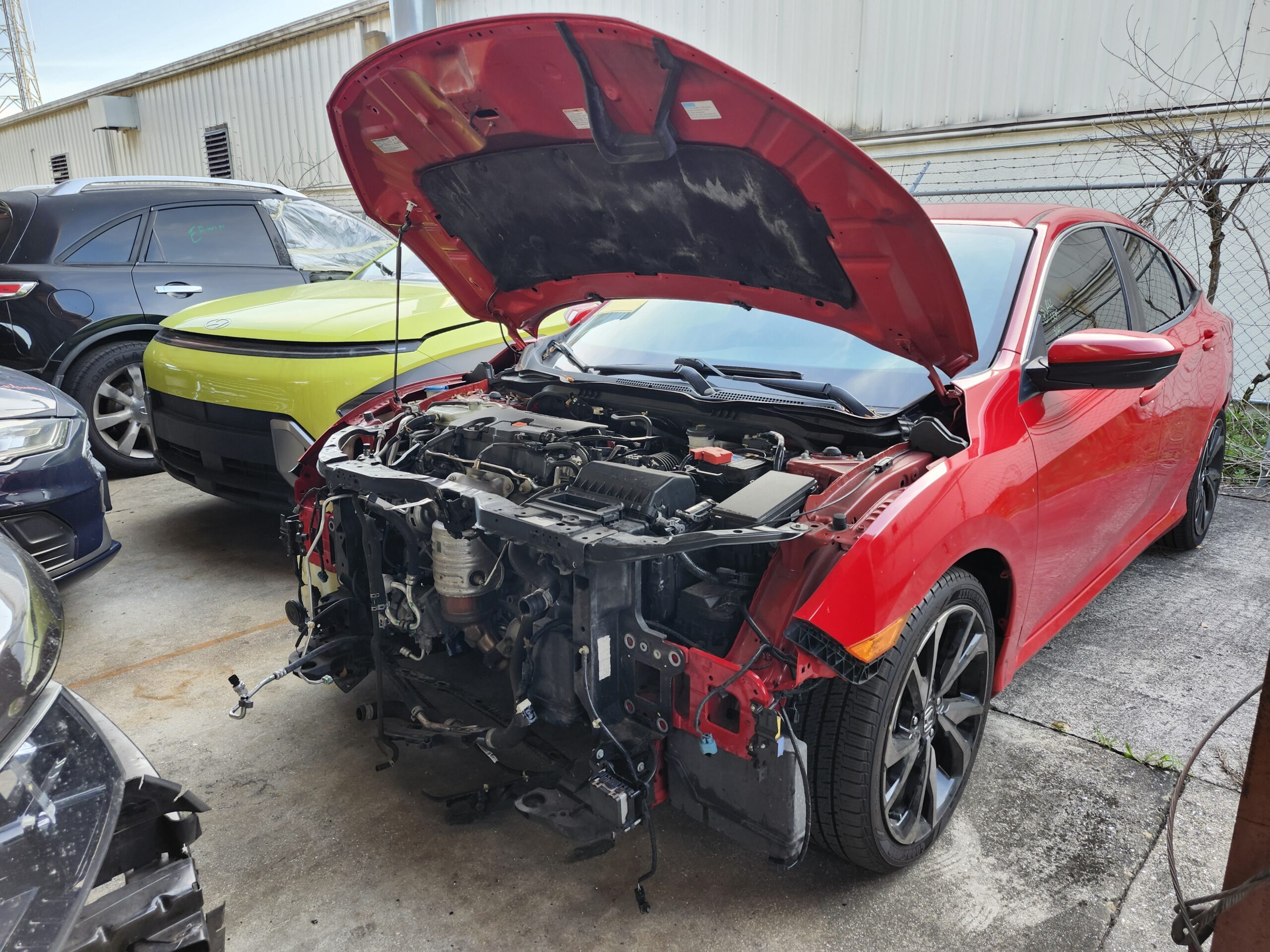
A 2019 Honda Civic Sport, garaged in the Wellington area of western Palm Beach County, was declared a total loss following a March 2026 collision. The insurer’s market valuation report set the vehicle’s base value at $11,825.00. Auto Praise’s independent appraisal, built on physical inspection and a broader set of market data, concluded an actual cash value of $16,597.83. After the vehicle owner invoked the appraisal clause, the two appointed appraisers agreed on a final award of $16,325.00 — $4,500.00 above the insurer’s original base offer.
This case illustrates a pattern common to Palm Beach County total loss claims: an automated valuation tool produced a defensible starting number, but the comparable selection and condition adjustments applied to it didn’t fully account for what this specific, well-documented vehicle was actually worth.
Case Overview Table
| Detail | Information |
| Vehicle | 2019 Honda Civic Sport Sedan |
| Exterior Color | Red |
| Engine / Drivetrain | 2.0L 4-Cylinder, CVT Automatic, Front-Wheel Drive |
| Mileage at Time of Loss | 90,542 miles |
| Location | Wellington area, western Palm Beach County, FL |
| Service Type | Independent total loss appraisal / appraisal clause |
| Insurer’s Base Vehicle Value | $11,825.00 |
| Auto Praise Independent Appraisal Value | $16,597.83 |
| Final Appraisal Award | $16,325.00 |
| Recovery Above Insurer’s Base Offer | $4,500.00 |
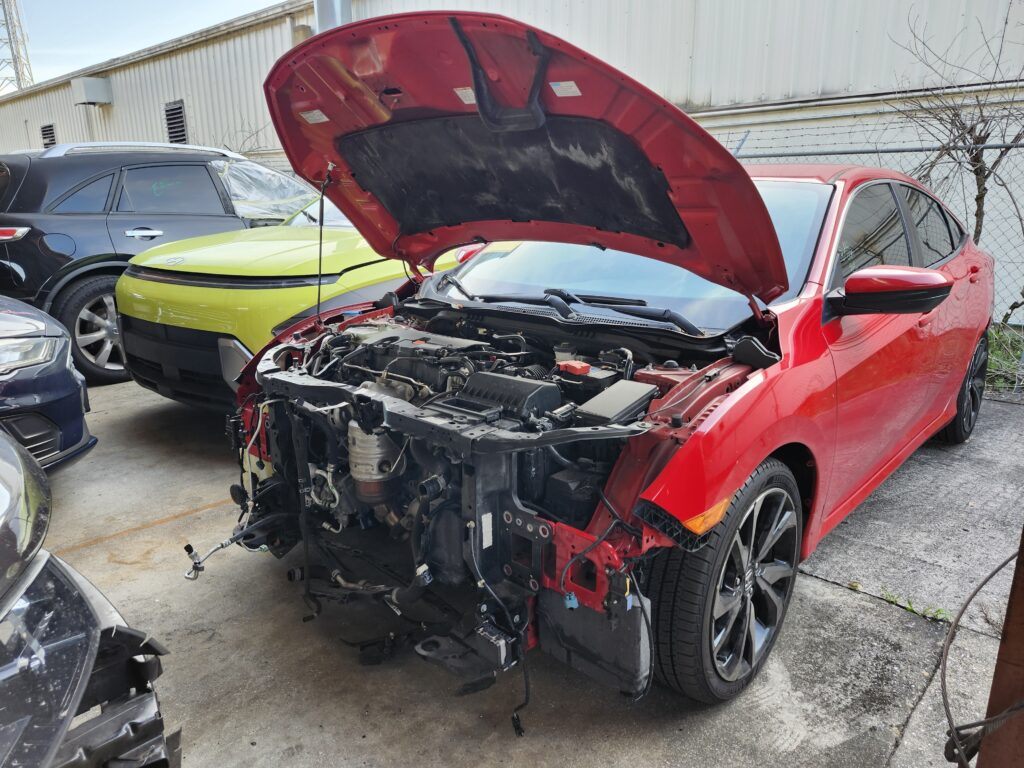
2020 Honda Civic Sport with severe front-end collision damage and exposed engine bay in Royal Palm Beach for total loss appraisal.
Florida Total Loss Appraisal & Claim Support
- Professional Authority: I-CAR Platinum & IACP Certified Appraisers with Florida 6-20 Adjuster Licensing.
- Industry Credentials: Over 30 years of specialized automotive and insurance claims experience.
- Valuation Experts: Independent Actual Cash Value (ACV) reports designed to accurately value your vehicle.
- Proven Reputation: Five-Star Rated Florida independent appraisal firm providing statewide remote and mobile support.
Where This Claim Happened
This claim originated in the Wellington area of western Palm Beach County, in the corridor of unincorporated communities that stretch along State Road 7 and Forest Hill Boulevard between Wellington proper and the West Palm Beach city line. The specific loss occurred in State Road 7 and Forest Hill Boulevard intersection, an area we regularly service for Wellington vehicle owners.
The western communities market, Wellington, Royal Palm Beach, and the unincorporated corridor along State Road 7 — sits apart from the coastal Palm Beach market in a few important ways. Vehicle turnover here leans heavily toward commuter sedans and family vehicles used for the daily drive into West Palm Beach along Southern Boulevard and Forest Hill Boulevard, rather than the higher-end inventory seen closer to A1A and the barrier island. A well-optioned, low-mileage-for-its-age Civic Sport like this one competes in a segment where buyers pay close attention to trim level and documented condition, not just year and mileage. That distinction matters when an automated valuation tool pulls comparables from a wide radius that may not reflect local buyer behavior as closely as a hand-selected, market-specific comparable set.
The Insurer's Valuation — What the MVR Showed
The insurer's automated valuation software returned a base vehicle value of $11,825.00 for this claim, built from twelve comparable vehicles pulled from across South Florida, including Fort Lauderdale, Lake Worth, Delray Beach, Hollywood, Hialeah, and as far as Fort Pierce and Fort Myers. When exact matching comparables aren't available in the immediate local market, sourcing from a wider geographic radius is standard appraisal practice, and the report applied mileage adjustments to each comparable to account for differences from the lost vehicle's mileage.
What stood out on closer review was the condition adjustment applied uniformly across all twelve comparables, a flat deduction of $2,754.00 from each one, bringing every comparable down to a baseline "Good" condition rating. That adjustment is a meaningful percentage of each comparable's list price. The insurer's own component-by-component inspection of the loss vehicle, however, rated every category, interior, exterior, mechanical, and tires — as "Good" with zero negative value impact. When a vehicle's own documented condition already sits at the baseline the adjustment is designed to normalize toward, it's worth asking whether that same deduction should have applied so heavily to the comparable vehicles used to value it.
The mileage figure used in the report — 90,542 miles — matched what our physical inspection later confirmed on the dashboard, so mileage accuracy wasn't an issue in this particular file. The gap here came from how the comparable data was adjusted, not from a data entry error.
The Auto Praise Independent Appraisal — Our Process
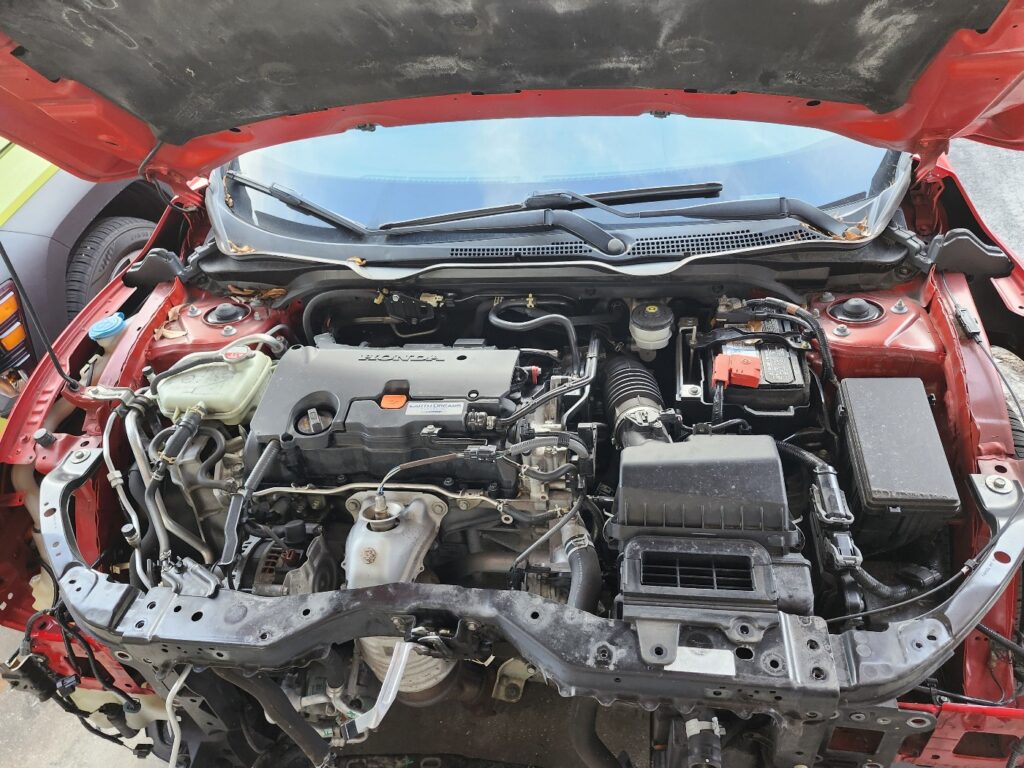
I personally inspected this vehicle, documenting the VIN plate, the odometer reading, and the condition of the interior, exterior panels, glass, and engine compartment with photographs taken at the point of inspection. That documentation gave me a firsthand basis for the condition ratings in my report, rather than relying solely on the lost vehicle's damage photos submitted with the claim.
For the valuation itself, I cross-referenced multiple sources rather than a single database. Black Book returned a retail value of $18,300.00 for this vehicle. J.D. Power's clean retail figure came in at $16,225.00. I then built a three-vehicle sales comparison using comparables in Fort Myers, Tampa, and Lake Worth, all matching trim, engine, and transmission, with a resulting average adjusted market price of $16,597.83 after mileage adjustments specific to each comparable.
Weighing the guidebook values against the sales comparison approach, and accounting for the vehicle's documented Sport trim equipment and condition at the time of loss, my final Actual Cash Value conclusion for this 2019 Honda Civic was $16,597.83, effective as of the March 2026 date of loss and certified in conformity with the Uniform Standards of Professional Appraisal Practice.
The Appraisal Clause Process
When the initial offer and the independent appraisal value didn't align, the vehicle owner invoked the appraisal clause found in most Florida auto policies. This is important context for any Florida vehicle owner considering this route: the appraisal clause is only available to a first-party insured, meaning the vehicle owner must be filing the claim through their own policy. On a third-party claim, where a different driver caused the damage and the claim is filed against the at-fault driver's insurer, the appraisal clause is not available, and claimants pursuing those claims have no formal mechanism to compel an independent appraisal.
In this case, the vehicle owner retained Auto Praise as their appointed appraiser. The carrier appointed its own appraiser. As required under Florida policy language and statute, a neutral umpire was named at the outset of the process in the event the two appraisers could not agree on value. The two party-appointed appraisers reviewed their respective findings and reached agreement without requiring the umpire's involvement, producing a signed, binding appraisal award of $16,325.00. Once signed by both appraisers, that award figure is what the insurance carrier is required to settle the claim for.
Outcome Summary
Insurer's Base Offer: $11,825.00 → Auto Praise Appraisal: $16,597.83 → Final Appraisal Award: $16,325.00
The appraisal process closed this claim at $16,325.00, a recovery of $4,500.00 above the insurer's original base vehicle value, resolved through the signed appraisal award rather than continued back-and-forth negotiation. For this vehicle owner, that recovery represented the difference between accepting a valuation built on a broad automated comparison and one grounded in a physical inspection and a multi-source market analysis specific to this Civic.
What This Case Illustrates
A uniform adjustment isn't always a fair adjustment. When an automated system applies the same condition deduction to every comparable vehicle regardless of that specific vehicle's documented state, it can undercut a vehicle that was already in above-average condition. This case is a clear example of why that adjustment deserves scrutiny rather than automatic acceptance.
Guidebook values are a starting point, not a conclusion. Black Book, J.D. Power, and sales comparison data each told a slightly different story about this vehicle's worth. A defensible appraisal weighs all three rather than anchoring to whichever number is lowest.
Physical inspection adds documentation value when it happens. Not every total loss appraisal requires an in-person inspection, many Auto Praise appraisals are completed as thorough desk reviews using photos, documentation, and market data. In this case, the physical inspection gave firsthand condition documentation that supported the final value conclusion.
Geographic comparable selection matters even when local inventory is limited. Pulling comparables from a wide South Florida radius is normal and appropriate when exact local matches aren't available — but the comparables still need to reflect true trim and equipment equivalency, not just year, make, and model.
The appraisal clause exists for exactly this kind of disagreement. When a documented gap exists between an insurer's offer and an independent appraisal, Florida policy language provides a structured path to resolve it, one this case worked through as designed.
Catching a flat $2,754 condition deduction applied to all twelve comparables on a car the insurer's own inspection rated Good across every category is not something that surfaces on its own. That is what a second opinion on a total loss valuation is for, and on this file it closed a $4,500 gap.
Frequently Asked Questions
What is a total loss appraisal, and when do I need one?
A total loss appraisal is an independent, professional determination of a vehicle's Actual Cash Value at the time of loss, prepared separately from the insurance company's own valuation. You generally need one when your insurer's total loss offer seems lower than what comparable vehicles are actually selling for in the current market. An independent appraisal provides documented, defensible support if you decide to challenge the offer or invoke your policy's appraisal clause.
How does the appraisal clause work for Wellington and Palm Beach County vehicle owners?
Most Florida auto policies include an appraisal clause that lets a first-party insured demand an independent appraisal when they disagree with the insurer's valuation. Each side appoints its own appraiser, a neutral umpire is named as a formality in case the two can't agree, and the appraisers work from actual market data to reach a binding award. This process is available statewide, including for Wellington and greater Palm Beach County vehicle owners, provided the claim is filed through the vehicle owner's own policy.
Why did the insurer's valuation differ from Auto Praise's appraisal in this case?
The gap largely came down to how comparable vehicles were adjusted for condition. The insurer's software applied the same flat condition deduction to every comparable vehicle regardless of its specific listing details, while Auto Praise's appraisal weighed multiple valuation sources, guidebook data and a market-specific sales comparison, against the vehicle's actual documented condition.
Do I need a physical inspection to get an accurate total loss appraisal?
Not necessarily. Many independent total loss appraisals are completed as desk reviews using the claim photos, documentation, and current market data, and can still produce a well-supported value conclusion. A physical inspection, when it occurs, simply adds an additional layer of firsthand documentation to support the appraiser's condition findings.
What should I do if my total loss offer seems low?
Start by requesting a copy of the insurer's market valuation report and reviewing the comparable vehicles, mileage figures, and condition adjustments it relies on. If the offer still seems inconsistent with what similar vehicles are actually selling for, an independent appraisal can identify whether the insurer's offer seems low for a documentable reason, and whether invoking the appraisal clause is a reasonable next step.
Getting an Independent Second Opinion in Wellington
If your total loss offer on a vehicle garaged anywhere in Wellington or the surrounding Palm Beach County communities seems too low, Auto Praise can review the insurer's market valuation report and identify whether the comparable selection and adjustments actually reflect your vehicle. We work with Florida vehicle owners statewide to evaluate whether there's a documented basis to pursue a better settlement through the total loss claim process.
A free claim review can help you understand whether your offer holds up against the actual market data for your vehicle.
Call 754-210-9807 for a Free Review Florida Licensed Adjusters • I-CAR Platinum Certified • IACP Certified Auto Appraisers