
 Call us now:

In the world of high-performance automotive assets, perfection is the baseline. When I am called to inspect a Ferrari, a McLaren, or a Lamborghini, the standards are fundamentally different than those used for a standard luxury sedan. For the owners of these vehicles, an accident is not just a temporary inconvenience; it is a significant financial event that alters the investment trajectory of the car. The exotic car diminished value following even a minor incident can be staggering, often reaching into the tens of thousands of dollars because the market for these vehicles simply does not tolerate a flawed history.
I recently evaluated a late-model Porsche 911 GT3 RS that had sustained what the insurance carrier called minor damage to the rear bumper and one carbon fiber wing element. The repair was executed by a factory-certified facility, and the final invoice was roughly $18,000. However, when the owner went to trade the vehicle for a newer allocation, he was met with a valuation that was $45,000 below the market average for a clean-title, no-accident example. This is the reality of the supercar market. The car was mechanically perfect, but its pedigree had been compromised.
The Unique Nature of Supercar Depreciation
Every vehicle depreciates, but supercar depreciation operates on a specialized curve. These cars are often purchased as much for their future resale potential or collectibility as they are for their driving dynamics. In the exotic segment, the buyer pool is exceptionally small and highly discerning. A buyer spending a quarter of a million dollars or more expects a vehicle with a flawless provenance.
When an accident is added to the history, that vehicle is immediately removed from the top tier of the market. It no longer qualifies for certain certified pre-owned programs, and it is viewed with skepticism by collectors. This shift in market tier is the primary driver behind the significant loss in value. Even if the car is restored to factory standards, the inherent stigma of the accident remains a permanent fixture of the vehicle’s identity.
Technical Nuances: Specialized Paint Valuation and Materials
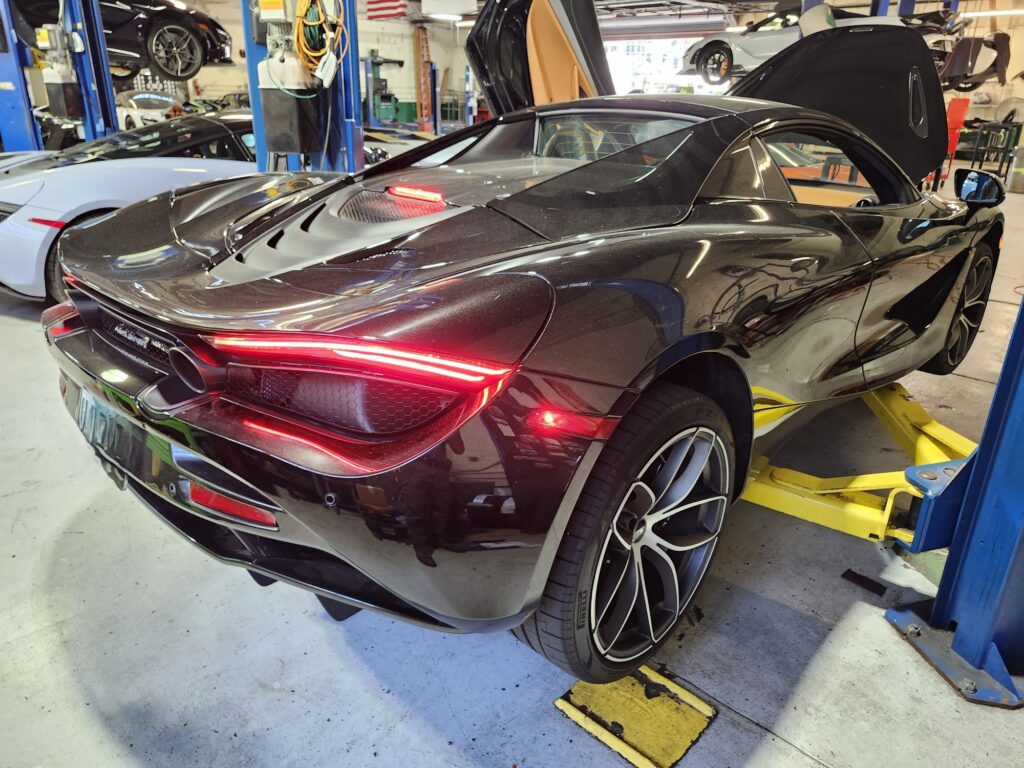
As an independent auto appraiser, one of the most critical factors I examine during an exotic appraisal is the finish. Many of these vehicles feature multi-stage paints, matte finishes, or bespoke “Ad Personam” or “Tailor Made” colors. Achieving a factory-perfect match on these finishes is incredibly difficult. During my inspections, I perform a specialized paint valuation by using high-resolution depth gauges to check for consistency across panels.
If a panel has been repainted, even perfectly, the paint thickness will almost always differ from the factory application. To a seasoned collector or a professional buyer, this is an immediate red flag. On a high-end exotic, a non-factory paint reading on a single door or fender can lead to a value deduction that far exceeds the cost of the actual repair. The market views original factory paint as a hallmark of an untouched, investment-grade asset.
Strategic Guide: Professional Valuation
Has your high-end asset been compromised by a repair? In the exotic market, documentation is everything. We provide the technical evidence needed to prove your loss.
The Role of Carbon Fiber and Bespoke Components
Exotic cars are moving away from traditional steel and aluminum toward advanced composites. Carbon fiber monocoques and body panels are common, and these materials do not “repair” in the traditional sense. If a carbon fiber component is damaged, it often requires a full replacement rather than a patch or fill.
However, even a replacement can be a point of contention in the market. Many exotic owners prefer to see original factory-installed components. When we document exotic car diminished value, we take into account the rarity of these parts and the specialized labor required to install them. A shop might follow the repair manual to the letter, but if the weave of the carbon fiber doesn’t perfectly align with the adjacent panel, the vehicle’s aesthetic and financial value are diminished.
Why Automated Valuation Software Fails the Exotic Owner
When an exotic car is involved in a severe accident, it often enters the realm of a total loss dispute. In my experience, insurance carriers rely on automated valuation software that frequently misses the mark on high-end vehicles. These programs are designed for high-volume commuter cars and often fail to accurately decode bespoke options, paint colors, or limited edition packages that define an exotic car’s true value.
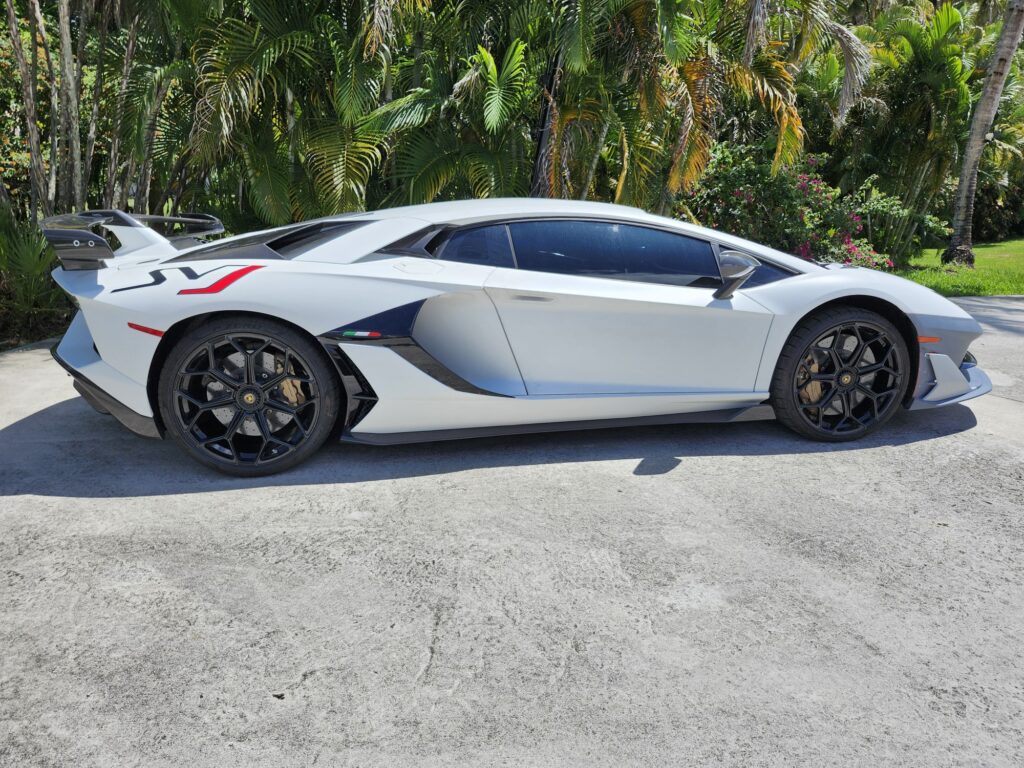
This is a common issue we see when a vehicle is on the verge of being totaled. The computer might see a “Lamborghini Huracan,” but it fails to account for the $40,000 in carbon fiber options or the specific performance exhaust that makes that particular VIN more desirable than a base model. This is why a professional appraisal is essential to verify that the valuation reflects the rarity and spec of the vehicle rather than a generic market average.
Strategic Guide: Total Loss Accuracy
Is your insurance company using generic data to value your exotic? Automated tools often overlook the high-level options that define your car’s worth.
The Market Stigma: Who is Buying Your Repaired Exotic?
When you go to sell a repaired exotic, your audience changes. The “perfectionist” buyers who pay premium prices are gone. You are left with “value seekers” who are looking for a deal. These buyers understand that they are taking a risk on a car with a history, and they demand a significant discount to justify that risk.
This gap between the “clean” price and the “accident-history” price is the diminished value. It is not an arbitrary number; it is a reflection of actual market behavior. When I prepare an appraisal report, I look at comparable sales of vehicles with similar histories. This data-driven approach is the only way to effectively counter the insurance company’s claim that a “quality repair” results in no loss of value.
Beyond the Physical Repair
It is a common mistake to think that once the body shop is finished, the financial impact has concluded. In reality, the “fixed” car is often just the beginning of a new set of challenges regarding its future marketability. Even when the work is performed to factory standards, the market reacts to the history of the vehicle. To understand the psychological factors and market data that drive these value drops, you can read our detailed breakdown on how an accident history anchors your car’s worth. This perspective is vital for exotic owners who need to justify their claim for loss in value to an insurance adjuster.
Strategic Guide: Florida Claim Education
Not sure how to start your claim process? Our guide breaks down the steps for vehicle owners in Florida to recover their lost equity.
The Long-Term Impact on Supercar Depreciation
It is important to understand that the financial hit doesn’t go away over time. Unlike an economy car where the accident matters less as the car ages, the supercar depreciation remains tethered to the vehicle’s history indefinitely. In the collector world, a “clean” 20-year-old Ferrari is worth significantly more than one with a story, even if the work was done 15 years ago.
By failing to file a claim for exotic car diminished value today, you are essentially agreeing to pay that discount out of your own pocket when you eventually sell the car. My goal is to ensure that the person responsible for the accident, or their insurance carrier, is the one who bears that financial burden.
Legal Recovery for High-Value Assets
The ability to recover these losses in Florida is not merely a matter of insurance company policy; it is a right established under state law. For owners of high-end marques, the financial stakes are significantly higher, and the path to recovery often requires a deeper understanding of exotic car values. If you are navigating a claim for a high-value vehicle, I recommend reviewing our comprehensive guide on Florida Diminished Value Law to understand your rights regarding third-party recovery and the evidence required to support a claim.
Strategic Guide: Total Loss Regulations
Could your repaired exotic actually be a total loss? Florida law has specific rules regarding the cost of repair relative to the car’s value.
Expert Documentation and Specialized Paint Valuation
In a recent case involving a Lamborghini Aventador with a custom matte finish, the specialized paint valuation was the turning point in the negotiation. The insurance company argued that the paint was “just paint.” However, we were able to demonstrate that the factory-applied matte finish has a specific texture and light-reflection index that cannot be replicated in a standard body shop environment without painting the entire vehicle to ensure a match.

The cost to do that, combined with the loss in value for no longer having the original factory finish, resulted in a claim that was five times higher than the insurance company’s initial offer. This is why you need someone who understands the technical side of the automotive industry, not just someone who can fill out a form.
Strategic Guide: Industry Resources
| Callout: Industry Authority Links |
| Market Data and Trends: For insights into current exotic and collector car market values, refer to Hagerty Valuation Tools or Bring a Trailer’s Market Results to see real-world sales data for high-end assets. |
Final Thoughts from the Field
Owning an exotic car is a passion, but it is also a significant financial commitment. Protecting the equity in that asset requires a proactive approach when an accident occurs. The exotic car diminished value is a real, measurable loss that impacts your net worth.
I take my role as an independent, credentialed authority seriously. I provide the evidence, the market data, and the technical insight needed to accurately document and quantify the loss in value to exotic cars after an accident. We don’t rely on hype; we rely on the engineering and economic realities of the supercar market to ensure our clients are treated fairly.
Does a minor “parking lot” incident really affect an exotic car’s value?
Yes. In the exotic market, even a record of a minor bumper repair can trigger a significant loss. Sophisticated buyers use paint meters to check every panel. If they find a discrepancy, they will assume the worst and demand a discount. This is why documenting the exact nature of the damage and the quality of the repair is vital.
Can an insurance company refuse to pay for a specialized paint valuation?
They often try to, claiming that standard refinishing costs are sufficient. However, if your vehicle has a multi-stage or bespoke factory finish, you are entitled to be made whole. This includes the cost of a proper repair and the loss in value associated with no longer having the original factory finish.
Why is supercar depreciation so much more aggressive after an accident?
It comes down to the buyer pool. Most supercar buyers are looking for an “investment-grade” vehicle. Once an accident is on the record, the car no longer fits that criteria. The pool of buyers shrinks to those who are only interested if the price is much lower than average.
If I plan to keep the car forever, do I still need a diminished value appraisal?
Plans change. You may decide to trade the car for a newer model or sell it to fund another investment. Even if you keep it, the value of your asset has decreased. Filing a claim now ensures you are compensated for that loss while the evidence and the claim window are still open.
How does a Total Loss Appraisal differ for an exotic car?
Standard total loss tools use generic market data. A professional exotic appraisal involves decoding the specific options, verifying the rarity of the color and trim, and looking at high-end retail listings and auction results. This ensures the payout reflects the actual cost of replacing your specific vehicle, not just a base-model version.