
 Call us now:

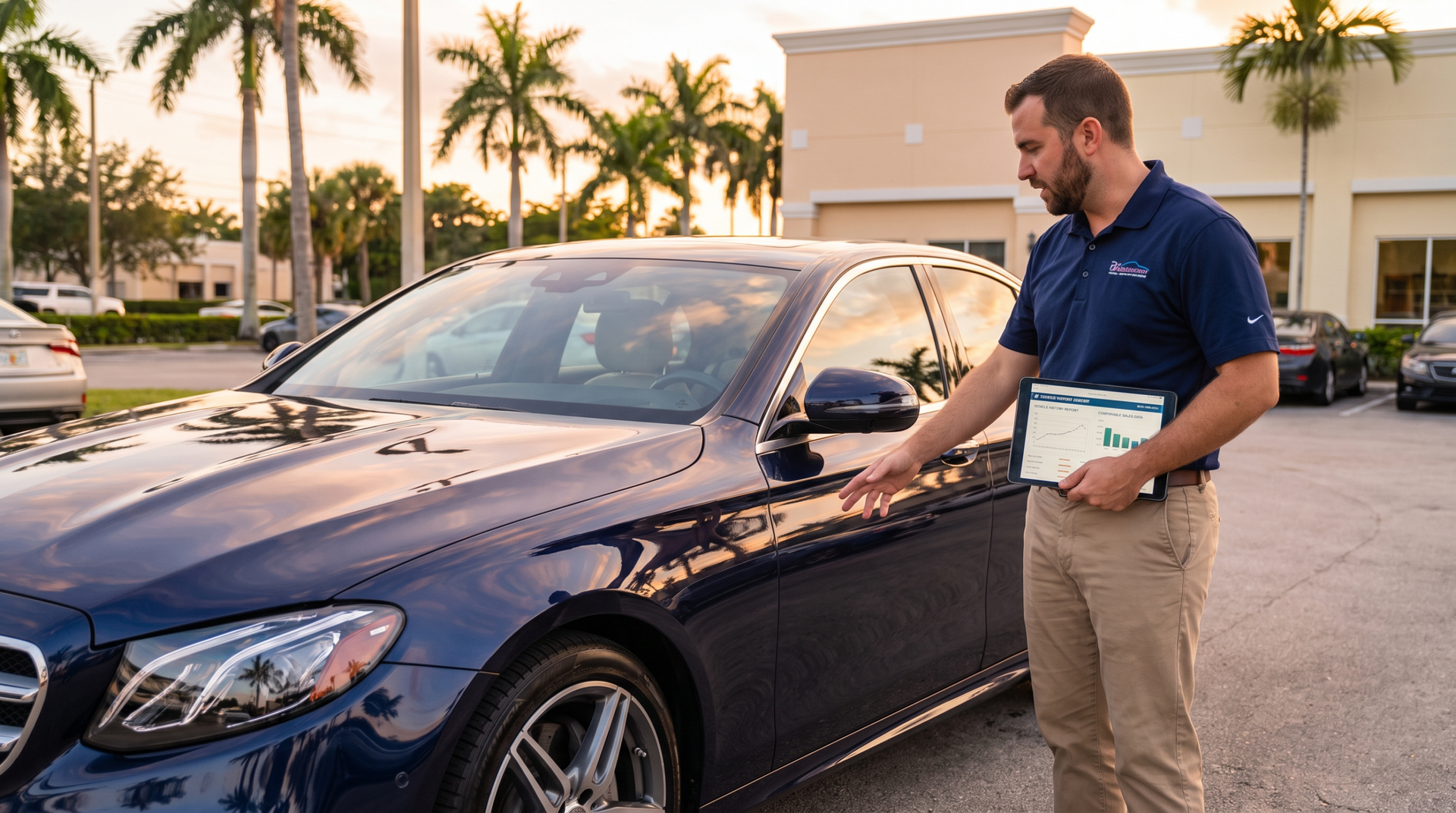
Inherent diminished value is the loss in resale worth a vehicle carries simply because it now has an accident on its record, even after a repair returns it to pre-loss condition. It exists independent of repair quality. A car can leave the shop with panel gaps within factory spec, OEM parts throughout, and a clean post-repair inspection, and still be worth less than an identical vehicle with no accident history, because the history itself is now permanent and disclosed on every vehicle history report a future buyer or dealer pulls.
TL;DR: Inherent diminished value applies after a repair is complete, and it’s separate from claim-related or repair-related value loss. The insurer formula many carriers use to estimate it was built for claims-processing consistency, not per-vehicle accuracy, which is why independent appraisals frequently land on a different number. Before you file a diminished value claim in Florida, understand which type of loss applies to your situation and what documentation actually supports it, starting with what diminished value means for your car’s worth.
What Is Inherent Diminished Value?
Inherent diminished value is the stigma loss a vehicle carries once an accident becomes part of its permanent record, regardless of how well the vehicle was repaired. It’s one of three recognized categories of diminished value, and it’s the one that typically applies once repairs are complete and done correctly. The vehicle history report doesn’t record repair quality; it records that an accident occurred, and that record alone is what a future buyer, dealer, or appraiser prices in.
That distinction matters because most owners assume a good repair means no loss at all. It doesn’t. A vehicle can leave the shop in excellent physical condition and still be worth measurably less than an identical vehicle with a clean history, simply because the two are no longer the same on paper.
Inherent Diminished Value vs. a Diminution in Value Claim
A diminution in value claim, sometimes called simply a diminished value claim, is the broader process of seeking compensation for any value a vehicle lost as a result of an accident. Inherent diminished value is one specific type of loss inside that broader claim, not a separate claim process of its own.
The other two types are claim-related value loss, which comes from how the insurer or shop handled the repair itself, and repair-related value loss, which comes from workmanship issues in the completed repair. Our full breakdown of all three diminished value types covers how they’re distinguished in more detail. Knowing which one describes your situation determines what evidence actually supports a claim, since each type is proven with different documentation.
Why a “Perfect” Repair Still Leaves Diminished Value on the Books
A repair can be executed to a genuinely high standard, OEM parts throughout, panel gaps within factory spec, a clean post-repair inspection, and the vehicle still carries this type of loss. That’s the part most owners find counterintuitive. Repair quality and the diminished value question are answering two different things.
Repair quality answers whether the vehicle was restored correctly. This type of loss answers whether the vehicle’s history is now different from an equivalent vehicle that was never in an accident. It is, even for a repair a certified technician would sign off on without hesitation, which is exactly why “the shop did a great job” and “there’s no diminished value here” aren’t the same statement.
How Diminished Value 17c Formula Works
The 17c formula is a base-value-times-multiplier calculation many insurers use to produce a quick inherent diminished value estimate: it starts from 10% of the vehicle’s pre-loss value as a cap, then applies a damage severity multiplier and a mileage multiplier to bring that ceiling down. It was built to process high volumes of claims consistently, not to price any individual vehicle precisely.
That design choice is exactly where the formula and an independent appraisal tend to diverge. It doesn’t look at your specific vehicle’s condition, trim level, regional market demand, or comparable sales in your area. It applies the same multiplier logic regardless of whether your car is a base trim with high mileage or a well-optioned, low-mileage example in a market where similar vehicles are moving quickly. A certified diminished value appraisal sources comparable sales data specific to the vehicle and the region rather than applying a flat table.
| Method | What It Evaluates | Vehicle-Specific? | Report Format | Best For |
| 17c estimate | Base value × damage multiplier × mileage multiplier | No, flat multiplier table | Internal claims worksheet | Quick internal insurer estimate |
| Insurer desk review | Formula output plus adjuster discretion | Limited | Claims file note | Fast, low-dispute claims |
| Independent certified appraisal | Vehicle-specific condition, trim, and regional comparable sales | Yes | Documented, USPAP-aligned report | Claims where the formula output looks understated relative to the vehicle |
This gap shows up most often on well-optioned trims, low-mileage vehicles, and vehicles in markets where comparable examples without accident history are selling briskly. None of those factors are inputs to the multiplier table. They are inputs to a comparable-sales-based appraisal, and they’re part of why, as we explain in why “fixed” doesn’t mean “undamaged” in the resale market, a clean repair invoice doesn’t erase the stigma a buyer or dealer will price in.
How to Prove Diminished Value to Your Insurance Company
Understanding how to prove diminished value starts with knowing what documentation actually counts, not just what feels like proof. A completed repair invoice showing OEM parts and a passed post-repair inspection feels like proof the vehicle is fine, and in one sense it is. But it does very little to support an inherent diminished value claim, because the claim isn’t about repair quality. It’s about the accident’s presence on the vehicle’s permanent record.
What tends to matter more:
- A copy of the vehicle history report showing the accident as recorded
- The vehicle’s pre-loss condition, mileage, and trim details
- Comparable sales data for similar vehicles without accident history in the same market
- A professional valuation that accounts for the specific vehicle rather than a flat formula
If you’re weighing whether to file a diminished value claim in Florida, the timing rules for filing matter, and we generally recommend confirming those with an attorney rather than relying on this article for anything beyond the appraisal side. Our overview of Florida’s diminished value law covers the general landscape, but Auto Praise provides appraisals, not legal advice.

How Auto Praise Documents Inherent Diminished Value
An inherent diminished value appraisal starts with the vehicle’s pre-loss condition, mileage, and trim, then moves to inspecting the completed repair itself before comparable sales data is sourced. The appraisal isn’t judging whether the shop did good work; it’s establishing what an equivalent vehicle without the accident history would be worth in the same market, and where this vehicle now sits relative to it.
The resulting report documents that comparison in a format built to hold up if a claim is disputed: USPAP-aligned methodology, comparable sales specific to the vehicle and region, and a clear explanation of how the figure was reached rather than a single number with no supporting work. That’s the difference between a formula output and a report someone can actually stand behind.
Inherent diminished value describes a specific, well-documented pattern: a vehicle repaired to a high standard that still loses resale value because the accident is now part of its permanent record. The 17c formula insurers use to estimate that loss was built for processing consistency, not per-vehicle accuracy, which is why the number it produces and a vehicle-specific comparable-sales appraisal can differ.
Get a Diminished Value Appraisal Review
If you believe an accident has reduced your vehicle’s resale value even after repairs, Auto Praise can provide an independent appraisal to establish what your vehicle is actually worth.
Frequently Asked Questions
How do I know if my claim was undervalued?
Compare the formula-based figure against recent sales of comparable vehicles without accident history in your market. If the gap is significant, an independent appraisal can document the difference with vehicle-specific data rather than a flat multiplier.
What information does an appraiser need to evaluate this type of claim?
An appraiser typically needs the vehicle’s pre-loss condition and mileage, the repair documentation, and access to inspect the completed vehicle. Comparable sales data for the specific make, model, and region is then sourced independently.
Does the vehicle need to still be repaired at the time of the appraisal?
Yes, typically. These appraisals are generally conducted after repairs are complete, since the appraisal is comparing the repaired vehicle’s market value against an equivalent vehicle with no accident history.
Does diminished value affect trade-in value the same way it affects private sale value?
Both are affected, but dealers typically apply their own internal adjustment at trade-in rather than referencing a formal diminished value figure, so the loss can show up differently depending on which sale path you take.
Can you claim diminished value on a leased or financed car?
Generally, the party with the financial interest in the vehicle’s residual value has standing to pursue a claim, which can include a leasing company or lender depending on the agreement’s terms regarding residual value and equity. This isn’t something to assume either way without checking the terms.
Is this treated the same way in every state?
No. How diminished value claims are handled, and whether first-party claims are recognized at all, varies significantly by state. This article addresses the concept generally, with some Florida-specific notes above. Other states may treat it differently.
Do I need an attorney to file a diminished value claim in Florida?
Not necessarily to file the claim itself, though if a claim is disputed or escalates, legal counsel can advise on how to proceed. Auto Praise provides appraisal documentation, not legal representation or advice.