
 Call us now:

When an insurer values a vehicle for a total loss appraisal, most of the attention goes to mileage and cosmetic condition. This case is a reminder that factory equipment matters just as much, and that a single option package, priced wrong, can leave thousands of dollars on the table.
The vehicle was a 2022 Tesla Model 3 garage in Boca Raton, FL, with 61,000 miles on it at the time of a February 2026 accident. The insurer’s valuation came in at $18,369.00. Our independent appraisal established a value of $27,908.21. After the appraisal clause ran its course, the two appraisers signed an agreed final value of $25,000.00 — a recovery of $6,631 above where the claim started.
What follows is how that gap opened up, and how it closed.
Case Overview
| Vehicle | 2022 Tesla Model 3 (Standard Range Battery) |
| Exterior | Black |
| Engine / Drivetrain | Electric, Rear-Wheel Drive |
| Mileage at Loss | 61,000 |
| Location | Boca Raton, FL |
| Service | Independent total loss appraisal / appraisal clause |
| Insurer’s valuation | $18,369.00 |
| Auto Praise independent appraisal | $27,908.21 |
| Final appraisal award | $25,000.00 |
| Recovery above insurer’s valuation | $6,631.00 |
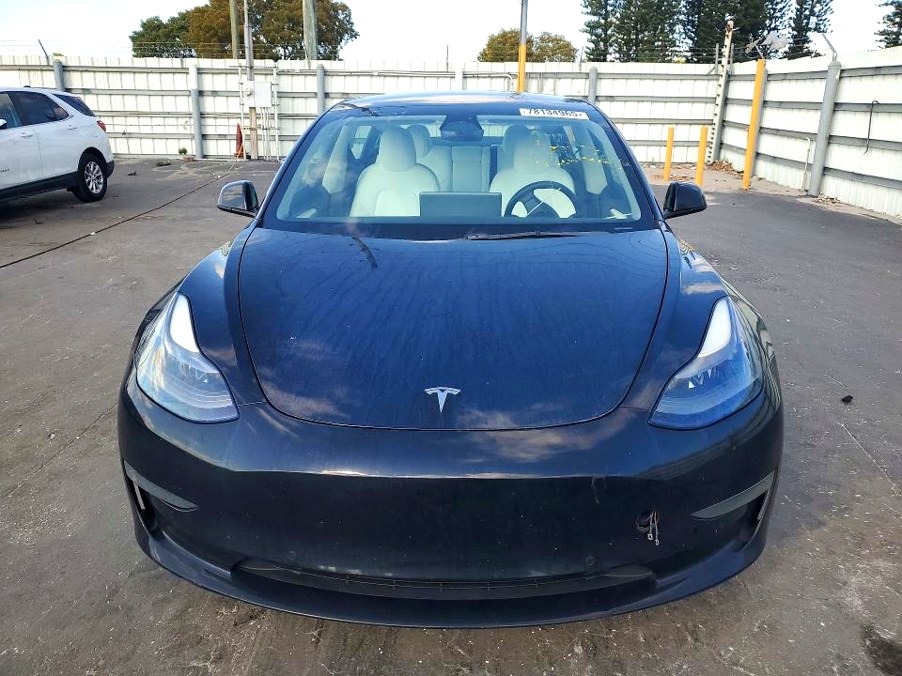
2022 Tesla Model 3 front view in Boca Raton for total loss appraisal.
Florida Total Loss Appraisal & Claim Support
- Professional Authority: I-CAR Platinum & IACP Certified Appraisers with Florida 6-20 Adjuster Licensing.
- Industry Credentials: Over 30 years of specialized automotive and insurance claims experience.
- Valuation Experts: Independent Actual Cash Value (ACV) reports designed to accurately value your vehicle.
- Proven Reputation: Five-Star Rated Florida independent appraisal firm providing statewide remote and mobile support.
The Boca Raton Market for This Vehicle
The vehicle was garaged in west Boca Raton, near the Yamato Road and Congress Avenue corridor, not far from the I-95 interchange that feeds into Glades Road. That part of the city sits between two different markets, the office and technology corridor along Yamato, and the retail and dining density around Town Center at Boca Raton and Mizner Park closer to Federal Highway.
It’s a market where buyers tend to know what they’re looking at. A properly equipped Tesla doesn’t sell the same way in this corridor as a base model does, and the local comp pool for well-optioned vehicles reflects that. That distinction ended up being the whole case.
How the Insurer’s Valuation Was Built
The insurer’s automated valuation software returned a base vehicle value of $17,614.00, adjusted to $18,369.00 after condition adjustments. Three comparable vehicles were used, sourced from Miami and West Palm Beach, ranging from 21 to 46 miles from where the vehicle was garaged. There’s nothing unusual about that distance on its own, when matching local inventory isn’t available, appraisers widen the search radius and apply adjustments, and that’s standard practice.
What mattered here wasn’t the distance. It was the equipment. None of the three comparables the software selected were equipped with Full Self-Driving, and the report’s own vehicle allowance for that package came to just $1,138. That figure was carrying the entire weight of a $12,000 factory option, with no matching real-world sale behind it to confirm it.
The report also flagged a couple of condition items worth noting: “no photos of the engine compartment” under the mechanical section, and “no photos provided” for the interior. Both were treated as neutral, but neither one was actually a finding about the vehicle’s condition, they were gaps in the documentation the report had to work with.
Building the Independent Appraisal
This file was worked as a desk review, using the documentation, photographs, and market data available, not a physical inspection. That’s a normal way for a total loss appraisal to be completed. A physical inspection has its place, but a well-documented desk review, built on verified sources, can support an equally credible conclusion.
The starting point was the vehicle’s original Tesla purchase order. That document confirmed the $12,000 Full Self-Driving Capability package as a factory-installed option, not an aftermarket add-on, not a theoretical upgrade, but a line item on the original order that had to be accounted for.
From there, three comparable Model 3s were sourced through CARFAX and Edmunds listings, matched for model year, trim, drivetrain, and mileage. As with the insurer’s file, none of the available comps carried Full Self-Driving, that’s simply not a package that shows up on every used Model 3, so its absence from the comp pool wasn’t the problem. The problem was what to do about it.
A JD Power valuation report for this specific vehicle configuration was pulled to answer that question directly. It showed a $5,750 retail adjustment for the Full Self-Driving package, nearly five times what the insurer’s software had allowed. That adjustment was applied consistently across all three comparables before averaging them, which brought the average adjusted comparable value to $27,908.21. That figure became the independent actual cash value conclusion as of the date of loss.
The Appraisal Clause Process
The vehicle owner invoked the appraisal clause after reviewing the insurer’s valuation. Under Florida policy language, this right belongs only to a first-party insured, meaning the vehicle owner is filing the total loss claim through their own policy. On a third-party claim, where a different driver caused the damage and the claim runs against that driver’s insurer, the appraisal clause isn’t available, and the claimant has no equivalent formal process to compel an independent valuation.
The vehicle owner retained Auto Praise as their appointed appraiser. The carrier appointed its own. Each side reviewed the file independently, and the two appraisers reached an agreed actual cash value of $25,000.00. That figure is what Florida law requires the carrier to settle the claim for, separate from deductible, sales tax, or title and registration fees.
The Outcome
The insurer’s valuation started at $18,369.00. The final agreed value settled at $25,000.00, a 36% increase, and $6,631 more than where the claim began. For the vehicle owner, that gap was the difference between a settlement that reflected a partially equipped Model 3 and one that reflected the vehicle they actually owned.
For more on how figures like this typically move during a total loss settlement negotiation, see our detailed breakdown of that process.
What This Case Illustrates
Every total loss file has its own set of variables, but a few things about this one hold true more broadly.
Automated valuation tools price equipment the same way they price everything else, off the comparables they can find. When a factory option isn’t represented in the local comp pool, the software still assigns it some value, but that figure isn’t necessarily grounded in a real sale. It has to be checked against outside data, not accepted on its own.
A desk review is only as good as the documents behind it. Nothing about this outcome required an in-person inspection. It required going back to the vehicle’s original purchase order to confirm what was actually on the car, rather than relying on a database’s best guess.
Out-of-market comparables aren’t automatically a problem. The insurer’s comps came from 21 to 46 miles away, which is ordinary when local inventory is thin. The real question is always whether the adjustments applied to those comparables reflect the market accurately, and in this case, one adjustment didn’t.
The appraisal clause is a contractual right, not a fight. This case was resolved through the process working the way it’s supposed to: two independently retained appraisers, each reviewing the same vehicle, reaching an agreed number.
For more on how comparable vehicles are selected and weighted in a total loss valuation, see our breakdown of comparable vehicles in total loss valuation.
Frequently Asked Questions
Does Full Self-Driving actually add value to a used Tesla?
Yes, when it can be verified against the vehicle’s original order documentation. It’s a $12,000 factory option, and guidebooks like JD Power track a specific retail adjustment for it separate from the base vehicle value. The complication in a total loss claim is that automated valuation software may not have a matching equipped comparable available locally, which can lead to the option being reduced to a small, unsupported adjustment unless someone checks it against outside data.
Why wasn’t this vehicle physically inspected?
Not every total loss appraisal requires an in-person inspection. A meaningful share of our work, including this file, is completed as a desk review using condition photos, factory documentation, and verified market comparables. A physical inspection is valuable in the right circumstances, but it isn’t the only way to reach a defensible, USPAP-compliant conclusion.
What should I do if my total loss offer seems low in Boca Raton?
Start by requesting the market valuation report and reviewing which comparable vehicles were used, along with whether any factory options were priced accurately. In a market like Boca Raton, where equipped vehicles carry a real premium, an undervalued or missing equipment adjustment is one of the more common reasons an offer doesn’t reflect what the vehicle is actually worth.
How does the appraisal clause work for Florida vehicle owners?
The appraisal clause lets a first-party insured challenge a total loss valuation by appointing their own independent appraiser, while the insurer appoints one as well. If the two agree on a value, that figure becomes binding and the insurer has to settle at that amount. It only applies when the vehicle owner is filing through their own policy, not on a third-party claim against another driver’s insurer.
What’s the real difference between an automated valuation and an independent appraisal?
An automated valuation is generated from a database of comparable vehicles with adjustments for mileage and condition. That’s a legitimate starting point, the issue is always whether the specific comparables and adjustments used actually match the vehicle in question. An independent appraisal goes back to the source documents, including things like a factory purchase order, to confirm the conclusion holds up.
Was Your Tesla or EV Undervalued Over an Equipment Package?
Technology and equipment packages — Full Self-Driving, premium interiors, upgraded battery configurations, are exactly the kind of factory options that automated valuation software struggles to price when a matching local comparable isn’t available. If your electric vehicle or any other vehicle was declared a total loss and the settlement seemed low, that’s often where the gap comes from.
Auto Praise can review the market valuation report used in your claim and check whether factory equipment, comparable vehicles, mileage, and condition ratings were priced accurately. A free claim review can help you understand whether there’s a valid basis to challenge the insurance company’s valuation and pursue a better settlement.
Call 754-210-9807 for a Free Review Florida Licensed Adjusters • I-CAR Platinum Certified • IACP Certified Auto Appraisers
Boca Raton vehicle owners dealing with a low total loss offer can start with that same free review.