
 Call us now:

A 2016 Land Rover Range Rover Autobiography, finished in black over a cognac leather interior with the long-wheelbase body style, was declared a total loss following an April 2025 accident in Wellington, Florida. The insurer’s base vehicle value came in at $31,359. Auto Praise’s independent appraisal, which identified a dealer-installed option the insurer’s valuation software never captured, placed the adjusted fair market value at $37,294. The claim proceeded through the appraisal clause, and the two appointed appraisers reached a binding award of $35,400, a recovery of $4,041 above the insurer’s original base offer.
Case Overview
| Detail | Figure |
| Vehicle | 2016 Land Rover Range Rover Autobiography, Long Wheelbase |
| Exterior Color | Black |
| Engine / Drivetrain | 5.0L Supercharged V8, Automatic, 4WD |
| Mileage at Time of Loss | 57,411 |
| Location | Wellington, FL (Palm Beach County) |
| Service Type | Independent total loss appraisal / appraisal clause |
| Insurer’s Base Vehicle Value | $31,359 |
| Auto Praise Independent Appraisal Value | $37,294 |
| Final Appraisal Award | $35,400 |
| Recovery Above Insurer’s Base Offer | $4,041 |
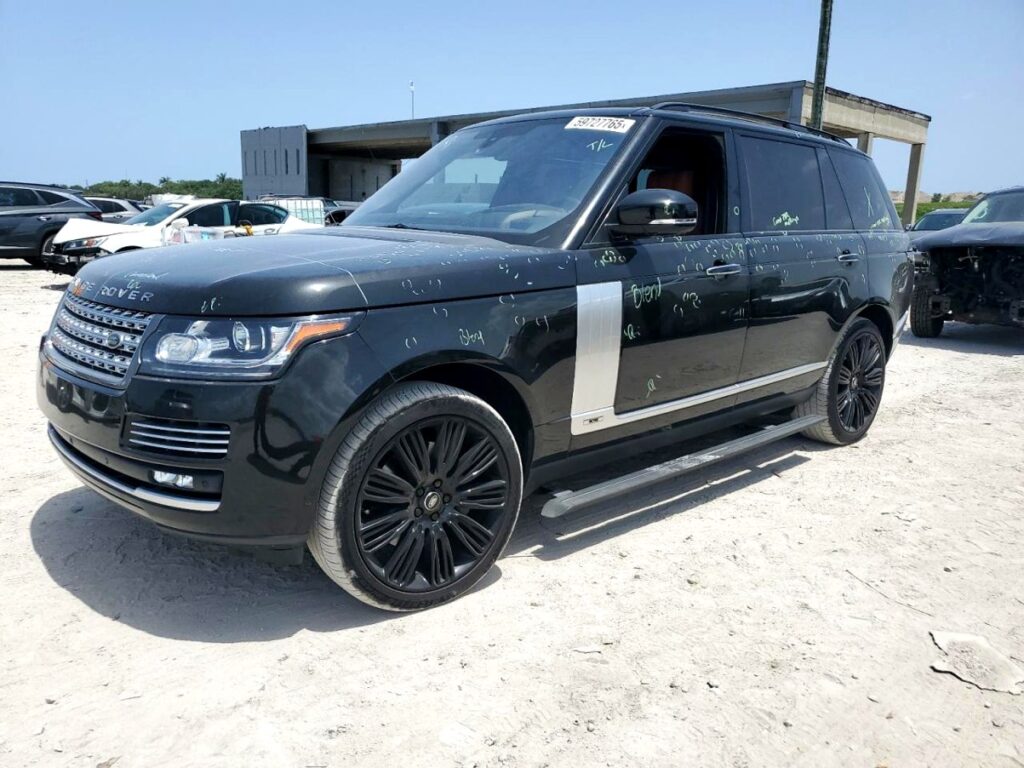
2016 Range Rover luxury SUV with appraiser markings in Wellington Florida assessed for total loss appraisal.
Florida Total Loss Appraisal & Claim Support
- Professional Authority: I-CAR Platinum & IACP Certified Appraisers with Florida 6-20 Adjuster Licensing.
- Industry Credentials: Over 30 years of specialized automotive and insurance claims experience.
- Valuation Experts: Independent Actual Cash Value (ACV) reports designed to accurately value your vehicle.
- Proven Reputation: Five-Star Rated Florida independent appraisal firm providing statewide remote and mobile support.
A Wellington Vehicle, A Wellington Market
This Range Rover was garaged in the Wellington corridor of western Palm Beach County, an area built around the community's equestrian economy.
Wellington's commercial and residential geography runs along South Shore Boulevard, Wellington Trace, and Forest Hill Boulevard, with Southern Boulevard providing the primary connection east toward West Palm Beach and State Road 7 (US-441) forming the corridor's eastern edge. The Mall at Wellington Green anchors the retail center of the community along South Shore Boulevard, and Wellington's identity as the "Winter Equestrian Capital of the World" — home to the Palm Beach International Equestrian Center's winter show season, shapes the local vehicle market in a specific way.
Full-size luxury SUVs like the Range Rover Autobiography are common in Wellington precisely because they're used for towing horse trailers, hauling tack, and navigating the community's farm-zoned acreage properties. That demand supports strong local values for well-optioned Range Rovers, but it also means that an exact match for a specific configuration, in this case, a Long Wheelbase Autobiography with a rare port-installed option, isn't always sitting on a lot nearby. That scarcity is part of why the insurer's search for comparable vehicles had to reach well outside South Florida, a pattern discussed in the next section.
The Insurer's Valuation — What the Report Showed
The insurer's total loss claim file relied on the insurance company's automated valuation software to establish a base vehicle value. That report set the base value at $31,359, with no downward condition adjustments, every inspected component, from the seats to the tires, came back rated as normal wear.
The software identified two comparable vehicles, both matching the year, make, model, and Long Wheelbase Autobiography trim. Because an exact-match configuration wasn't available closer to home, both comparables were sourced from well outside Florida. When exact matching comparables aren't available locally, appraisers commonly widen the search radius and apply market adjustments to account for the difference, that's standard practice, not a flaw by itself. The real question is whether the comparables were genuinely equivalent and whether the adjustments applied were complete.
On mileage, the system got the direction right: both comparables carried higher mileage than the loss vehicle's 57,411, and the software applied upward adjustments of roughly $1,464 and $414 to account for it. Where the report fell short was on equipment. The insurer's equipment table credited a $50 allowance for a roof rack but never identified or valued the vehicle's deployable side steps, a port-installed option, available only on the Long Wheelbase Autobiography, that carried an original retail list price of $4,151. Because that option isn't part of the base equipment set decoded directly from the VIN, it's the kind of detail an automated system can miss entirely unless it was separately flagged in the file.
The Auto Praise Independent Appraisal — Our Process
I inspected this vehicle at the salvage facility where it was being stored, documenting the VIN plate, confirming the odometer reading, and photographing the condition across the interior, exterior panels, glass, and engine bay. The seats, carpets, dashboard, and headliner all came back clean, consistent with a well-maintained vehicle prior to the loss.
For comparable vehicles, I ran a local search within a 500-mile radius first and found no matching VIN-equivalent comps, this configuration simply isn't common inventory in Florida. I expanded the search nationwide, prioritizing similar mileage and, where a comparable carried its own accident history, applying a downward adjustment so the resulting value reflected clean, minor-damage market data rather than mixing in more heavily damaged vehicles. One comparable required a $2,500 accident-history adjustment for exactly that reason.
The three comparables I used averaged 71,650 miles against the loss vehicle's 57,411, so I applied a mileage adjustment of roughly $0.03 per mile — about $1,139 — which brought the fair market value at time of loss to $34,804.
The deployable side steps were the detail that mattered most in this file. Cross-referencing the vehicle's Black Book New Car Cost Guide entry confirmed the option — code 931, Long Wheelbase only, $4,151 original retail — and I applied a $2,490 adjustment to reflect it. That brought the adjusted fair market value, certified under USPAP, to $37,294.
The Appraisal Clause Process
The appraisal clause is a provision found in most Florida auto policies that allows either party to demand a formal, structured process for resolving a valuation dispute, separate from ordinary claim negotiation. It's worth noting that the appraisal clause is only available to a first-party insured, meaning the vehicle owner filing the claim through their own policy. On a third-party claim, where a different driver caused the damage and the claim is filed against the at-fault driver's insurer, the appraisal clause isn't available, and claimants have to pursue other means to challenge an unsatisfactory offer.
In this case, the vehicle owner retained Auto Praise as their appointed appraiser, and the carrier appointed its own appraiser. Both sides submitted their valuations, and the two appraisers worked toward agreement. As is standard under Florida policy language, an umpire was named at the outset of the process in case the two appraisers couldn't agree, but that step wasn't needed here. The appraisers reached agreement directly, producing a binding appraisal award of $35,400. Once signed, that award is the figure the insurer is required to settle the claim for.
Outcome Summary
Insurer's Initial Base Value: $31,359
Final Appraisal Award: $35,400
Recovery Above Insurer's Offer: $4,041
For the vehicle owner, that recovery closed most of the gap between what an automated valuation missed and what the vehicle was actually equipped with, value that would otherwise have been left on the table over a single overlooked option code.
What This Case Illustrates
Automated valuation software decodes standard equipment, not everything on the vehicle. A VIN tells a valuation system what a vehicle came with from the factory. Port-installed and dealer-installed options, like this vehicle's deployable side steps, often exist outside that data set entirely, and only get captured if someone specifically documents and prices them.
A wide comparable search radius isn't automatically a problem. When a specific trim and configuration is scarce in the local market, pulling comparables from hundreds of miles away is a normal and defensible approach, as long as the adjustments applied account for real differences in mileage, condition, and equipment.
Mileage adjustments can be correct in direction and still incomplete overall. The insurer's mileage math here wasn't the issue. A valuation can get one variable right while still missing another that materially affects the total.
Specialty package documentation is where independent appraisals earn their value. Cross-referencing a manufacturer's cost guide to confirm an option's availability, trim restriction, and original retail price is the kind of detail-level work that separates a desktop valuation from a fully substantiated one.
The appraisal clause exists precisely for disagreements like this one. When two credentialed appraisers can look at the same vehicle and file and reach a different number, Florida policy language provides a structured way to resolve it without litigation.
Frequently Asked Questions
What is the appraisal clause, and how does it work in Florida?
The appraisal clause is a provision in most Florida auto policies that lets either the insurer or the policyholder demand a formal valuation dispute process when they disagree on a vehicle's total loss value. Each side appoints its own appraiser, and an umpire is named at the outset in case the two appraisers can't agree, though in most cases, including this one, the appraisers reach agreement directly. Once both appraisers sign an award, it becomes binding, and the insurer must settle the claim at that figure. It's a faster and less adversarial path than litigation, but it only applies to first-party claims filed under the vehicle owner's own policy.
Can a dealer-installed or port-installed option increase my total loss settlement?
Yes, if it carried a documented original cost and is properly verified. Options installed at the port or dealer level, such as deployable side steps, upgraded wheels, or protection packages, aren't always part of the base equipment an automated valuation system decodes from the VIN. If that equipment was on the vehicle at the time of loss and can be documented through a manufacturer cost guide or dealer invoice, it belongs in the valuation. Unverified or undocumented claims about equipment don't hold up the same way.
How does mileage affect a total loss valuation?
Mileage adjustments are applied to each comparable vehicle to account for differences from the loss vehicle's actual mileage, higher-mileage comparables get adjusted upward, lower-mileage comparables get adjusted downward. Getting the direction right doesn't guarantee the overall valuation is complete; mileage is one input among several, and an accurate mileage adjustment can still sit alongside a missed equipment credit or an incomplete comparable set.
What should Wellington, FL vehicle owners do if their total loss offer seems low?
Start by requesting a copy of the market valuation report from your insurer and reviewing the comparable vehicles, mileage figures, and equipment list it used. Wellington vehicle owners dealing with specialty trims, aftermarket equipment, or low-mileage vehicles are often the ones most affected by valuation gaps, since automated systems have less comparable data to draw from in those situations. If the numbers don't add up, an independent review can identify whether there's a documented basis to challenge the offer before you accept it.
Is the appraisal clause available for every total loss claim?
No. The appraisal clause is only available to a first-party insured, someone filing a total loss claim through their own auto policy after their vehicle is damaged. If a different driver caused the damage and the claim is being filed against that driver's insurance company instead, the appraisal clause doesn't apply, since it's a first-party policy provision. Third-party claimants in that situation don't have a formal process to compel an independent appraisal and generally need to pursue negotiation or other legal avenues to dispute an offer they believe is too low.
Getting A Fair Number On A Wellington Total Loss Claim
Cases like this one usually come down to a single overlooked detail rather than a broadly wrong valuation. The insurer's mileage math was reasonable, its comparable search was defensible given how scarce this configuration is, and its condition assessment matched what our physical inspection found. The gap came from a $4,151 factory option that never made it into the equipment table.
That's the value of having someone review the file who knows what to look for, and knows how to document it in a way that holds up through a formal appraisal process. If your total loss offer looks light and you're not sure why, reviewing the market valuation report line by line is the place to start, and it's often the fastest way to pursue a better settlement than accepting the first number offered.
Documenting a factory option code, pricing it against a manufacturer cost guide, and carrying that finding through a binding appraisal award is not something a valuation report does on its own. That is the work an independent appraisal of a totaled vehicle is built to do, and on this file it was worth $4,041 to the owner.
If the insurance company's total loss offer seems too low, Auto Praise can review the market valuation report and identify errors that may be affecting your settlement amount. We assist Florida vehicle owners statewide by reviewing comparable vehicles, adjustments, options, condition ratings, and valuation methodology to determine whether the offer is accurate.
A free claim review can help you understand whether there is a valid basis to challenge the insurance company's valuation and pursue a better settlement.
Call 754-210-9807 for a Free Review Florida Licensed Adjusters • I-CAR Platinum Certified • IACP Certified Auto Appraisers