
 Call us now:

A 2024 Land Rover Range Rover P550e Autobiography, garaged in Doral, Florida, was declared a total loss after being reported stolen on June 16, 2025. The insurer’s automated valuation software returned a base vehicle value of $110,700. Auto Praise’s independent appraisal placed the vehicle’s actual cash value at $134,780.68. The claim was resolved through the appraisal clause process, producing a signed award of $130,000 — $19,300 above the insurer’s initial base value.
This case involved a low-mileage luxury hybrid SUV, a valuation built on comparable vehicles pulled from well outside Florida, and a mileage profile that didn’t line up cleanly with the comparables selected. Here is how the numbers broke down and what the file shows.
Case Overview
| Detail | Information |
| Vehicle | 2024 Land Rover Range Rover P550e Autobiography |
| Exterior color | White |
| Engine / drivetrain | 3.0L V6 turbocharged plug-in hybrid, automatic, four-wheel drive |
| Mileage at time of loss | 24,000 |
| Location | Doral, FL |
| Loss type | Total loss — vehicle reported stolen |
| Service type | Independent total loss appraisal / appraisal clause |
| Insurer’s base vehicle value | $110,700.00 |
| Auto Praise independent appraisal value | $134,780.68 |
| Final appraisal award | $130,000.00 |
| Recovery above insurer’s base offer | $19,300.00 |
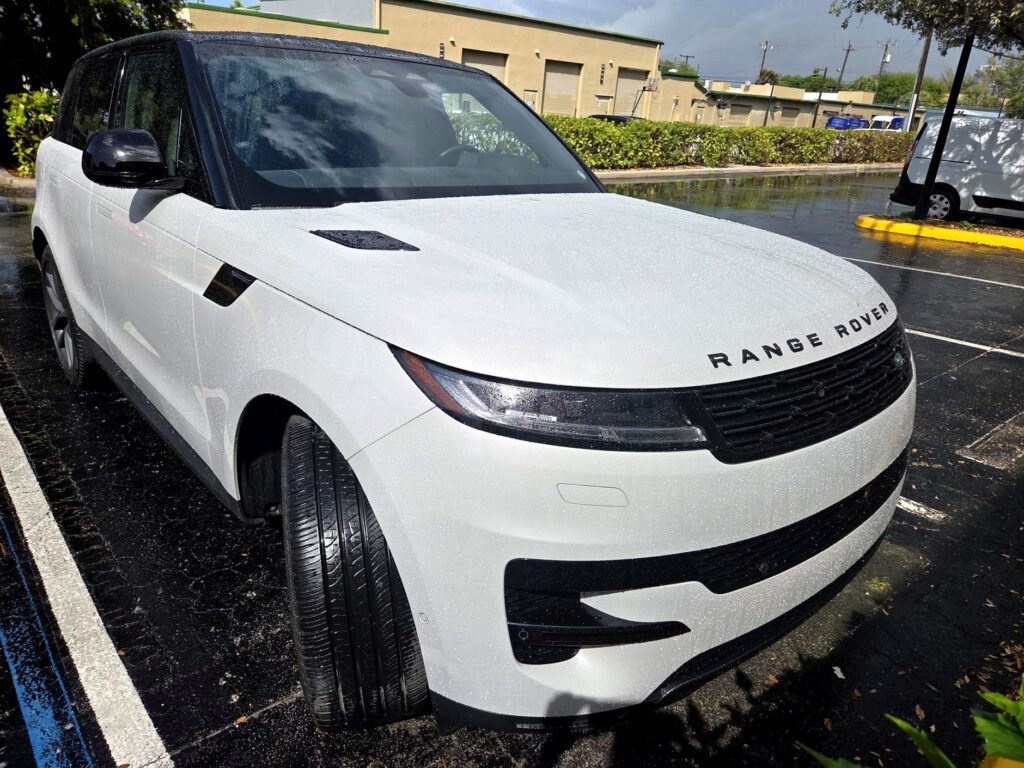
2024 Range Rover Sport luxury SUV front three-quarter view in Doral Florida for total loss appraisal.
Florida Total Loss Appraisal & Claim Support
- Professional Authority: I-CAR Platinum & IACP Certified Appraisers with Florida 6-20 Adjuster Licensing.
- Industry Credentials: Over 30 years of specialized automotive and insurance claims experience.
- Valuation Experts: Independent Actual Cash Value (ACV) reports designed to accurately value your vehicle.
- Proven Reputation: Five-Star Rated Florida independent appraisal firm providing statewide remote and mobile support.
A Doral Claim, A National Comparable Search
The vehicle in this case was garaged in Doral, an area shaped by its proximity to Miami International Airport, the Palmetto Expressway (SR-826), and Florida’s Turnpike — a market with a high concentration of newer luxury and near-luxury vehicles due to the corporate and international buyer base that clusters around the Doral business corridor.
Doral vehicle owners dealing with a total loss claim are often surprised at how far a valuation report’s comparable vehicles can be pulled from, sometimes across the country rather than from their own zip code or county.
Doral’s inventory of newer Range Rovers, Mercedes, and other high-trim SUVs tends to move through a small number of dealer groups in Miami-Dade and Broward counties. When a vehicle this specialized is valued, the quality of the comparable pool matters as much as the quantity.
The Insurer’s Valuation — What the MVR Showed
The insurer’s automated valuation software returned a base vehicle value of $110,700 for the subject Range Rover, based on a search of vehicles similar in year, make, model, and trim. The mileage on the lost vehicle was recorded as 24,000, which the report itself flagged as 41% above the average mileage of 17,000 for this vehicle class.
Three comparable vehicles were used to calculate the base value. None were located in Florida — the comparables were sourced from Las Vegas, Nevada; Appleton, Wisconsin; and Atlanta, Georgia. Sourcing comparables from outside the immediate market is a standard and accepted part of automated valuation when local inventory for a specific trim is limited, provided appropriate adjustments are applied to account for regional differences.
The mileage spread among the three comparables used was notable. One had roughly 15,300 miles, another about 7,300 miles, and the third close to 27,800 miles — a range of over 20,000 miles across three vehicles being compared against a 24,000-mile loss vehicle. The mileage adjustments applied to bring those comparables in line ranged from a $1,915 deduction to a $3,581 deduction, with one comparable actually receiving a small upward adjustment despite having significantly higher mileage than the loss vehicle. Whether those specific adjustment amounts fully captured the real market impact of that mileage spread, particularly for a $110,000+ hybrid SUV where mileage-driven depreciation compounds quickly, was a central question in this case.
The condition of the loss vehicle was rated “Good” across every inspected category, with a total condition adjustment of $0. The three comparables used in the valuation were each brought down by a $7,723 condition adjustment to match that same “Good” standard, indicating the source listings for those comparables reflected better-than-good conditions as advertised.
The Auto Praise Independent Appraisal — Our Process
Because the vehicle was the subject of a theft claim, it was not available for a physical inspection at the time this appraisal was prepared. Auto Praise completed the appraisal as a desk review, working from the documentation, photographs, and vehicle records provided by the owner and the file. Most total loss appraisals at Auto Praise are completed this way, physical inspection is used when the vehicle is available and accessible, but a desk review conducted with complete documentation is a standard and reliable appraisal method.
I selected three comparable vehicles for this file, cross-checked against CARFAX, Edmunds, and dealer listing data, and matched to the subject vehicle’s exact trim — P550e Autobiography with the short wheelbase configuration. Two of the three comparables I used were located in Florida markets (West Palm Beach and Sarasota), which put them meaningfully closer to the Doral market than the comparables used in the insurer’s report.
I also incorporated JD Power Used Cars/Trucks values to account for the timing gap between the date of loss and the date the appraisal was completed. JD Power’s data showed the vehicle’s value had declined by roughly 13.2% in that window, a normal reflection of market depreciation over several months, and I applied that adjustment to the average comparable sales value to arrive at a value specific to June 16, 2025, the date of loss.
The average adjusted value of my three comparables came to $119,064.68. After applying the 13.2% date-of-loss adjustment, the final Auto Praise actual cash value conclusion was $134,780.68, certified in accordance with the Uniform Standards of Professional Appraisal Practice (USPAP).
The Appraisal Clause Process
This claim was resolved through the appraisal clause provision of the insured’s own auto policy. The appraisal clause is only available to a first-party insured, meaning the vehicle owner must be filing the total loss claim through their own insurance policy. On a third-party claim, where a different party caused the loss and the vehicle owner is filing against someone else’s insurance, the appraisal clause is not available, and third-party claimants have no formal process to compel an independent appraisal.
Because this was a first-party theft claim filed under the vehicle owner’s own policy, the appraisal clause applied. The vehicle owner retained Auto Praise as their appointed appraiser. The insurer appointed its own appraiser. As required by both the policy language and Florida statute, a neutral umpire was named at the outset of the process, as is standard protocol in the event the two appraisers could not agree on value.
In this case, the two appointed appraisers reached agreement directly, and the umpire’s involvement was not required to finalize a decision. The two appraisers signed a binding appraisal award of $130,000.00. Under Florida insurance practice, once both appraisers sign an award, the insurer is required to settle the claim at that figure.
Outcome Summary
Final appraisal award: $130,000.00
Recovery above insurer’s initial base value: $19,300.00
| Amount | |
| Insurer’s initial base vehicle value | $110,700 |
| Auto Praise independent appraisal | $134,781 |
| Final signed appraisal award | $130,000 |
For the vehicle owner, that $19,300 difference represented the gap between a settlement built on out-of-state comparables and lighter mileage adjustments, and one grounded in Florida-based comparable data and a full accounting for market depreciation timing. This outcome reflects the specific facts of this file, every total loss claim depends on its own documentation, comparables, and policy terms.
What This Case Illustrates
A desk review can be a complete and credible appraisal. When a vehicle isn’t physically available — as in a theft claim — a well-documented desk review using photographs, vehicle history, and market data can produce a reliable, USPAP-compliant value conclusion. Physical inspection isn’t the only path to an accurate appraisal.
Mileage adjustments need to match the actual mileage gap. When comparable vehicles span a wide mileage range, as they did here, the dollar adjustments applied to close that gap deserve scrutiny. A vehicle with 24,000 miles compared against one with roughly 7,300 miles is a meaningfully different vehicle in the eyes of most buyers, and the adjustment should reflect that.
Local comparables tell a more accurate market story. Sourcing comparables from outside the region isn’t improper on its own — it’s a normal part of the process when local inventory is thin — but comparables pulled from a Florida market carry more direct relevance to a Doral vehicle owner’s actual resale environment than comparables sourced from the Midwest or Mountain West.
Timing matters in every total loss valuation. The months between a date of loss and the date an appraisal is finalized can shift a vehicle’s value meaningfully, particularly for newer luxury and hybrid models. Adjusting for that gap using published guides like JD Power keeps the final number tied to the actual date of loss rather than a later market snapshot.
The appraisal clause exists for exactly this kind of disagreement. When two parties reach different conclusions on value from the same underlying vehicle, the appraisal clause provides a structured, policy-based path to a binding resolution — without requiring a lawsuit or prolonged negotiation.
Frequently Asked Questions
What is the appraisal clause, and how does it work for Florida vehicle owners?
The appraisal clause is a provision found in most Florida auto policies that allows either the insurer or the insured to demand an independent appraisal process when they disagree on a vehicle’s value. Each side appoints its own appraiser, and a neutral umpire is selected at the outset in case the two appraisers cannot agree. The appraisal clause is only available to first-party insureds filing under their own policy, it is not available for third-party claims against another driver’s insurer. Once both appraisers sign an award, the insurer must settle at that amount.
Does Auto Praise need to physically inspect my vehicle to complete an appraisal?
Not necessarily. Most Auto Praise total loss appraisals are completed as desk reviews using photographs, documentation, vehicle history reports, and market data, this is a standard and accepted appraisal method. Physical inspection is used when the vehicle is available and accessible, but its absence doesn’t prevent a complete, credible appraisal from being produced.
Why would an insurance company’s valuation use comparable vehicles from other states?
When a specific trim or configuration isn’t well represented in local inventory, automated valuation tools will expand the search radius to find similar vehicles elsewhere in the country. This is standard practice, and appropriate market adjustments should be applied to account for regional pricing differences. The more important question is whether those adjustments, for mileage, condition, and market, accurately reflect the real differences between the comparable and the lost vehicle.
What should Doral vehicle owners do if their total loss offer seems low?
Start by requesting a copy of the full market valuation report from the insurer, not just the summary. Review the comparable vehicles used, their mileage, their location, and the adjustments applied to each one. If the insurer undervalued the vehicle based on inaccurate mileage adjustments, mismatched trims, or missing equipment, an independent appraisal can identify those gaps and support a formal dispute.
How does mileage affect the value of a vehicle like a Range Rover P550e Autobiography?
Mileage adjustments are meant to reflect how much a vehicle’s value changes for every mile above or below the comparable odometer reading. For a plug-in hybrid luxury SUV like the P550e, mileage differences can carry a larger dollar impact than on a more common vehicle, simply because the base value is higher. When comparables span a wide mileage range, the adjustment applied to each one should scale with that difference, not just apply a flat, modest correction.
What happens if my vehicle is stolen and later declared a total loss?
A stolen vehicle claim is handled similarly to any other total loss claim once the insurer confirms the loss and moves to settlement. The valuation is based on the vehicle’s actual cash value as of the date it was reported stolen, using market data, comparable vehicles, and any available documentation or photographs. If the vehicle isn’t recovered for physical inspection, a desk review appraisal can still be used to challenge the offer if the insurer’s valuation appears inaccurate.
Was Your Doral Total Loss Offer Too Low?
A valuation built on comparables from three time zones away, with mileage adjustments that may not have matched the real gap between those vehicles and yours, is worth a second look. Auto Praise reviews market valuation reports for Florida vehicle owners to identify where the comparable selection, mileage adjustments, or condition ratings may have missed the mark, and to determine whether there’s a documented basis to pursue a better settlement.
A free claim review costs nothing and gives you a clear answer on whether your file is worth challenging.
Call 754-210-9807 for a Free Review Florida Licensed Adjusters • I-CAR Platinum Certified • IACP Certified Auto Appraisers
Auto Praise produces total loss appraisal reports that hold carriers to local market evidence, rather than out-of-state listings priced for a different buyer.