
 Call us now:

This 2014 Mercedes-Benz C250 Sport in Orlando, FL was declared a total loss following a collision in the Orlando area. The carrier’s automated Market Valuation Report established a base vehicle value of $11,335.00. The vehicle carried a documented odometer reading of just 12,177 miles — placing it in the bottom 10% of all mileage readings for this model year. Despite that extraordinary mileage position, the insurer’s comparable selection consisted entirely of vehicles with odometer readings ranging from approximately 33,000 to 62,000 miles. Auto Praise conducted an independent total loss appraisal and established an Actual Cash Value of $17,182.70. The appraisal clause was invoked, and a binding appraisal award was reached at $16,245.00 — a recovery of $4,910.00 above the insurer’s base vehicle value.
Case Overview Table
| Field | Detail |
| Vehicle | 2014 Mercedes-Benz C250 Sport Sedan |
| Exterior Color | Black |
| Engine / Drivetrain | 1.8L L4 Turbocharged / Rear-Wheel Drive |
| Mileage at Time of Loss | 12,177 |
| Location | Orlando, FL |
| Service Type | Independent Total Loss Appraisal / Appraisal Clause |
| Insurer’s Base Vehicle Value | $11,335.00 |
| Auto Praise Independent Appraisal Value | $17,182.70 |
| Final Appraisal Award | $16,245.00 |
| Recovery Above Insurer’s Base Offer | $4,910.00 |
The bottom line:
| Amount | |
| Insurer’s Base Vehicle Value | $11,335.00 |
| Auto Praise Independent Appraisal | $17,182.70 |
| Final Appraisal Award | $16,245.00 |
| Recovery Above Initial Offer | +$4,910.00 |
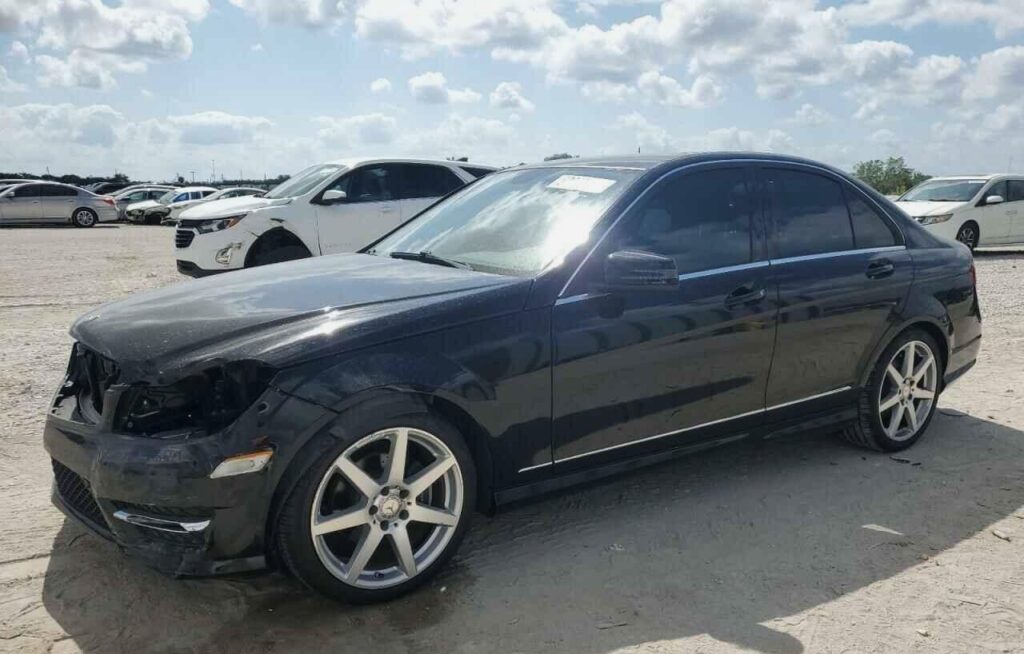
2014 Mercedes-Benz C250 sedan with front-end collision damage being evaluated for total loss appraisal in Orlando FL.
Florida Total Loss Appraisal & Claim Support
- Professional Authority: I-CAR Platinum & IACP Certified Appraisers with Florida 6-20 Adjuster Licensing.
- Industry Credentials: Over 30 years of specialized automotive and insurance claims experience.
- Valuation Experts: Independent Actual Cash Value (ACV) reports designed to accurately value your vehicle.
- Proven Reputation: Five-Star Rated Florida independent appraisal firm providing statewide remote and mobile support.
Orlando — Why Geographic Context Matters for This Valuation
Orlando is one of Florida's largest and most active used vehicle markets. The metro area is served by a dense network of major corridors, I-4, Florida's Turnpike, the 408 (East-West Expressway), the 417 (Central Florida GreeneWay), and US-441, that connect a broad and diverse buyer base across Orange, Seminole, Osceola, and Lake counties.
The pre-owned European luxury sedan segment is active throughout the Orlando metro. Dealers along Colonial Drive, Sand Lake Road, and the International Drive corridor regularly carry Mercedes-Benz C-Class inventory. The South Orlando and Dr. Phillips corridors attract buyers in higher income brackets who are specifically seeking well-maintained European vehicles with verified histories. In this market, a low-mileage C-Class with a clean single-owner title history would be a notable listing, one that would move quickly and command a premium over higher-mileage comparable units.
The collision in this case occurred in the Orlando area, and the vehicle was inspected at a salvage facility in Orlando following the total loss determination. The Orlando market is the appropriate reference point for establishing what a willing buyer would pay for this specific vehicle — and it is a market where condition, history, and mileage carry real weight in buyer decision-making.
The I-4 corridor running through central Orlando, connecting the Walt Disney World Resort area through downtown and east toward Daytona Beach, is one of Florida's highest-traffic routes. The interchange areas around SR-408, SR-528 (the Beachline Expressway), and the tourist corridor along International Drive see significant accident volumes, consistent with the type of claim documented here. Orlando vehicle owners facing total loss claims have access to the same independent appraisal rights as any Florida insured.
The Insurer's Valuation — What the Automated Report Showed
The carrier's valuation was prepared using an automated market valuation platform. The report established a base vehicle value of $11,335.00, using ten comparable vehicles, all identified as 2014 Mercedes-Benz C250 Sport RWD units with the same engine and drivetrain configuration.
The mileage picture was the central problem. The MVR flagged it directly: the loss vehicle had 90% fewer miles than the average of 121,300 miles for this model year. That is not a marginal discrepancy, this vehicle was operating at approximately one-tenth the typical mileage for an eleven-year-old car.
The insurer's ten comparable vehicles showed odometer readings ranging from approximately 33,000 to 62,000 miles. The loss vehicle had 12,177 miles. The mileage adjustments applied to each comparable, ranging from roughly $511 to $903, reflect the software's attempt to close that gap through a per-mile rate. When the mileage gap between the loss vehicle and every comparable in the pool is this large, the adequacy of the adjustment methodology becomes the critical question.
The comparable geography also warrants review. Of the ten comparables, only one was sourced within the South/Central Florida market, a unit listed in West Palm Beach, approximately 200 miles from Orlando. The remaining nine were sourced from Orlando-area dealers, Wesley Chapel, Daytona Beach, Clearwater, Gainesville, Jacksonville, and Savannah, Georgia. When local inventory is limited, expanding the search radius is standard and accepted appraisal practice, and market adjustments are applied to account for geographic differences. The relevant question is whether the comparable vehicles used were genuinely equivalent in trim and specification, and whether the mileage methodology adequately reflected the true market premium on a vehicle with only 12,177 documented miles.
One comparable was the wrong trim. Comp 10, sourced from Savannah, Georgia, was identified as a C250 Luxury, not a C250 Sport. A Make/Model/Trim adjustment of +$200 was applied. While the platform attempted to correct for the trim difference, the C250 Sport and C250 Luxury carried meaningfully different specifications and market positioning. Including a trim-mismatched comparable in the pool, even with an adjustment, introduces imprecision into the weighted average that a carefully constructed independent appraisal can address.
The Auto Praise Independent Appraisal — Our Process
When I reviewed this claim, the mileage situation was the first thing that stood out. A 2014 Mercedes-Benz C250 Sport with 12,177 miles is not a normal used car — it is a vehicle that has been barely driven in eleven years, averaging fewer than 1,200 miles per year. That kind of mileage history commands a genuine premium in the market, and a valuation methodology that doesn't fully capture it will systematically undervalue the vehicle.
Beginning with the documentation. I reviewed the FLHSMV title record, which confirmed a single owner, no prior title brands, and the odometer reading of 12,177 miles. The vehicle history confirmed no salvage, no frame damage, no manufacturer buyback, no flood history, and no odometer rollback. The vehicle originated in Phoenix, Arizona, was titled in Mesa, Arizona in early 2015, and transferred to the Florida owner in late 2021. At the time of the Florida title transfer, the odometer read 8,186 miles, consistent with the extremely low annual use pattern throughout the vehicle's life.
Comparable selection methodology. The Auto Praise appraisal used a three-comparable method, with the search criteria prioritized around the lowest available mileage on matching Sport trim units with clean title histories. Because the loss vehicle's mileage was so far outside the norm for its model year, I expanded the search radius to 250 miles to find Sport trim units with no accident record and the lowest possible documented mileage. The three comparables selected ranged from approximately 33,000 to 53,000 miles, still substantially higher than the loss vehicle, but representing the lowest-mileage clean-title Sport trim examples available in the market at the time.
A mileage adjustment was applied at a rate of $0.05 per mile. With an average comparable mileage of 42,524 miles against the loss vehicle's 12,177 miles, the mileage adjustment came to $1,517.37. Combined with the average comparable list price of $15,665.33, the fair market value at time of loss was established at $17,182.70, certified under USPAP.
What the VIN documentation confirmed. The VIN decoded to a 2014 Mercedes-Benz C-Class with a 1.8L L4 DOHC 16V engine, 7-speed automatic transmission, and rear-wheel drive, confirming the Sport trim specification. The original MSRP for this platform was $36,250, establishing the baseline for a well-equipped vehicle that, under normal use, would have experienced substantial depreciation by 2025. This vehicle's documented mileage history substantially altered that depreciation curve, and the independent appraisal reflected that reality.
The Appraisal Clause Process
The appraisal clause is a provision found in most first-party auto insurance policies that allows a vehicle owner to request an independent appraisal when they disagree with the insurer's valuation. It is only available on a first-party claim, meaning the vehicle owner must be filing through their own insurance policy. On a third-party claim, where the vehicle owner is filing against the at-fault driver's insurance, the appraisal clause is not available, and third-party claimants must pursue other means to challenge an unsatisfactory offer.
In this case, the appraisal clause was invoked following receipt of the insurer's automated valuation. The vehicle owner retained Auto Praise as their appointed appraiser. The carrier appointed its own appraiser. Both appraisers reviewed the documentation, the comparable data, and the valuation methodology.
The process produced a binding appraisal award of $16,245.00, the figure the carrier was required to settle the claim for. The award reflected a value meaningfully higher than the insurer's original base vehicle value of $11,335.00.
Outcome Summary
| Insurer's Base Vehicle Value | $11,335.00 |
| Final Appraisal Award | $16,245.00 |
| Recovery Above Initial Offer | $4,910.00 |
The vehicle owner recovered $4,910.00 more than the carrier's original base vehicle value, a 43% increase over the initial offer. For a vehicle with only 12,177 documented miles, that recovery reflected the real market premium that the automated valuation platform's comparable selection failed to fully capture.
What This Case Illustrates
Mileage is not just a line item — it is a market signal. The insurer's automated platform applied per-mile adjustments to account for the gap between the loss vehicle's 12,177 miles and its comparable pool averaging over 42,000 miles. But automated mileage adjustments based on a flat per-mile rate may not fully reflect the market reality of a vehicle that is genuinely exceptional in its mileage history. A buyer searching for a low-mileage European sedan will pay a premium that a formula-based adjustment can underestimate. When the mileage gap is this large, the comparable selection methodology itself becomes the critical question.
Comparable trim equivalency matters. The insurer's ten-comparable pool included one unit identified as a C250 Luxury rather than a C250 Sport. These are distinct trim levels with different specifications and market positioning. A $200 adjustment does not fully replicate the trim-level difference in buyer perception. When reviewing a comparable vehicles selection, confirming that each comparable matches the loss vehicle's trim, not just its model name, is a foundational step in building a credible independent appraisal.
Vehicle history adds measurable value that automated platforms may miss. This vehicle had a documented single-owner history, no accidents prior to the total loss, no title brands, and odometer readings that told a consistent and verifiable story. That history is not invisible to the market, buyers pay more for it. An independent appraisal that incorporates vehicle history documentation can establish a value that reflects what a real buyer in the real market would actually pay.
Ultra-low mileage creates a narrow comparable pool — and that pool must be searched carefully. The insurer's comparables showed mileage between 33,000 and 62,000 miles. There were no comparables anywhere near 12,177 miles because vehicles like this rarely reach the market. When comparable inventory is this thin, the appraiser's methodology for selecting and adjusting the available data becomes more consequential. The comparables selected by Auto Praise were chosen specifically for lowest available mileage and clean title history, the factors most directly relevant to this vehicle's market position.
The appraisal clause is a legitimate policy right, not a last resort. Florida vehicle owners who file total loss claims through their own insurance have the right to invoke the appraisal clause when they believe the valuation is inaccurate. It is a structured, binding process that produces a definitive result. In this case, it produced a settlement $4,910.00 higher than the carrier's initial offer.
Frequently Asked Questions
My total loss offer seems low for a car with very low mileage. What should I do?
Low mileage is one of the most significant value factors for a used vehicle, but automated insurance valuation platforms may not fully capture its market impact when the subject vehicle's mileage is far outside the normal range for its model year. If your vehicle had significantly fewer miles than the comparable vehicles used in the insurer's market valuation report, the per-mile adjustment applied may not reflect what buyers would actually pay for that mileage advantage. An independent total loss appraisal can review the comparable selection and mileage methodology to determine whether the offer accurately reflects your vehicle's value. Call 754-210-9807 for a free claim review.
How does the appraisal clause work for Orlando vehicle owners?
The appraisal clause is a provision in most Florida first-party auto insurance policies that gives the insured the right to demand an independent appraisal when they disagree with the carrier's total loss valuation. Both the insured and the carrier appoint their own appraisers, and those two appraisers work to reach an agreed value. A neutral umpire is elected at the outset as required by Florida statutes and standard policy language — available if the two appraisers cannot reach agreement. The result is a binding appraisal award that the carrier must honor. Importantly, the appraisal clause is only available on first-party claims, where you are filing through your own policy. It is not available on third-party claims against another driver's insurance. For a full explanation of the process and your rights under Florida law, see our guide to Florida total loss law.
What is an automated Market Valuation Report, and do I have to accept it?
Insurance carriers use automated valuation platforms to generate market valuation reports for total loss claims. These platforms produce a base vehicle value by selecting comparable vehicles from a database, applying adjustments for mileage, options, and condition, and calculating a weighted average. The report represents the carrier's starting position, it is not a binding determination of your vehicle's value. You have the right to review the comparables and methodology used, question the accuracy of the inputs, and pursue an independent appraisal if you believe the valuation is inaccurate. If your offer seems low, the first step is requesting a copy of the MVR and reviewing it carefully.
What happens when the insurer's comparables include a different trim level than my vehicle?
Trim level equivalency is a foundational requirement for valid comparable selection. A 2014 Mercedes-Benz C250 Sport and a 2014 Mercedes-Benz C250 Luxury are distinct configurations with different specifications and market positioning. When an automated valuation platform includes a trim-mismatched comparable, it typically applies a dollar adjustment, but formula-based adjustments may not fully replicate the market's actual response to trim-level differences. If your insurer's MVR includes comparable vehicles that do not match your vehicle's trim, that is a valid basis for challenging the valuation through the appraisal process.
Does vehicle history affect total loss value in Florida?
Yes, and it can affect it significantly. A single-owner vehicle with a clean title history, no prior accidents, and a verified odometer reading will command a premium over an otherwise identical vehicle with multiple owners, prior damage, or title issues. Automated valuation platforms may apply some adjustment for history, but independent appraisers can incorporate documented history more directly into the comparable selection and valuation methodology. In this case, the subject vehicle's single-owner clean history supported the independent value conclusion. For more on how the total loss process works and how your vehicle's history factors in, see our Florida total loss claim guide.
I was in an accident in Orlando. Can Auto Praise help with my total loss claim?
Yes. Auto Praise provides independent total loss appraisal services to Florida vehicle owners statewide, including throughout the Orlando metro and Central Florida region. If you received a total loss offer from your carrier and believe it is too low, we can review the market valuation report and provide an independent assessment of your vehicle's actual cash value. The review is free, and there is no obligation.
If Your Total Loss Offer Seems Too Low
If the insurance company's total loss offer seems too low, Auto Praise can review the market valuation report and identify errors that may be affecting your settlement amount. We assist Florida vehicle owners statewide by reviewing comparable vehicles, adjustments, options, condition ratings, and valuation methodology to determine whether the offer is accurate.
A free claim review can help you understand whether there is a valid basis to challenge the offer and pursue a better settlement.
Call 754-210-9807 for a Free Review Florida Licensed Adjusters • I-CAR Platinum Certified • IACP Certified Auto Appraisers
A large mileage gap between a vehicle and its comparables moves the number substantially, and independent total loss appraisal services exist to quantify that difference with market evidence.