
 Call us now:

A 2012 Land Rover LR4 HSE, finished in white with the 5.0L V8 and four-wheel drive, was declared a total loss following an accident in Doral, Florida on April 26, 2026. The vehicle had 77,923 miles at the time of loss. The insurer’s initial base vehicle value came in at $7,684.00. Auto Praise’s independent appraisal placed the vehicle’s Actual Cash Value at $12,731.64. Following invocation of the appraisal clause, the two appointed appraisers reached a binding award of $12,668.00, a recovery of $4,984.00 above the insurer’s original base offer.
Case Overview Table
| Detail | Figure |
| Vehicle | 2012 Land Rover LR4 HSE 4WD |
| Exterior Color | White |
| Engine / Drivetrain | 5.0L V8, Automatic, Four-Wheel Drive |
| Mileage at Time of Loss | 77,923 miles |
| Location | Doral, FL |
| Service Type | Independent total loss appraisal / appraisal clause |
| Insurer’s Base Vehicle Value | $7,684.00 |
| Auto Praise Independent Appraisal Value | $12,731.64 |
| Final Appraisal Award | $12,668.00 |
| Recovery Above Insurer’s Base Offer | $4,984.00 |
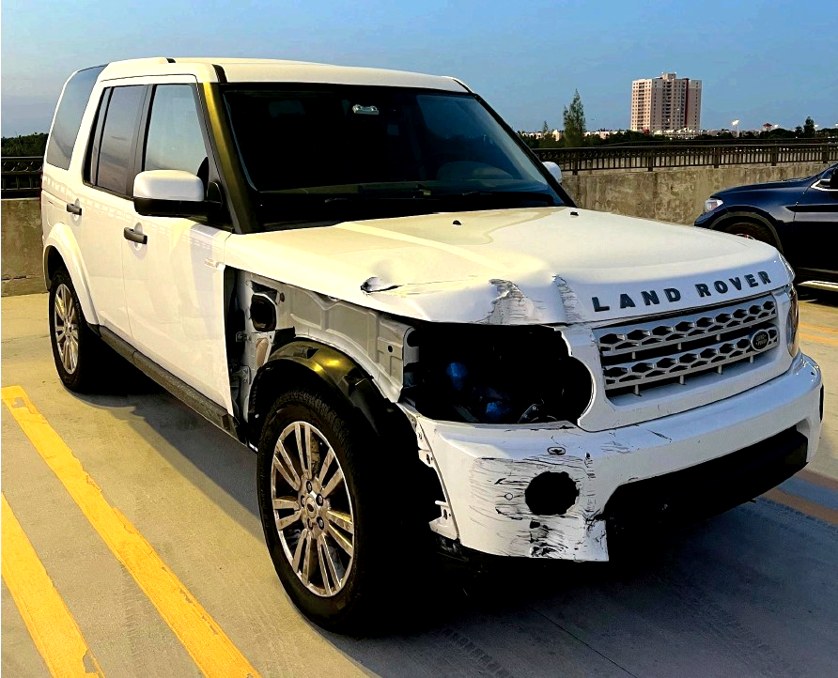
2012 Land Rover LR4 with severe front passenger side collision damage in Doral Florida for total loss appraisal.
Florida Total Loss Appraisal & Claim Support
- Professional Authority: I-CAR Platinum & IACP Certified Appraisers with Florida 6-20 Adjuster Licensing.
- Industry Credentials: Over 30 years of specialized automotive and insurance claims experience.
- Valuation Experts: Independent Actual Cash Value (ACV) reports designed to accurately value your vehicle.
- Proven Reputation: Five-Star Rated Florida independent appraisal firm providing statewide remote and mobile support.
A Doral Claim, A Familiar Pattern
The vehicle owner was based in the Doral area of Miami-Dade County when the accident occurred. Doral sits along the NW 25th Street and Doral Boulevard corridor, bordered by the Palmetto Expressway (SR-826) to the east and Florida’s Turnpike to the west, with Miami International Airport just a few miles from the city’s northern edge. The area is dense with corporate offices, golf course communities, and the Dolphin Mall retail corridor, and it carries a large population of imported and specialty vehicles tied to its international business community.
That matters for valuation. A 2012 Land Rover LR4 HSE in this market competes against a mix of well-maintained, low-mileage examples favored by buyers in Doral’s business and residential corridors, and higher-mileage units advertised farther out in Central and North Florida. Comparable selection has to account for that split, or the resulting value can end up skewed toward vehicles that don’t actually reflect what a Doral-area LR4 in this condition would sell for.
The Insurer’s Valuation — What the MVR Showed
The insurer’s total loss claim valuation was generated through the insurer’s automated valuation software, which returned a Base Vehicle Value of $7,684.00. After a total condition adjustment of -$297.00, the Adjusted Vehicle Value came to $7,387.00.
Three comparable vehicles supported that number. None were sourced from the immediate Doral or Miami-Dade market, the closest was 63 miles away in West Palm Beach, with the other two at 116 miles (Fort Pierce) and 205 miles (Winter Garden). When exact matching comparables aren’t available locally, appraisers commonly widen the search radius and apply market adjustments to compensate, that part of the process is standard. The more relevant question is whether the comparables selected were true equivalents once those adjustments were applied.
Two issues stood out on review. One comparable was listed as the “Luxury” trim rather than the HSE trim of the loss vehicle, a real equipment and market-value difference that a straight trim-name mismatch can obscure. A second comparable was a 2013 model year vehicle rather than 2012. The report’s own data also noted the loss vehicle carried 53% fewer miles than the average for the model (165,400 miles), yet all three comparables carried higher mileage than the loss vehicle — 101,051, 117,161, and 115,356 miles respectively — which placed extra weight on mileage adjustments to bridge that gap.
The condition adjustment applied to the loss vehicle also merits a closer look. The report deducted for “major wear” on the seats, carpets, and dashboard, each with the notation “No Comments”, meaning no supporting detail accompanied those specific deductions.
Automated valuation platforms are a legitimate and widely used starting point for total loss claims. The issue in this case wasn’t the tool, it was whether the specific comparables and condition inputs matched the actual vehicle closely enough to produce an accurate number.
The Auto Praise Independent Appraisal — Our Process
I completed this appraisal as a documentation-based desk review, using the photographs, vehicle records, and market data made available to me. Most Auto Praise total loss appraisals are completed this way, a physical inspection isn’t required in every case, and a desk review conducted with sufficient supporting material can be just as thorough.
The photographs provided showed the VIN plate, the odometer reading at 77,923 miles, and condition across the exterior panels, glass, and interior, including the seats, carpets, and dashboard the insurer had flagged for major wear deductions. The vehicle owner also supplied receipts showing a new battery and a set of four replacement tires purchased roughly two weeks before the date of loss, which is relevant context the automated valuation didn’t have.
For comparable vehicles, I selected listings matching the correct HSE trim, 5.0L V8 engine, and automatic four-wheel-drive configuration, cross-referencing dealer listings, CARFAX history, and published pricing guides. One comparable carried a documented two-accident history, and I applied a corresponding downward adjustment rather than treating it as a clean match.
The strongest data point came from the vehicle’s own history. Records showed this specific vehicle had sold at public auction for $13,250 just weeks before the date of loss, a real, recent transaction for the actual vehicle in question, not a proxy comparable. That figure supported an independent auto appraiser’s conclusion that the vehicle’s condition prior to loss did not reflect the “major wear” deductions applied in the automated valuation.
Based on this review, I concluded a Fair Market Value / Actual Cash Value of $12,731.64 as of the date of loss, certified under USPAP-compliant methodology.
The Appraisal Clause Process
This claim was resolved through the appraisal clause, a provision found in most Florida auto policies that allows either party to demand an independent valuation process when they disagree on a vehicle’s value. The appraisal clause is only available to a first-party insured, meaning the vehicle owner must be filing the claim through their own policy. On a third-party claim, where a different driver’s insurer is responsible, the appraisal clause is not available, and claimants have to pursue other means to challenge an unsatisfactory offer.
In this case, the vehicle owner retained Auto Praise as their appointed appraiser. The carrier appointed its own appraiser. Both sides appointed a neutral umpire at the outset, as is standard under Florida policy language and required by statute in the event the two appraisers cannot agree, though most cases, including this one, are resolved directly between the two appointed appraisers without the umpire’s involvement. The two appraisers reached agreement and signed a binding award of $12,668.00 on May 19, 2026. Under the appraisal clause, that figure is what the insurance carrier is required to pay.
Outcome Summary
Insurer’s Base Offer: $7,684.00
Auto Praise Independent Value: $12,731.64
Final Binding Award: $12,668.00
Recovery: $4,984.00 above the insurer’s initial offer
For the vehicle owner, that recovery represented the difference between a settlement based on distant, mismatched comparables and one grounded in the vehicle’s actual documented condition and market history.
What This Case Illustrates
A desk review can be just as rigorous as a physical inspection. When sufficient photos, maintenance records, and market data are available, a documentation-based appraisal can identify the same discrepancies a hands-on inspection would, without requiring the vehicle to be physically accessed.
Trim and model-year equivalency matter more than they appear to. A comparable listed under a different trim name, or from a different model year, can carry a meaningfully different market value even when the listing looks similar at a glance.
Wider-radius comparables aren’t inherently wrong — but they need real scrutiny. Sourcing comparables from outside the immediate market is standard practice when local inventory is thin. The value of that practice depends entirely on whether the adjustments applied make the comparable truly equivalent.
Condition deductions need documentation behind them, not just a checkbox. A “major wear” adjustment with no supporting comment is difficult to evaluate on its own — especially when the vehicle owner holds receipts showing recent maintenance that tells a different story.
A vehicle’s own sale history can be the strongest evidence in the file. When a documented, recent, arm’s-length transaction exists for the actual vehicle in question, it often carries more weight than any third-party comparable ever could.
Frequently Asked Questions
What is a total loss appraisal, and why would a Doral vehicle owner need one?
A total loss appraisal is an independent, professional opinion of a vehicle’s Actual Cash Value at the time of loss, prepared separately from the insurance company’s own valuation. Vehicle owners in Doral and throughout Miami-Dade County request one when they believe the insurer’s offer doesn’t reflect their vehicle’s true condition or market value. An independent appraisal documents comparable sales, condition factors, and equipment details that support a different conclusion, giving the owner a factual basis to challenge the offer through negotiation or, if needed, the appraisal clause process.
How does the insurer’s automated valuation software determine a vehicle’s value?
Insurance companies typically rely on automated valuation software that searches a database of vehicles for sale or recently sold, selects comparables based on the vehicle’s garaging zip code, and applies adjustments for mileage, equipment, and condition. This is a legitimate industry tool and a reasonable starting point. The accuracy of the result depends on whether the comparables it selects, and the condition inputs applied to them, genuinely match the vehicle being valued.
Can a total loss appraisal be completed without a physical inspection?
Yes. Many Auto Praise appraisals are completed as desk reviews, using photographs, vehicle history records, maintenance receipts, and market data rather than an in-person inspection. A desk review can be just as thorough as a physical inspection when enough documentation is available to verify the vehicle’s condition and support accurate comparable selection.
What is the appraisal clause, and who can use it in Florida?
The appraisal clause is a provision in most Florida auto insurance policies that lets either the insured or the insurer demand an independent valuation process when they disagree on a vehicle’s value. It is only available to a first-party insured, someone filing a claim on their own policy. On a third-party claim, where the at-fault driver’s insurer is handling the claim, the appraisal clause isn’t available, and the claimant has to pursue other avenues to dispute a low offer.
What should Doral vehicle owners do if their total loss offer seems low?
Start by requesting a copy of the market valuation report from the insurer and reviewing the comparable vehicles it used, including their trim, mileage, and distance from Doral. If the comparables don’t match your vehicle’s actual trim, condition, or documented history, that’s grounds to challenge the offer. An independent appraisal can document those discrepancies with specific, defensible figures, which strengthens a request for reconsideration or supports invoking the appraisal clause if the policy allows it.
Does low mileage automatically mean a higher settlement offer?
Not necessarily. In this case, the insurer’s own report noted the vehicle had 53% fewer miles than the model average, yet the comparables used to calculate the base value all carried higher mileage than the vehicle itself. Low mileage should support a stronger valuation, but only if the comparable selection and adjustments are applied consistently with that fact. A mismatch between a vehicle’s documented condition and the comparables used to value it is one of the most common reasons a total loss offer comes in low.
If Your Total Loss Offer Seems Low, We Can Take a Closer Look
If the insurance company’s total loss offer on your vehicle seems too low, Auto Praise can review the market valuation report and identify errors that may be affecting your settlement amount. We assist Florida vehicle owners statewide, including Doral vehicle owners, by reviewing comparable vehicles, adjustments, options, condition ratings, and valuation methodology to determine whether the offer is accurate.
A free claim review can help you understand whether there is a valid basis to challenge the insurance company’s valuation and pursue a better settlement through the Florida total loss claims process.
Call 754-210-9807 for a Free Review Florida Licensed Adjusters • I-CAR Platinum Certified • IACP Certified Auto Appraisers